

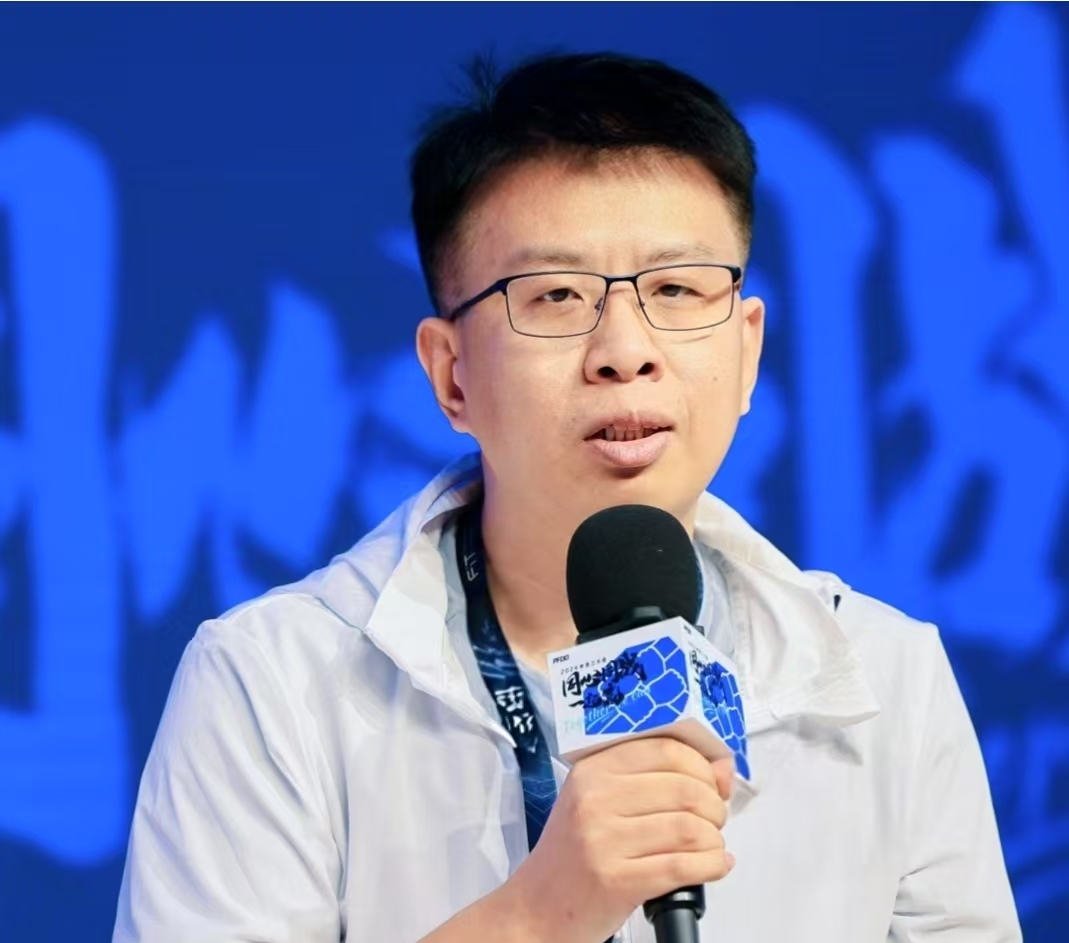
 xiuqiang He
· 5 previous affiliations
- Shenzhen Technology UniversitySince 2025
- Full Professor · Since 2025
- Tencent (China)2022–2025
- Principal Researcher · 2022–2025
- Huawei Technologies (China)2010–2022
- Researcher · 2010–2022
- PhD student · 2006–2010
- Xi'an Jiaotong University1999–2006
- MS student · 2003–2006
- Undergrad student · 1999–2003
Research Overview
Xiuqiang He focuses on recommendation systems, uplift modeling, and the application of artificial intelligence to online marketing and financial technologies. His trajectory spans foundational work in feature interaction and causal inference for customer lifetime value, evolving toward large language model agents and parameter-efficient fine-tuning. Currently, he investigates retrieval-augmented generation and invariant learning for robust decision-making.
Research Trajectory
Xiuqiang He has established a strong foundation in the architecture and optimization of recommendation systems, particularly for complex online platforms. His broader research encompasses the area of Modeling Explicit and Implicit Feature Interactions and the research direction of Efficient Discovery of High Order Feature Interactions. He has also contributed extensively to the area of Sparse Selection of High-Order Feature Interactions and explored Graph Contrastive Learning for Sparse Recommendation. Furthermore, his foundational work addresses the challenges of Unbiased Learning from Selection Biased Interaction Data.
In 2024, his research heavily emphasized optimizing online marketing and financial technology platforms through advanced causal inference and multi-task learning. He developed approaches for Expected Transaction Value Optimization for Precise Marketing in FinTech Platforms, addressing the unique challenges of guaranteed delivery strategies in mutual fund distribution where the goal is to maximize transaction amounts rather than simple conversion rates. A major theme during this period was uplift modeling and the accurate prediction of customer lifetime value (CLTV). He introduced OptDist: Learning Optimal Distribution for Customer Lifetime Value Prediction to capture the complex, long-tailed distributions of user spending, moving beyond the limitations of single-distribution assumptions. To improve incentive assignments, he advanced multi-valued treatment scenarios in Towards Effective and Efficient Multi-valued Treatment Uplift Modeling in Online Marketing and tackled strict budget constraints in End-to-End Cost-Effective Incentive Recommendation under Budget Constraint with Uplift Modeling, reformulating the budget allocation challenge as a multi-choice knapsack problem.
Alongside uplift modeling, he investigated complex user behaviors in recommendation systems. In Touch the Core: Exploring Task Dependence Among Hybrid Targets for Recommendation and its preprint version, he utilized multi-task learning to capture the intricate dependence between discrete conversion actions (like clicks) and continuous targets (like watch time or revenue), improving the prediction of core platform conversions.
Expanding into generative AI, he also explored the training of autonomous agents. In Training Agents with Weakly Supervised Feedback from Large Language Models, he developed an iterative framework where a critic model provides weak supervision. This approach allows smaller open-source models to achieve complex task performance without requiring definitive environmental feedback or expert demonstrations, contributing to research areas such as Imitation Learning from Limited and Suboptimal Demonstrations and Scaling Expert Evaluation via Frontier Model Judges.
Moving into 2025, his focus on recommendation and causal inference deepened to address robustness and lifelong learning. He tackled click-through rate prediction through Retrieval Augmented Cross-Domain LifeLong Behavior Modeling for Enhancing Click-through Rate Prediction. To ensure incentive strategies remain effective under distribution shifts, he introduced Invariant Deep Uplift Modeling for Incentive Assignment in Online Marketing via Probability of Necessity and Sufficiency. This research bridges several causal directions, advancing the area of Invariant Learning for Distributionally Robust Machine Learning, Learning Causal Features via Invariant Risk Minimization, and Uplift Modeling for Causal Recommendation.
His most recent work in 2026 spans evolutionary algorithms and the efficiency of large language models. He proposed An adaptive length-variation based evolutionary multitasking algorithm for feature selection of high-dimensional classification, which aligns with his broader interest in the research direction of Fine-Grained Selection for Efficient Neural Architectures. In collaborative work on large language models, he participated in developing BoRA: Towards More Expressive Low-Rank Adaptation with Block Diversity, a method that overcomes the rank bottleneck of standard LoRA by introducing learnable diagonal matrices. This contributes to the broader area of High Rank Adaptation with Low Parameter Budgets. Additionally, he contributed to Less Is More: Elevating RAG via Performance-Driven Context Compression, applying reinforcement learning to optimize context compression in retrieval-augmented generation systems, advancing the area of Reinforcement Learning with Verifiable Rewards for LLM Reasoning.
He also advanced generative and deep recommendation pipelines in 2026. As senior author, He introduced From Item Scores to Semantic Tokens: Test-Time Collaborative Adaptation for Generative Recommendation, proposing a training-free adaptation method that injects discriminative collaborative signals into semantic beam search to advance Dynamic Preference Modeling in Interactive Systems. In related collaborative efforts, He participated in designing OptST: Optimizing Semantic Tokenization for LLM-Enhanced Recommendation, which adapts discrete semantic tokenizers to downstream recommendation tasks via anchor-regularized low-rank deformation, and contributed to Towards a Unified Framework of Optimal Input-Side Dimensional Configuration for Deep CTR Prediction, which uses optimal transport to coordinate sample, feature, and embedding selection for Overcoming Feature Redundancy in High Dimensional Data.
Current Directions
The most recent papers in the evidence address the efficiency, robustness, and scalability of large machine learning models, particularly large language models (LLMs) and causal recommendation systems. Recent work investigates parameter-efficient fine-tuning, specifically focusing on overcoming rank bottlenecks in low-rank adaptation methods to improve model expressiveness without incurring significant parameter overhead. Concurrently, research in retrieval-augmented generation (RAG) focuses on performance-driven context compression, utilizing reinforcement learning to reduce computational costs while maintaining or improving generation accuracy.
In the domain of online marketing and recommendation, current directions emphasize invariant learning and out-of-distribution generalization. This involves developing causal representation learning frameworks that ensure uplift models and incentive assignment strategies remain robust across shifting user behaviors, seasonal trends, and environmental changes. Additionally, ongoing work explores unified input-side dimensional configurations and semantic tokenization for generative and deep recommendation, continuing a long-standing focus on architectural efficiency and optimal feature interaction.
Profile updated
Loading new papers…
Other researchers whose papers cluster into the same research directions — a proxy for overlapping technical interests and shared intellectual neighborhoods.
See something wrong? Report a mistake