

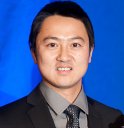
 Rui Zhang
· 1 previous affiliation
- University of MinnesotaSince 2024
- Full Professor · Since 2024
24 other authors named Rui Zhang: Rui Zhang (Huazhong University of Science and Technology · Tsinghua University · 577 papers), Rui Zhang (Chinese Academy of Sciences · 96 papers), Rui Zhang (Pennsylvania State University · 51 papers), Rui Zhang (37 papers), Rui Zhang (30 papers), and 19 more
Research Overview
Rui Zhang focuses on the development of natural language processing methods and predictive models to analyze biomedical big data, including electronic health records and published literature. His trajectory spans clinical concept extraction, pharmacovigilance, and the cross-institutional adaptation of specialized language models. Recently, his work addresses federated learning for healthcare applications and the structural integration of knowledge graphs with large language models.
Research Trajectory
Early in his trajectory, Zhang explored the application of machine learning and transfer learning to diverse healthcare data modalities. This included early work on medical imaging, such as Identifying Cardiomegaly in ChestX-ray8 Using Transfer Learning (2019). He subsequently applied natural language processing to public health monitoring on social media in Exploring Eating Disorder Topics on Twitter: Machine Learning Approach (2020). By utilizing a CNN-LSTM pipeline and Correlation Explanation (CorEx) topic modeling, this research filtered platform noise to identify authentic discussions by laypeople, uncovering distinct themes ranging from diagnostic ambivalence to recovery. This methodology contributed to the broader research area of Expert Annotation for Specialized Machine Learning.
Between 2021 and 2022, Zhang's focus shifted heavily toward extracting structured insights from unstructured clinical narratives and Electronic Health Records (EHRs). He developed deep learning pipelines for pharmacovigilance, demonstrated in Deep learning approaches for extracting adverse events and indications of dietary supplements from clinical text (2021). Concurrently, he advanced clinical risk prediction by utilizing real-world EHR data to estimate the risk of heart conditions following breast cancer treatments. His study, Predicting Cancer Treatments Induced Cardiotoxicity of Breast Cancer Patients (2022), highlighted the elevated risks of heart failure associated with chemotherapy and targeted therapies compared to radiation. This work advanced methodologies in the research directions of Predicting Rare Events under Extreme Class Imbalance and Internal Model Validation via Bootstrap Resampling.
A major milestone during this period was the introduction of domain-specific language models tailored for oncology. He presented CancerBERT: a cancer domain-specific language model for extracting breast cancer phenotypes from electronic health records (2022), demonstrating that pre-training on a cancer-specific corpus with a custom vocabulary significantly outperformed general-purpose models in clinical decision support tasks. Alongside these core NLP advancements, he investigated demographic factors in disease progression in Racial Disparities in Alzheimer's Disease and Alzheimer's Disease-Related Dementias from the Disease Progression Perspective (2022) and participated in the development of remote patient monitoring tools in Semi-automated Clinical Content Curation of COVID-19 Chatbot Remote Patient Monitoring Solution (2022).
Building on the success of specialized models like CancerBERT, Zhang's research in 2023 and 2024 addressed the challenge of deploying clinical AI across different hospital systems. In A Cross-institutional Evaluation on Breast Cancer Phenotyping NLP Algorithms on Electronic Health Records (2023), he investigated how well transformer-based models generalize across institutions with varying clinical documentation styles. The finding that CancerBERT could be effectively ported with minimal fine-tuning contributed significantly to the research directions of Cross-Institutional Adaptation of Clinical Deep Learning Models and Cross-Institutional Portability of Clinical Language Models. He expanded on multi-site challenges by formalizing evaluation frameworks in A taxonomy for advancing systematic error analysis in multi-site electronic health record-based clinical concept extraction (2024). During this time, he also continued his epidemiological modeling with Multi-modality risk prediction of cardiovascular diseases for breast cancer cohort in the All of Us Research Program (2024).
To address the data privacy constraints inherent in multi-institutional healthcare research, Zhang explored decentralized training paradigms. An in-depth evaluation of federated learning on biomedical natural language processing for information extraction (2024) demonstrated that federated learning models could match or surpass centralized training performance for biomedical NLP tasks without compromising patient data privacy. He also surveyed broader methodological advances in the field, co-authoring A review of reinforcement learning for natural language processing and applications in healthcare (2024).
Most recently, in 2025, Zhang's work has integrated large language models (LLMs) with structured knowledge representations while simultaneously assessing their security vulnerabilities. He introduced DrKGC: Dynamic Subgraph Retrieval-Augmented LLMs for Knowledge Graph Completion across General and Biomedical Domains (2025), a framework that utilizes dynamic, rule-guided subgraph retrieval and a GCN-based adapter to inject structural embeddings directly into LLM prompts, improving complex biomedical inference. Concurrently, he collaborated on identifying critical security flaws in retrieval-augmented generation (RAG) systems. On the Vulnerability of Applying Retrieval-Augmented Generation within Knowledge-Intensive Application Domains (2025) revealed how attackers could exploit orthogonal augmentation to inject poisoned documents, proposing a regularized Mahalanobis distance defense. This security-focused research intersects with the broader area of The Universal Topology of Adversarial Embedding Attacks.
Current Directions
Recent work investigates the intersection of large language models, structured knowledge representation, and system security in biomedical contexts. A primary focus is enhancing the reasoning capabilities of generative AI by grounding models in domain-specific knowledge graphs, utilizing dynamic subgraph retrieval to improve complex biomedical inference and knowledge graph completion. Concurrently, research addresses the vulnerabilities of retrieval-augmented generation (RAG) systems in high-stakes domains like medicine, developing mathematical defenses against adversarial knowledge poisoning and data leaks. Another ongoing theme is the deployment of privacy-preserving, decentralized machine learning—specifically federated learning—to enable robust clinical concept extraction across multiple healthcare institutions without compromising sensitive patient data.
Profile updated
Loading new papers…
Other researchers whose papers cluster into the same research directions — a proxy for overlapping technical interests and shared intellectual neighborhoods.
See something wrong? Report a mistake