

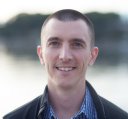
 Timothy A. Miller
· 3 previous affiliations
- Harvard UniversitySince 2011
- Associate Professor · Since 2023
- Assistant Professor · 2019–2023
- Instructor · 2014–2019
- Postdoc · 2011–2014
- University of Wisconsin–Madison2010–2011
- Research professor · 2010–2011
- University of Minnesota2003–2010
- PhD student · 2003–2010
Research Overview
Timothy A. Miller focuses on clinical natural language processing, temporal information extraction, and the application of large language models to healthcare data. His trajectory spans early work on clinical temporal annotation to privacy-preserving federated learning architectures for medical phenotyping. Most recently, his research investigates the grounding, reliability, and deployment considerations of large language models in clinical environments.
Research Trajectory
Miller’s early research concentrated on extracting structured temporal data from unstructured clinical narratives. He developed systems for Discovering Temporal Narrative Containers in Clinical Text, which aimed to map the chronological sequence of patient events. He contributed to broader community efforts in Temporal Annotation in the Clinical Domain, notably working on the THYME corpus and adapting ISO-TimeML guidelines to reflect the heavily inference-based reasoning required in medical texts. This period also included collaborative work on Discovering body site and severity modifiers in clinical texts and the design of methods for Extracting Time Expressions from Clinical Text. Together, this body of work advanced the broader research area of Temporal Anchoring for Clinical Information Extraction.
As clinical NLP systems matured, Miller shifted toward addressing their generalizability across different hospital systems and datasets. He led investigations into Unsupervised Domain Adaptation for Clinical Negation Detection, exploring how algorithms perform when moved to unseen target domains and noting the significant performance drops that occur in cross-domain experiments. This focus contributed to the research direction of Cross-Institutional Portability of Clinical Language Models. He later revisited this problem during the transition to transformer architectures, directing research on Does BERT need domain adaptation for clinical negation detection?. Concurrently, he participated in cognitive modeling research within the area of Parsing with Bounded Working Memory. This included contributions to Unsupervised Grammar Induction with Depth-bounded PCFG and Depth-Bounded Statistical PCFG Induction as a Model of Human Grammar Acquisition, which explored how working memory constraints might explain the differences between child and adult grammar acquisition by imposing depth bounds on probabilistic context-free grammars.
To address the privacy and data-sharing bottlenecks inherent in healthcare AI, Miller guided the development of distributed machine learning architectures. He oversaw work on Two-stage Federated Phenotyping and Patient Representation Learning, which enabled accurate patient phenotyping without requiring direct data sharing between institutions. This advanced the broader area of Decentralized Model Training via Federated Learning. He expanded on this framework with Confederated learning in healthcare: Training machine learning models using disconnected data separated by individual, data type and identity for Large-Scale health system Intelligence, proposing a method to train models on highly fragmented data separated by patient identity and data type. During this period, he also directed applied clinical NLP studies, such as Classifying unstructured electronic consult messages to understand primary care physician specialty information needs.
In recent years, Miller has returned to temporal extraction with modern architectures while simultaneously addressing the foundational challenges of deploying large language models (LLMs) in medicine. He introduced End-to-end clinical temporal information extraction with multi-head attention, utilizing transformer encoders to improve performance on the THYME corpus, aligning with the research direction of Transforming Unstructured Clinical Text into Structured Data. Addressing the practicalities of LLM deployment, he provided an economic and technical framework in Considerations for health care institutions training large language models on electronic health records, advocating for the continued pre-training of open-source models over the prohibitive cost of training from scratch.
His work has increasingly critically evaluated LLM capabilities in medical diagnostics. He co-authored a Position Paper On Diagnostic Uncertainty Estimation from Large Language Models: Next-Word Probability Is Not Pre-test Probability, demonstrating that simple next-word prediction methods are unreliable for estimating disease probabilities. He also collaborated on When Raw Data Prevails: Are Large Language Model Embeddings Effective in Numerical Data Representation for Medical Machine Learning Applications?, which examined how LLM vector representations compare to raw numerical electronic health record data when used as inputs for traditional machine learning algorithms. Most recently, he guided the development of the LCD benchmark: long clinical document benchmark on mortality prediction for language models, providing a standardized evaluation tool for models processing extensive patient histories.
Current Directions
Recent work investigates the reliability, evaluation, and practical integration of large language models in clinical settings, contributing to the broader research area of Grounding Large Language Models for Clinical Reliability. The most recent papers in the evidence address the limitations of LLMs in handling specific medical data types, such as numerical electronic health record features, and scrutinize their capacity for probabilistic reasoning in diagnostics. A major ongoing theme is the establishment of robust evaluation frameworks, including the development of benchmarks for processing long clinical documents to predict patient outcomes like mortality. This focus ensures that generative models are rigorously tested against the strict safety, accuracy, and economic requirements of healthcare applications before clinical deployment.
Profile updated
Loading new papers…
Other researchers whose papers cluster into the same research directions — a proxy for overlapping technical interests and shared intellectual neighborhoods.
See something wrong? Report a mistake