

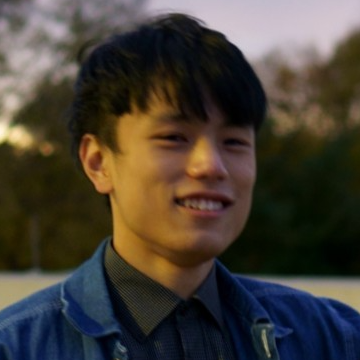
 Renming Liu
· 2 previous affiliations
- Carnegie Mellon UniversitySince 2024
- Postdoc · Since 2024
- Michigan State University2014–2024
- PhD student · 2019–2024
- Undergrad student · 2014–2018
Research Overview
Renming Liu focuses on graph representation learning, foundational graph encoders, and the application of deep learning to single-cell genomics. His work emphasizes the development of robust benchmarking taxonomies for Graph Neural Networks (GNNs) and the creation of universal structural representations that transfer across diverse graph domains. Recently, his research has expanded to include generative modeling techniques, specifically conditional diffusion models, to address complex tasks in biological data analysis and the standardization of deep learning workflows for single-cell transcriptomics.
Research Trajectory
Liu’s early research, beginning around 2021, was primarily concerned with the fundamental properties of graph algorithms and the evaluation of graph-structured data. During this period, he addressed the limitations of existing random walk models on weighted graphs and initiated a systematic investigation into the nature of graph learning benchmarks. This work sought to move beyond simple performance metrics by developing a data-driven Automated Structural Representation Learning for Graphs taxonomy. By perturbing datasets to observe performance degradation, Liu and his collaborators identified the specific types of information—such as node features versus global topology—that different datasets require a model to capture.
By 2022, Liu’s focus shifted toward the intersection of graph machine learning and bioinformatics. He contributed to the development of standardized platforms for single-cell analysis, recognizing the need for reproducible and scalable deep learning frameworks in the biological sciences. This period marked a transition from theoretical graph analysis to the practical application of GNNs in high-dimensional biological spaces, where he participated in the creation of comprehensive benchmarking libraries.
In 2023 and 2024, Liu’s work reached a significant milestone with the development of "foundation-style" graph encoders. This research direction addresses the challenge of Learning from Pure Topology in Unattributed Graphs, where models must function without rich node features. By pre-training encoders to reconstruct multiple hand-crafted structural features, Liu developed methods for establishing Learning Universal Topological Vocabularies for Graph Transfer. This approach allows for the extraction of rich positional and structural information that transfers across disparate domains, such as from molecular chemistry to computer vision.
Concurrently, Liu has advanced the use of generative models in single-cell analysis. His recent work introduces unified frameworks that treat diverse biological tasks—including cell type annotation and perturbation prediction—as posterior distribution estimation problems. These frameworks leverage conditional diffusion models and incorporate external knowledge from Large Language Models (LLMs) and GNNs, reflecting a broader interest in Decoupling Feature Propagation from Graph Neural Network Training to improve model flexibility and performance in zero-shot or few-shot scenarios.
Current Directions
Liu’s current research is characterized by three primary pillars: foundational graph learning, generative modeling for biology, and the systematization of machine learning workflows.
In the domain of foundational graph learning, he continues to refine the Graph Positional and Structural Encoder (GPSE) framework. This work aims to replace manual feature engineering with learned latent representations that capture the "shape" of data, potentially incorporating concepts from Scaling Topological Data Analysis for Deep Learning. The goal is to create more efficient and transferable models that mitigate the computational bottlenecks associated with traditional GNN architectures.
In bioinformatics, Liu is focused on the evolution of the DANCE platform, moving toward automated and transparent workflows. This involves Scaling Graph Learning through Structural Distillation and data-driven recommendations for preprocessing, which reduces the reliance on trial-and-error in single-cell analysis. His work with diffusion models (scDiff) represents a push toward more generalizable biological AI that can integrate multi-modal data and external knowledge bases.
Representative Work
Towards a Taxonomy of Graph Learning Datasets As the lead author of this 2021 study, Liu established a principled approach to understanding GNN evaluation. The research introduced a taxonomy based on how GNN performance responds to specific data perturbations, revealing whether a dataset primarily tests a model's ability to process node features or its capacity to leverage global graph structure. This work provided a critical framework for moving beyond leaderboard rankings toward a more analytical understanding of graph representation learning.
Accurately Modeling Biased Random Walks on Weighted Graphs Using Node2vec+ In this first-author paper, Liu addressed a specific technical limitation in the popular node2vec algorithm when applied to weighted graphs. By introducing node2vec+, he provided a more accurate method for modeling biased random walks, ensuring that the structural properties of weighted networks are preserved in the resulting embeddings. This work demonstrated an early focus on the nuances of graph topology and algorithmic robustness.
Taxonomy of Benchmarks in Graph Representation Learning Expanding on his earlier taxonomy work, Liu served as the lead author on this 2022 paper which developed a "sensitivity profile" for benchmarking datasets. The study analyzed how much GNN performance changes across various graph types, offering a method to taxonomize benchmarks according to the specific structural or feature-based aspects they probe. This research is foundational for the systematic selection of datasets in GNN research.
Graph Positional and Structural Encoder In this 2024 work, Liu introduced GPSE, a foundational graph encoder designed to learn universal representations of graph topology. By pre-training on large-scale molecular data to reconstruct multiple positional and structural encodings (PSEs), the model creates a transferable feature extractor that can augment any GNN or Graph Transformer. This work represents a significant step toward universal graph models that do not require domain-specific feature engineering.
A General Single-Cell Analysis Framework via Conditional Diffusion Generative Models As the lead author, Liu proposed scDiff, a framework that unifies various single-cell computational tasks—such as imputation and cell type annotation—into a single posterior estimation problem. By utilizing conditional diffusion generative models, the framework achieves high performance in few-shot biological scenarios, demonstrating the utility of advanced generative AI in the life sciences.
DANCE: a deep learning library and benchmark platform for single-cell analysis Liu led the development of DANCE, an open-source Python library designed to standardize deep learning for single-cell analysis. The platform unifies dozens of state-of-the-art models and datasets under a consistent interface, facilitating reproducibility and accelerating the development of new graph-based methods in genomics. This work highlights his contribution to the infrastructure of the computational biology community.
Profile updated
Loading new papers…
Other researchers whose papers cluster into the same research directions — a proxy for overlapping technical interests and shared intellectual neighborhoods.
See something wrong? Report a mistake