

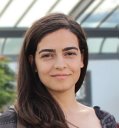
 Reihaneh Rabbany
· 5 previous affiliations
- Assistant Professor · 2018–2038
- McGill UniversitySince 2018
- Assistant Professor · 2018–2038
- Carnegie Mellon UniversitySince 2016
- Postdoctoral Fellow · Since 2016
- University of Alberta, Alberta Innovates Center for Machine Learning2008–2016
- Graduate Research Assistant · 2009–2016
- Graduate Teaching Assistant · 2008–2009
- University of Alberta2008–2016
- Doctor of Philosophy (Ph.D.), Computer Science · 2010–2016
- Master’s Degree, Computer Science · 2008–2010
Research Overview
Reihaneh Rabbany focuses on complex data analysis, graph representation learning, and the evaluation of machine learning models on temporal networks. Her trajectory spans foundational work in dynamic community mining and clustering validation to the development of robust benchmarks and efficient architectures for evolving graphs. Her current focus includes combating misinformation and deepfakes in online societies while advancing ethical frameworks for AI interventions.
Research Trajectory
Her early research explored the structural dynamics of evolving networks, beginning with community mining in dynamic social networks through Meerkat: Community Mining with Dynamic Social Networks. By 2017, her focus included foundational evaluation metrics for unsupervised learning, introducing A General Clustering Agreement Index: For Comparing Disjoint and Overlapping Clusters. This work provided a unified metric for comparing both disjoint and overlapping clusters against ground-truth benchmarks, contributing to the broader research direction of Bias Correction in Clustering Validation Metrics.
A recurring theme in her trajectory is the critical reassessment of model complexity and evaluation rigor. In 2021, she participated in research demonstrating The Surprising Performance of Simple Baselines for Misinformation Detection, which suggested that complex neural architectures often overlook straightforward signals in the data. This skepticism toward over-engineering informed her subsequent leadership in temporal graph learning. In Towards Better Evaluation for Dynamic Link Prediction, she and her collaborators identified that many edges in dynamic graphs reoccur over time. By proposing a pure memorization-based baseline called EdgeBank, this work highlighted the necessity of stringent testing, advancing the areas of The Power of Simple Heuristics in Temporal Learning and Robust Evaluation of Dynamic Link Prediction. To systematically address these evaluation gaps across the field, she spearheaded the Temporal Graph Benchmark for Machine Learning on Temporal Graphs, creating a diverse, large-scale collection of datasets with realistic evaluation protocols for dynamic node and edge prediction tasks.
Building on these benchmarks, her research expanded to address the computational bottlenecks of high-dimensional and evolving data. To handle multiway, tensor-valued data without disrupting cross-dimensional dependencies, she developed Higher Order Transformers With Kronecker-Structured Attention. This introduced a factorized attention framework that efficiently captures relationships across dimensions, contributing to the area of Learning Directly on Multidimensional Tensor Structures. Continuing this push for scalable infrastructure, she guided the development of TGM: A Modular and Efficient Library for Machine Learning on Temporal Graphs. This library unified continuous and discrete-time methods, enabling massive speedups and supporting the broader direction of Scaling Temporal Graph Neural Networks for Massive Evolving Data.
Parallel to her methodological work, she has extensively applied graph representation learning and natural language processing to analyze online societies and political discourse. In contexts lacking stable institutional data, she introduced fully unsupervised methods for ideological mapping, such as Uncovering Hidden Factions through Text-Network Representations: Unsupervised Public Opinion Mapping of Iran on Twitter in the 2022 Unrest, which utilized joint text-network embeddings to analyze online factions. Her group has also systematically investigated synthetic media and misinformation. This includes empirical analyses like Deepfakes in the 2025 Canadian Election: Prevalence, Partisanship, and Platform Dynamics, which quantified the prevalence and platform dynamics of AI-generated content, and the creation of OpenFake: An Open Dataset and Platform Toward Large-Scale Deepfake Detection, a massive adversarial arena designed to continuously evaluate detection models against state-of-the-art generators. To improve automated fact-checking, she developed TRUTH: Teaching LLMs to Rerank for Truth in Misinformation Detection, a domain-adapted reranking approach for retrieval-augmented generation systems.
Finally, her work critically examines the societal deployment of machine learning. In Ask before you Build: Rethinking AI-for-Good in Human Trafficking Interventions and the related Reframing AI-for-Good: Radical Questioning in AI for Human Trafficking Interventions, she introduced the Radical Questioning framework. This pre-design tool challenges techno-solutionist assumptions, urging researchers to interrogate the social legitimacy and potential harms of AI interventions before development begins, ensuring projects pivot toward survivor-centered empowerment.
Her more recent work advances both multi-task capabilities on dynamic networks and the behavioral validation of language model agents. To enable transferable multi-task learning across evolving networks, Rabbany contributed to Hydra: Towards Transferable Multi-Task Learning on Temporal Graphs, an architecture combining local temporal GNN representations with spectral global connectivity modules to predict graph properties under a joint objective. In agent-based simulation, Rabbany co-developed A Framework for Context Enrichment and Selective Robustness in LLM Social Agents, introducing controlled context enrichment rules and selective robustness criteria to evaluate and stabilize language model behavior under prompt variations.
Current Directions
The most recent papers in the evidence indicate a dual focus on scaling temporal graph infrastructure and addressing the proliferation of synthetic media in online ecosystems. Methodologically, her group is advancing unified, highly efficient software libraries for temporal graph modeling and designing higher-order transformer architectures capable of natively processing tensor-valued data. In applied domains, current work investigates the detection and mitigation of misinformation, the robustness of language model agents in social simulations, and multi-task transfer learning on temporal graphs. Additionally, her research continues to emphasize the ethical dimensions of AI deployment, advocating for survivor-centered and participatory frameworks in social impact projects.
Profile updated
Loading new papers…
Other researchers whose papers cluster into the same research directions — a proxy for overlapping technical interests and shared intellectual neighborhoods.
See something wrong? Report a mistake