

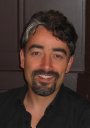
 Osmar Zaiane
· 5 previous affiliations
- University of AlbertaSince 1999
- Full Professor · Since 1999
- Professor · 2009–2010
- McCalla Professor · 2008–2009
- Scientific Director · 2009–2020
- Scientific Director · 2009–2017
- Scientific Director · 2009–2016
- IEEE DSAA2016
- General Chair · 2016
- Simon Fraser University1993–1999
- PhD, Computing Science · 1993–1999
- Université Laval1990–1992
- MSc, Computer Science · 1990–1992
Research Overview
Osmar Zaiane focuses on data mining, machine learning, and natural language processing, with contributions ranging from early knowledge discovery systems to recent advances in generative AI and multi-agent architectures. The trajectory spans foundational work in relational database mining and community detection to contemporary research in text style transfer, medical image segmentation, and hierarchical memory for language agents.
Research Trajectory
The early trajectory begins in the mid-1990s with foundational work in data mining and knowledge discovery. Resource and Knowledge Discovery in Global Information Systems: A Preliminary Design and Experiment (1995) proposed a multiple layered database approach to extract and transform information from the internet. This was followed by the development of DBMiner: A System for Mining Knowledge in Large Relational Databases (1996), an interactive environment implementing functions such as generalization, association, and classification for large-scale relational data.
Subsequent research expanded into network analysis and community discovery. Meerkat: Community Mining with Dynamic Social Networks (2010) explored structures in evolving social graphs. This line of inquiry advanced the research direction of Overlapping Community Detection in Complex Networks, notably through Generalization of clustering agreements and distances for overlapping clusters and network communities (2015), which addressed the evaluation of clustering algorithms when data points belong to multiple groups.
By the 2020s, the focus broadened to encompass complex classification problems and deep learning architectures. Framework for extreme imbalance classification: SWIM - sampling with the majority class (2020) introduced a method to handle severe class imbalance by leveraging the majority class to guide the sampling process. In computer vision, UCTransNet: Rethinking the Skip Connections in U-Net from a Channel-Wise Perspective with Transformer (2022) proposed a novel semantic segmentation framework that improved upon traditional U-Net architectures using channel-wise attention mechanisms. Concurrently, work in natural language processing addressed the area of Overcoming the Multimodality Problem in Parallel Generation with Non-autoregressive Translation with Layer-Wise Prediction and Deep Supervision (2022), bridging the performance gap between fast non-autoregressive models and high-quality autoregressive translation systems.
In 2024, the research output demonstrated a strong emphasis on natural language processing, particularly text style transfer and large language models (LLMs). SETTP: Style Extraction and Tunable Inference via Dual-Level Transferable Prompt Learning and Reusing Transferable Weight Increments for Low-resource Style Generation presented innovative frameworks for teaching models new text styles using minimal training data. Machine translation quality was further explored in OTTAWA: Optimal TransporT Adaptive Word Aligner for Hallucination and Omission Translation Errors Detection (2024), which utilized optimal transport to identify translation errors without requiring access to internal model states. The application of LLMs extended to robotics with Adaptive Iterative Feedback Prompting for Obstacle-Aware Path Planning via LLMs (2024), enhancing autonomous navigation in dynamic environments. Additional 2024 contributions included Uncovering Flat and Hierarchical Topics by Community Discovery on Word Co-occurrence Network, which applied community mining techniques to topic modeling, and BrainDAS: Structure-aware domain adaptation network for multi-site brain network analysis, advancing medical image analysis.
The most recent work investigates advanced agent architectures, meta-learning, and robust machine learning systems. A Study of the Efficacy of Generative Flow Networks for Robotics and Machine Fault-Adaptation (2025) explored the use of Continuous Flow Networks for rapid hardware fault adaptation. A Task-Level Explanation Framework for Meta-Learning Algorithms (2025) introduced TLXML to quantify how past training tasks influence future predictions in meta-learning. In 2026, Why Solve It Twice? Hierarchical Accumulation of Skills for Transfer-Efficient ML Engineering presented a hierarchical multi-agent system to optimize machine learning engineering tasks. Medical imaging research continued with Style Content Decomposition-based Data Augmentation for Domain Generalizable Medical Image Segmentation (2026), improving model generalization across unseen domains. Finally, Toward a Theory of Hierarchical Memory for Language Agents (2026) proposed a unifying theoretical framework for memory systems in language agents, establishing a common language for analyzing retrieval strategies.
Current Directions
Recent work investigates the architecture and capabilities of autonomous agents and advanced machine learning systems. A primary focus is the development of hierarchical memory structures for language agents, aiming to optimize retrieval strategies and improve long-horizon reasoning. Concurrently, research explores multi-agent systems designed to accumulate and transfer skills efficiently, reducing computational overhead in complex engineering tasks. Additionally, ongoing efforts address the interpretability of meta-learning algorithms through task-level explanation frameworks and investigate the application of generative flow networks for robust fault adaptation in robotics.
Profile updated
Loading new papers…
Other researchers whose papers cluster into the same research directions — a proxy for overlapping technical interests and shared intellectual neighborhoods.
See something wrong? Report a mistake