

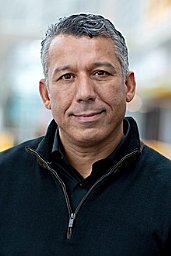
 Raouf Boutaba
· 6 previous affiliations
- University of WaterlooSince 1999
- Full Professor · Since 1999
- Fellow · Since 2012
- Distinguished Visiting Professor · 2009–2013
- University of Toronto1998–1999
- Visiting Assistant Professor · 1998–1999
- Director · 1995–1997
- Université Pierre-et-Marie-Curie1989–1994
- Ph.D., Computer Science · 1989–1994
Research Overview
Raouf Boutaba focuses on the management of networks, systems, and services, with an emphasis on resource allocation in wired and wireless infrastructures. His trajectory spans foundational work in network virtualization and software-defined networking to recent advances in 5G network slicing and closed-loop automation. Currently, he investigates machine learning applications for network telemetry, cybersecurity, and dynamic resource orchestration in next-generation telecommunication networks.
Research Trajectory
Boutaba’s early research established foundational approaches to network management and virtualization. In the 1990s, he explored policy-based frameworks for high-speed multi-networks in Towards Integrated Network Management : A Domain/policy Approach And Its Application To A High Speed Multi-network. As network virtualization gained prominence as a core mechanism for future Internet architectures, he addressed the fundamental challenge of resource allocation in Virtual Network Embedding with Coordinated Node and Link Mapping. He subsequently provided a comprehensive overview of the field's evolution and open challenges in A survey of network virtualization.
Moving into the era of software-defined networking, his work expanded into the area of Softwarization and Disaggregation of Network Infrastructure. He detailed the state of the art and emerging research problems for virtualized environments in Network Function Virtualization: State-of-the-Art and Research Challenges. Recognizing the growing intersection of artificial intelligence and network operations, he synthesized developments across the field in A comprehensive survey on machine learning for networking: evolution, applications and research opportunities. During this period, he also contributed to the research direction of Hardware-Software Co-design for High-Performance Resource Disaggregation by developing A Disaggregated Packet Processing Architecture for Network Function Virtualization, which aimed to improve the efficiency of packet processing in virtualized network functions.
More recently, Boutaba and his collaborators have investigated online optimization and resource allocation under uncertainty. In Static Pricing for Online Selection Problem and its Variants, his group demonstrated that randomized static pricing strategies can match the performance of dynamic algorithms for adversarial online selection, ensuring fairness without sacrificing competitive performance. He further explored decision-making frameworks in Online Algorithms with Uncertainty-Quantified Predictions, leveraging machine learning predictions equipped with uncertainty quantification to improve online algorithm design. Continuing this thread, he participated in analyzing pricing mechanisms that balance dynamic adjustments with operational stability in Posted Pricing for Online Selection: Limited Price Changes and Risk Sensitivity.
A major focus of his recent trajectory involves 5G network slicing and closed-loop automation. Addressing the need for high-resolution visibility in programmable data planes, his lab developed Rethinking Telemetry Design for Fine-Grained Anomaly Detection in 5G User Planes to monitor Service Level Agreements (SLAs) in real-time. This telemetry research extends into the broader area of Dynamic Network Slicing for Incompatible Service Requirements with the introduction of SliceScope in Dynamic SLA-aware Network Slice Monitoring. SliceScope operates as an optimization-driven framework that dynamically allocates telemetry resources based on specific SLAs, improving monitoring accuracy for critical slices while adhering to strict telemetry budgets. To achieve automated management, he presented a 3GPP-compliant implementation for real-time threat mitigation in Towards NWDAF-enabled Analytics and Closed-Loop Automation in 5G Networks. Furthermore, contributing to the research direction of Mapping Virtual Networks to Physical Infrastructure, his group designed 5Guard: Isolation-aware End-to-End Slicing of 5G Networks, an ensemble optimization framework that secures multi-tenant virtualized infrastructure while meeting strict real-time deadlines.
Security and fault management in high-speed networks represent another critical pillar of his current work. In the area of Early Flow Classification, his team introduced RAID: In-Network RA Signaling Storm Detection for 5G Open RAN, embedding machine learning directly into P4-programmable switches to block malicious connection requests at microsecond speeds. He also introduced a highly efficient cryptographic protocol in Over-Threshold Multiparty Private Set Intersection for Collaborative Network Intrusion Detection, enabling institutions to identify shared cyber threats without exposing raw network logs and achieving substantial performance improvements over previous methods. Looking toward future network reliability, his most recent work includes Active Learning for Transformer-Based Fault Diagnosis in 5G and Beyond Mobile Networks, applying advanced sequence models to identify and diagnose network failures.
Current Directions
The most recent papers in the evidence address the operational, analytical, and security challenges of 5G and beyond mobile networks. Recent work investigates closed-loop network automation, utilizing in-band network telemetry and standardized analytics functions to dynamically monitor Service Level Agreements and manage network slices. Another primary focus is the integration of machine learning directly into programmable network hardware to achieve line-rate security, such as detecting signaling storms in Open RAN architectures. Additionally, current research explores privacy-preserving cryptographic protocols for collaborative intrusion detection and the application of transformer-based models for automated fault diagnosis in next-generation telecommunication infrastructures.
Profile updated
Loading new papers…
Other researchers whose papers cluster into the same research directions — a proxy for overlapping technical interests and shared intellectual neighborhoods.
See something wrong? Report a mistake