

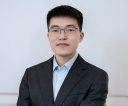
 Qi Sun
· 6 previous affiliations
- Zhejiang UniversitySince 2023
- Assistant Professor · Since 2023
- Cornell University2022–2023
- Postdoctoral Associate · 2022–2023
- Cornell Tech2022–2023
- Postdoc · 2022–2023
- Chinese University of Hong Kong2018–2022
- PhD student · 2018–2022
- SmartMore 思谋科技2020–2022
- Research Intern · 2020–2022
- Xidian University2014–2018
- Bachelor of Engineering - BE, Software Engineering · 2014–2018
8 other authors named Qi Sun: Qi Sun (New York University · Google (United States) · 58 papers), Qi Sun (Nanyang Technological University · City University of Hong Kong · 21 papers), Qi Sun (Sakana AI (Japan) · Institute of Science Tokyo · 10 papers), Qi Sun (4 papers), Qi Sun (1 paper), and 3 more
Research Overview
Qi Sun focuses on machine learning for electronic design automation, hardware-aware model deployment, and design space exploration. His trajectory spans from optimizing deep neural network dataflows on hardware accelerators to developing automated tuning frameworks for microarchitecture design. Recently, his work has expanded to include physics-informed models for computational lithography and safety mechanisms for large language models.
Research Trajectory
Early in his career, he investigated the power-efficient deployment of deep neural networks (DNNs) on hardware accelerators. In 2019, he introduced Power-Driven DNN Dataflow Optimization on FPGA, proposing a framework designed to minimize power consumption during intensive data computation and transmission while maintaining overall system performance.
This focus on hardware deployment optimization continued as he addressed the massive design spaces and time-consuming on-chip tests associated with mapping complex models to hardware. To navigate these challenges, he developed Deep Neural Network Hardware Deployment Optimization via Advanced Active Learning (2021), an automated framework for optimizing hardware configurations. Concurrently, he explored transfer learning techniques to accelerate the deployment process, presenting Fast and Efficient DNN Deployment via Deep Gaussian Transfer Learning (2021). This work utilized deep Gaussian processes to capture empirical deployment knowledge and transfer it to new tasks via maximum-a-posteriori tuning.
His research also extended to microarchitecture design space exploration and computer vision acceleration. He contributed to BOOM-Explorer: RISC-V BOOM Microarchitecture Design Space Exploration Framework (2021), an automated system that balances power and performance for the RISC-V Berkeley Out-of-Order Machine using microarchitecture-aware active learning. In the domain of vision models, he advanced the research direction of Efficient Super Resolution for Resource Constrained Hardware by developing A High-Performance Accelerator for Super-Resolution Processing on Embedded GPU (2021). This framework combined a LASSO-based dictionary pruning strategy with hardware-aware kernel optimization to achieve real-time super-resolution on edge devices.
Moving into 2022, his work increasingly leveraged machine learning to automate complex electronic design automation (EDA) tasks. He proposed Correlated Multi-objective Multi-fidelity Optimization for HLS Directives Design to navigate the trade-offs and diverse data fidelities inherent in high-level synthesis for FPGAs. For GPU compilation, he introduced GTuner: tuning DNN computations on GPU via graph attention network, which jointly learned computational graph structures and code features to auto-tune GPU implementations. Alongside these EDA optimizations, he investigated robust deep stereo vision, presenting Counteracting Adversarial Attacks in Autonomous Driving to mitigate the impact of noise and adversarial perturbations on real-time autonomous systems.
In recent years, his collaborative work has addressed design technology co-optimization (DTCO) and the application of large models to semiconductor manufacturing. He participated in the development of Unitho: A Unified Multi-Task Framework for Computational Lithography (2025), a Transformer-based model integrating mask generation, simulation, and rule violation detection. This was followed by LithoDreamer: A Physics-Informed World Model for Multi-Stage Computational Lithography (2026), which framed lithography as a decision-driven evolution system to predict outcomes and plan interventions. Additionally, he has contributed to research on the safety of large reasoning models, participating in SafeCompass: Dynamic Chain-of-Thought Steering via Inference-Time Safety Signals (2026) to prevent adversarial prompts from bypassing safety filters during internal reasoning steps.
Current Directions
The most recent papers in the evidence indicate a dual focus on applying advanced machine learning architectures to semiconductor manufacturing and ensuring the safety of large language models. In the domain of electronic design automation and manufacturing, recent collaborative work investigates computational lithography through the lens of unified Transformer frameworks and physics-informed world models. These approaches aim to accelerate mask generation and simulate lithography outcomes under varying manufacturing conditions. Concurrently, research addresses the alignment and safety of large reasoning models, exploring dynamic steering mechanisms to secure chain-of-thought processes against adversarial manipulation during inference.
Profile updated
Loading new papers…
Other researchers whose papers cluster into the same research directions — a proxy for overlapping technical interests and shared intellectual neighborhoods.
See something wrong? Report a mistake