

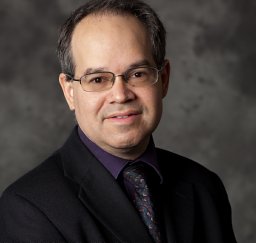
 Peter Anthony Beerel
· 5 previous affiliations
- University of Southern CaliforniaSince 1994
- Associate Chair, Graduate Programs · Since 2019
- Full Professor · Since 2017
- Associate Professor · 2000–2017
- Assistant Professor · 1994–2000
- Reduced Energy Microsystems2016–2018
- Chief Scientist · 2016–2018
- Intel (United States)2011–2015
- Chief Scientist, Technology Development · 2011–2015
- TimeLess Design Automation2008–2010
- CEO & Co-founder · 2008–2010
- Stanford University1989–1994
- PhD student · 1989–1994
Research Overview
Peter Anthony Beerel focuses on the design of energy-efficient hardware architectures, asynchronous circuits, and low-latency neuromorphic computing systems. His trajectory spans foundational contributions to speed-independent circuit synthesis to recent innovations in ultra-low-power superconducting logic and hardware-algorithm co-design for edge AI. Currently, his group investigates efficient architectures for large-scale vision and language models, alongside privacy-preserving inference and diffusion model optimization.
Research Trajectory
Beerel’s early research established foundational methods in the design and verification of asynchronous logic. In the early 1990s, he introduced methods for the Automatic gate-level synthesis of speed-independent circuits (1992). He later participated in the development of RAPPID: An Asynchronous Instruction Length Decoder (1999), demonstrating the practical viability of asynchronous techniques in complex processor components. His work extended into formal verification, including the Implicit enumeration of strongly connected components and anapplication to formal verification (2000). He continued advancing asynchronous architectures, contributing to High performance asynchronous design using single-track full-buffer standard cells (2006). A major culmination of this resilient design focus was Blade - A Timing Violation Resilient Asynchronous Template (2015), which provided a robust bundled-data template that avoids metastability and replay-based logic overheads, allowing systems to safely exploit average-case data and process variations.
In the early 2020s, his focus expanded toward hardware-algorithm co-design for machine learning, particularly in neuromorphic and edge computing. Investigating Spiking Neural Networks (SNNs), he explored Can Deep Neural Networks be Converted to Ultra Low-Latency Spiking Neural Networks? (2022), identifying that standard conversion strategies fail at ultra-low latency due to incorrect assumptions about uniform pre-activation distributions. Concurrently, he advanced the research direction of Constrained Optimization for Mixed Precision Quantization with BMPQ: Bit-Gradient Sensitivity-Driven Mixed-Precision Quantization of DNNs from Scratch (2022), utilizing integer linear programming to optimize bit-width assignments without requiring a pre-trained baseline.
By 2023, his lab increasingly targeted edge AI accelerators and efficient vision systems. He led the development of ViTA: A Vision Transformer Inference Accelerator for Edge Applications (2023), tailoring configurable hardware for resource-constrained environments. Exploring the broader area of Direct Machine Vision on Raw Sensor Data, his group proposed Enabling ISPless Low-Power Computer Vision (2023), an approach that bypasses traditional image signal processing to significantly reduce bandwidth and power consumption. Returning to SNNs, he introduced a novel training framework in HOYER REGULARIZER IS ALL YOU NEED FOR EXTREMELY SPARSE SPIKING NEURAL NETWORKS (2023) to achieve one-time-step inference with extreme activation sparsity.
In 2024, Beerel’s research diversified across superconducting logic, hybrid neural architectures, and secure inference. He pioneered new layout optimizations in the direction of Path Balancing for Gate Level Pipelined Superconducting Circuits, introducing A Novel Optimization Algorithm for Buffer and Splitter Minimization in Phase-Skipping Adiabatic Quantum-Flux-Parametron Circuits to drastically reduce area costs in ultra-low-power superconducting logic. In neuromorphic computing, his team asked Can we get the best of both Binary Neural Networks and Spiking Neural Networks for Efficient Computer Vision?, developing Sparse Binary Activation Neural Networks (BANNs) that merge the energy efficiency of SNNs with the low latency of BNNs. They also designed LMUFormer: Low Complexity Yet Powerful Spiking Model With Legendre Memory Units, merging Transformer elements with orthogonal polynomial projections for highly efficient sequence modeling. Addressing security, he developed Linearizing Models for Efficient yet Robust Private Inference, reducing computationally expensive ReLU operations while maintaining adversarial robustness. Additionally, he contributed to the area of Understanding Training Data Memorization in Generative Models through his participation in LoyalDiffusion: A Diffusion Model Guarding Against Data Replication, which redesigned internal U-Net architectures to prevent copy-paste shortcuts.
Most recently, his work tackles the scalability of foundation models and further refines superconducting circuits. He led the development of LAWCAT: Efficient Distillation from Quadratic to Linear Attention with Convolution across Tokens for Long Context Modeling (2025), a distillation framework extending effective context windows up to 22K tokens while minimizing pre-training data. He also continued his AQFP research with Optimizing Phase-Scheduling with Throughput Trade-offs in AQFP Digital Circuits (2025), formulating an integer linear program to balance phase-skipping and phase-alignment. Looking toward multimodal efficiency, he introduced RedVTP: Training-Free Acceleration of Diffusion Vision-Language Models Inference via Masked Token-Guided Visual Token Pruning (2026), accelerating inference by pruning redundant visual tokens after the initial generation step.
Current Directions
Recent work investigates the computational bottlenecks of large-scale generative models and the physical design of ultra-low-power superconducting circuits. In the domain of foundation models, the most recent papers in the evidence show Beerel's group developing training-free token pruning techniques to accelerate diffusion vision-language models, alongside distillation frameworks that convert quadratic attention mechanisms into linear-complexity architectures for long-context tasks. Concurrently, he continues to advance the physical synthesis of Adiabatic Quantum-Flux-Parametron (AQFP) digital circuits, focusing on integer linear programming formulations to optimize phase-scheduling and maximize throughput in superconducting logic.
Profile updated
Loading new papers…
Other researchers whose papers cluster into the same research directions — a proxy for overlapping technical interests and shared intellectual neighborhoods.
See something wrong? Report a mistake