

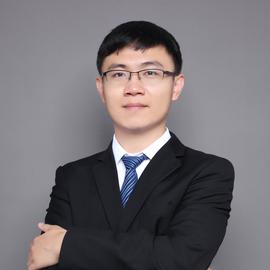
 Meng Li
· 3 previous affiliations
- Peking UniversitySince 2022
- Assistant Professor · Since 2022
- Meta (United States)2018–2022
- Researcher · 2018–2022
- The University of Texas at Austin2013–2018
- PhD · 2013–2018
10 other authors named Meng Li: Meng Li (Rice University · 304 papers), Meng Li (Hefei University of Technology · 22 papers), Meng Li (5 papers), Meng Li (Renmin University of China · 4 papers), Meng Li (Uber AI (United States) · 2 papers), and 5 more
Research Overview
Meng Li focuses on efficient artificial intelligence algorithms, hardware-algorithm co-design, and privacy-preserving machine learning. His research trajectory spans from early work in hardware security and neural architecture search to the development of secure, multi-modal AI acceleration frameworks. Currently, his group investigates scalable inference techniques for large language models and diffusion architectures, emphasizing cryptographic protocols and test-time compute optimization.
Research Trajectory
Meng Li’s early research addressed hardware security and the protection of intellectual property in integrated circuits. He introduced a quantitative security criterion for layout-level IC camouflaging to counter reverse engineering attacks in Provably secure camouflaging strategy for IC protection. Expanding into secure computation, he developed PrivyNet: A Flexible Framework for Privacy-Preserving Deep Neural Network Training with A Fine-Grained Privacy Control, which splits neural networks between local platforms and the cloud to protect data privacy. He also collaborated on foundational challenges in distributed training, analyzing weight divergence and proposing data-sharing strategies in Federated Learning with Non-IID Data.
Transitioning toward efficient AI for edge devices, he proposed an energy-aware network growth algorithm in Energy-Aware Neural Architecture Optimization with Fast Splitting Steepest Descent, which frames neuron selection as a resource-constrained knapsack problem to deliver low-FLOP networks. He also explored hardware-algorithm co-design in the area of Computing at the Data Source with In-Memory Architectures, addressing memory bottlenecks in recommendation systems with RecNMP: Accelerating Personalized Recommendation with Near-Memory Processing. In collaborative work on training efficiency, he helped introduce a cyclic precision approach in CPT: Efficient Deep Neural Network Training via Cyclic Precision, dynamically varying precision along the training trajectory. His contributions to the research direction of One Shot Neural Architecture Search with Weight Sharing include AttentiveNAS: Improving Neural Architecture Search via Attentive Sampling, which improves search efficiency by focusing sampling on the performance Pareto front rather than relying on uniform distributions.
Returning to privacy with a focus on modern architectures, his work shifted to the direction of Communication Efficient Protocols for Private Machine Learning Inference. He developed MPCViT: Searching for Accurate and Efficient MPC-Friendly Vision Transformer with Heterogeneous Attention, optimizing Vision Transformers for Secure Multi-Party Computation (MPC) through a heterogeneous attention search space. Leading a research group, he advanced the broader area of Mitigating the Computational Overhead of Encrypted Machine Learning with PrivCirNet: Efficient Private Inference via Block Circulant Transformation, which uses block circulant structures to accelerate encrypted matrix operations. He also bridged homomorphic encryption and low-precision quantization in HEQuant: Marrying Homomorphic Encryption and Quantization for Communication-Efficient Private Inference, contributing to the field of SIMD Ciphertext Packing for Homomorphic Encryption by packing multiple low-precision values into single encryption coefficients.
Extending these cryptographic techniques to large language models, his lab introduced MPCache: MPC-Friendly KV Cache Eviction for Efficient Private LLM Inference to reduce the latency and communication overhead of private LLM serving via static pruning and dynamic token selection. Similarly, his group developed CryptoMoE: Privacy-Preserving and Scalable Mixture of Experts Inference via Balanced Expert Routing, enabling secure inference for Mixture-of-Experts models through optimized routing strategies.
Beyond privacy, his recent work addresses the computational bottlenecks of generative models, including the direction of Speculative Decoding for Autoregressive Models. His lab proposed Orchestrating Dual-Boundaries: An Arithmetic Intensity Inspired Acceleration Framework for Diffusion Language Models to optimize the prefill and decoding phases of diffusion-based LLMs. They further accelerated MoE diffusion models with TEAM: Temporal–Spatial Consistency Guided Expert Activation for MoE Diffusion Language Model Acceleration, leveraging decoding consistency to reduce expert activation costs. Investigating the scaling of test-time compute, his group developed HyPER: Bridging Exploration and Exploitation for Scalable LLM Reasoning with Hypothesis Path Expansion and Reduction. Finally, exploring the internal mechanics of attention layers, his lab authored Attention Sink Forges Native MoE in Attention Layers: Sink-Aware Training to Address Head Collapse, demonstrating that the attention sink phenomenon functions as an implicit gating mechanism and proposing a sink-aware training algorithm to improve model efficiency.
Current Directions
Recent work from Meng Li's group investigates the efficiency and scalability of large language models and diffusion architectures. A major focus is optimizing Mixture-of-Experts (MoE) systems, both by designing balanced routing strategies for secure, privacy-preserving inference and by leveraging temporal-spatial consistency to reduce expert activation costs in diffusion models. Additionally, his group is exploring the scaling of test-time compute for LLM reasoning, seeking to balance path exploration and exploitation without disrupting the model's natural reasoning flow. Finally, ongoing research examines the internal mechanics of transformer attention, specifically how attention sinks can be harnessed as implicit gating mechanisms to prevent head collapse and improve overall architecture efficiency during training.
Profile updated
Loading new papers…
Other researchers whose papers cluster into the same research directions — a proxy for overlapping technical interests and shared intellectual neighborhoods.
See something wrong? Report a mistake