

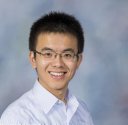
 Meng Li
· 3 previous affiliations
- Rice UniversitySince 2017
- Associate Professor · Since 2024
- Assistant Professor · 2017–2024
- Duke University2015–2017
- Postdoc · 2015–2017
- North Carolina State University2010–2015
- PhD student · 2010–2015
10 other authors named Meng Li: Meng Li (Peking University · 143 papers), Meng Li (Hefei University of Technology · 22 papers), Meng Li (5 papers), Meng Li (Renmin University of China · 4 papers), Meng Li (Uber AI (United States) · 2 papers), and 5 more
Research Overview
Meng Li focuses on Bayesian inference, high-dimensional variable selection, and functional data analysis. His recent work develops scalable probabilistic models and robust selection methods for complex data structures, including spatial images, time series, and symbolic regression. Currently, he investigates nonparametric screening techniques and covariate-dependent graph learning to improve interpretability and computational efficiency in statistical machine learning.
Research Trajectory
In 2024, Li’s research addressed the modeling of complex, structured data through flexible Bayesian frameworks. With collaborators, he explored neurophysiological data analysis in Semiparametric Latent ANOVA Model for Event-Related Potentials, providing a structured approach to variance in latent signals. Expanding into spatial data, he contributed to Bayesian Image-on-Scalar Regression with a Spatial Global-Local Spike-and-Slab Prior. This work introduced a hierarchical Gaussian process model utilizing an Inverse-Wishart process prior to manage within-image dependencies. By incorporating "participation rate" parameters, the method achieved simultaneous global selection at the covariate level and local selection at the pixel or voxel level. During the same period, he developed a unified framework for functional data in Semiparametric Bayesian Inference for Local Extrema of Functions in the Presence of Noise. This encompassing Bayesian approach identifies peaks and valleys in noisy functions even when the true number of extrema is unknown, contributing to the broader area of Scalable Bayesian Inference via Stochastic Gradient MCMC.
Li has also focused heavily on robustness and structural variable selection. In Bayesian Median Autoregression for Robust Time Series Forecasting, he and his co-authors introduced BayesMAR, a model that replaces traditional Gaussian error assumptions with a Laplace distribution. This substitution enhances robustness against outliers while maintaining an interpretable structure, aligning with efforts in the research direction of Self-Explainable Neural Networks without Performance Loss. Applying structural selection to the physical sciences, he guided the development of the Operator-Induced Structure (OIS) method in Operator-Induced Structural Variable Selection for Identifying Materials Genes. The resulting iBART algorithm iteratively constructs and selects physicochemical descriptors, offering significant improvements in computational efficiency for complex materials science problems.
In 2025, Li’s work shifted toward extreme high-dimensional challenges and probabilistic representations. He addressed the scalability limits of discovering mathematical laws in Ab Initio Nonparametric Variable Selection for Scalable Symbolic Regression with Large $p$. This paper introduced PAN+SR, a tuning-free nonparametric pre-screening framework that drastically reduces the search space, enabling standard symbolic regression algorithms to operate on datasets with hundreds of variables. This methodology advances the research direction of Robust Variable Selection through Stability and Subsampling, while also contributing to areas such as Taming the Combinatorial Explosion in Symbolic Regression and Resolving Feature Selection Instability in Correlated Data.
Further exploring probabilistic models in 2025, Li collaborated on Efficient in-situ image and video compression through probabilistic image representation. The proposed CARP framework adaptively learns optimal image representations without requiring separate training phases, situating this work within the area of Automated Regularization via Hierarchical Bayesian Inference. Continuing his methodological contributions to functional and relational data, he also formalized new inferential techniques in Inference in functional linear quantile regression and developed structured network models in Bayesian covariate-dependent graph learning with a dual group spike-and-slab prior.
Current Directions
The most recent papers in the evidence indicate an ongoing focus on scaling interpretable machine learning and Bayesian inference to high-dimensional and highly structured environments. Recent work investigates nonparametric pre-screening techniques that allow computationally intensive algorithms, such as symbolic regression, to function efficiently in large feature spaces. Additionally, Li is actively developing methods for complex dependency structures, addressing problems in functional linear quantile regression and covariate-dependent graph learning. These directions emphasize a unified approach to statistical machine learning, where robust priors and probabilistic representations are used to extract interpretable signals from noisy, high-dimensional data.
Profile updated
Loading new papers…
Other researchers whose papers cluster into the same research directions — a proxy for overlapping technical interests and shared intellectual neighborhoods.
See something wrong? Report a mistake