

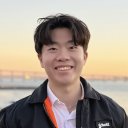
 Oswin So
6 previous affiliations
- Research Scientist Intern · 2025
- PhD student · 2024
- Master of Science - MS, Aeronautics and Astronautics · 2022–2024
- Autonomous Control and Decision Systems Laboratory2019–2022
- Undergraduate Research Assistant · 2019–2022
- Research Intern · 2022
- Georgia Institute of Technology2018–2022
- Undergrad student · 2018–2022
- Aurora2021
- Motion Planning Intern · 2021
Research Overview
Oswin So focuses on structure-exploiting algorithms for the learning and control of dynamical systems, with an emphasis on safety-critical reinforcement learning and reachability analysis. His trajectory spans robust decision-making, multi-agent coordination, and the development of control barrier functions for complex robotic systems. Recently, his work has expanded to include the optimization of discrete generative models and flow-based learning frameworks.
Research Trajectory
Early work addressed the challenge of catastrophic tail-end outcomes in robotics and control. In Adaptive CVaR Optimization for Dynamical Systems with Path Space Stochastic Search (2020), he explored the research direction of Tail Risk Optimization for Robust Decision Making by minimizing conditional value-at-risk rather than expected cost. Building on robust control frameworks, he introduced Variational Inference MPC using Tsallis Divergence (2021), which generalized variational inference in robot control by replacing the standard Kullback-Leibler divergence with the more flexible Tsallis divergence, providing a unified approach to mode selection and exploration.
Between 2022 and 2023, the focus expanded to complex trajectory optimization and multi-agent interactions. He developed Maximum Entropy Differential Dynamic Programming, formulating a method that escapes local minima through multimodal policy exploration. In collaborative work on population dynamics, he contributed to Deep Generalized Schrödinger Bridge, a numerical solver combining mean-field games with deep reinforcement learning to handle high-dimensional, non-differentiable interactions. To address uncertainty in multi-agent planning, he presented MPOGames: Efficient Multimodal Partially Observable Dynamic Games, which treats planning as a partially observable game to hedge against unknown intentions, advancing the area of Probabilistic Trajectory Forecasting for Autonomous Systems. Concurrently, he investigated safety-critical reinforcement learning in Solving Stabilize-Avoid via Epigraph Form Optimal Control using Deep Reinforcement Learning.
A major theme of his 2024 trajectory involves synthesizing safety filters and control barrier functions (CBFs) for constrained systems. In Solving Minimum-Cost Reach Avoid using Reinforcement Learning, he utilized Hamilton-Jacobi reachability and techniques in the area of State Augmentation for Cumulative Constraints to minimize energy costs while maintaining high success rates. He further addressed the research direction of Overcoming the Curse of Dimensionality in Reachability Analysis with RPCBF: Constructing Safety Filters Robust to Model Error and Disturbances via Policy Control Barrier Functions, proposing an online method to estimate robust safety margins without offline training. He also conducted a systematic comparison of optimal control techniques in Second-Order Constrained Dynamic Optimization, introducing a robust Primal-Dual Augmented Lagrangian variant of Differential Dynamic Programming. To scale safety filters to high-dimensional systems with input constraints, he developed policy neural CBFs in How to Train Your Neural Control Barrier Function: Learning Safety Filters for Complex Input-Constrained Systems.
In 2025, his research on safety guarantees scaled to distributed multi-agent systems and complex physical domains. He introduced Solving Multi-Agent Safe Optimal Control with Distributed Epigraph Form MARL, transforming zero-violation safety problems into an epigraph form to stabilize training for real-world drone swarms. This was complemented by GCBF+: A Neural Graph Control Barrier Function Framework for Distributed Safe Multiagent Control, which leverages graph neural networks to learn distributed safety certificates, contributing to the broader area of Enforcing Safety Guarantees Under Actuator Saturation. For systems with limited predictive horizons, he developed Safe Beyond the Horizon: Efficient Sampling-based MPC with Neural Control Barrier Functions, combining neural safety functions with resampling strategies for real-time collision avoidance. Beyond robotics, he collaborated on applying scientific machine learning to fusion energy in Learning plasma dynamics and robust rampdown trajectories with predict-first experiments at TCV, designing trajectories to safely shut down burning plasmas and advancing work in the direction of Regulating Turbulence and Instabilities for Stable Plasma Confinement.
Most recently, in 2026, his work has expanded into flow-based optimization and discrete generative models. He co-developed Learning-to-Optimize via Deep Unfolded Flows, a framework that treats iterative optimization as a population-based transport problem to solve complex non-convex tasks. He also introduced Discrete Adjoint Matching, extending adjoint-based fine-tuning to discrete state spaces, enabling the optimization of diffusion-based large language models for non-differentiable rewards.
Current Directions
The most recent papers in the evidence address the intersection of generative modeling, flow-based optimization, and scalable safety for multi-agent systems. Recent work investigates how continuous-time Markov chains and adjoint matching can be used to fine-tune discrete generative models, such as diffusion-based LLMs, for non-differentiable rewards in massive state spaces. Additionally, current research explores deep unfolded flows for learning iterative optimization strategies, treating non-convex optimization as a population-based transport problem to improve generalization in higher dimensions. Alongside these generative and optimization frameworks, there is a continued focus on distributed safe control, utilizing graph neural networks and epigraph-form reinforcement learning to guarantee collision-free navigation for large-scale robotic swarms.
Profile updated
Loading new papers…
Other researchers whose papers cluster into the same research directions — a proxy for overlapping technical interests and shared intellectual neighborhoods.
See something wrong? Report a mistake