

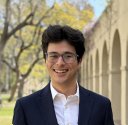
 Ryan Kazuo Cosner
· 2 previous affiliations
- Tufts UniversitySince 2026
- Assistant Professor · Since 2026
- California Institute of Technology2019–2025
- PhD student · 2019–2025
Research Overview
Ryan Kazuo Cosner focuses on the intersection of control theory, machine learning, and robotics to develop provably safe autonomous systems. His work centers on High-Order Control Barrier Functions for Safety-Critical Control (CBFs), risk-aware control frameworks, and the integration of learning-based methods with formal safety certificates. By bridging theoretical guarantees with practical deployment, he addresses challenges in state uncertainty, unknown dynamics, and human-in-the-loop systems across various robotic platforms.
Research Trajectory
Cosner’s research trajectory began with a focus on the robustness of safety-critical controllers to imperfect perception and state estimation. In 2020 and 2021, he investigated how measurement errors and "black-box" perception modules could undermine the formal guarantees provided by traditional nonlinear control methods. This period was characterized by the development of frameworks that unify robust control requirements with set-invariance properties, ensuring that robots remain safe even when their internal state estimates are erroneous.
By 2022, his work expanded into the integration of human feedback and model-free control strategies. He explored how human preferences could be used to tune the parameters of safety-critical controllers, balancing the trade-off between conservative safety and operational performance. During this time, he also contributed to the development of Safety Critical Control for High Relative Degree Systems and multi-rate control architectures, which allow high-level planners and low-level controllers to operate at different frequencies while maintaining safety constraints.
In the more recent period from 2023 to 2025, Cosner’s research has shifted toward online learning in unknown environments and stochastic safety. This evolution reflects a move away from assuming pre-existing "backup" controllers or known physical models. His recent work utilizes Gaussian Processes and probabilistic frameworks to enable robots to learn dynamics online while maintaining safety certificates. This includes the development of Automated Synthesis of Lyapunov Functions for Stability Verification and methods for achieving safety in probability for systems subject to unbounded disturbances, such as Gaussian noise.
Current Directions
Cosner’s current research continues to push the boundaries of safe autonomy in complex, real-world settings. A primary focus is the development of risk-aware safety filters that move beyond binary collision avoidance. By leveraging partial differential equations, such as Poisson and Laplace equations, he is developing methods that allow robots to navigate environments with varying levels of caution based on the specific risks associated with different obstacles.
He is also actively investigating the Control and Inversion of Non-Minimum Phase Systems, addressing the counter-intuitive behaviors of systems that initially move away from a target before proceeding toward it. This work is critical for high-performance control in complex mechanical systems. Additionally, his focus on stochastic systems has led to the formalization of "Input-to-State Stability in Probability," a framework for quantifying how stability degrades under bounded and unbounded disturbances in discrete-time systems.
Representative Work
Measurement-Robust Control Barrier Functions: Certainty in Safety with Uncertainty in State In this work, Cosner addresses the gap between theoretical safety guarantees and the practical reality of imperfect state measurements. He introduces Measurement-Robust Control Barrier Functions (MR-CBFs), which leverage backup sets and robustness requirements to synthesize control invariant sets that account for erroneous state estimates. This framework provides a rigorous method for ensuring safety in the presence of sensor noise and estimation lag.
Safety-Aware Preference-Based Learning for Safety-Critical Control This paper presents a framework for tuning safety-critical controllers using human feedback. By combining Preference-Based Learning (PBL) with CBFs, Cosner demonstrates how a system can learn optimal safety parameters from simple binary comparisons (e.g., "behavior A is better than behavior B"). Crucially, the algorithm ensures that the robot avoids unsafe actions even during the learning process, preventing the "perfectly safe but uselessly slow" behavior often found in conservative controllers.
Model-Free Safety-Critical Control for Robotic Systems Cosner contributed to this framework which enables safety-critical control without relying on high-fidelity dynamical models. The approach synthesizes safe velocities based on CBF theory and tracks them with a low-level controller. This model-free approach is application-agnostic and provides theoretical safety guarantees, making it highly deployable across different robotic platforms where complex dynamics may be difficult to model accurately.
Multi-Rate Control Design Under Input Constraints via Fixed-Time Barrier Functions This research introduces the concept of "periodic safety," requiring system trajectories to visit a subset of a safe set at regular intervals. Cosner utilizes fixed-time barrier functions within a multi-rate framework, where a high-level Model Predictive Control (MPC) planner generates reference trajectories for a low-level quadratic programming (QP) controller. This architecture ensures safety is maintained even when planning and execution occur at different timescales.
Safe Online Dynamics Learning with Initially Unknown Models and Infeasible Safety Certificates Addressing the challenge of unknown physics, Cosner developed an online learning algorithm that guarantees safety without a pre-existing backup controller. By using Gaussian Processes to model uncertainty, the system is able to explore its environment and "learn" its way back to a feasible safety certificate before reaching a dangerous state. This work significantly reduces the prior knowledge required to deploy safe autonomous systems in novel environments.
Probabilistic Control Barrier Functions: Safety in Probability for Discrete-Time Stochastic Systems In this work, Cosner moves away from binary safety definitions to address the inherent uncertainties of the real world, such as sensor noise and unpredictable wind. He introduces Probabilistic Control Barrier Functions (PrCBFs), which provide safety guarantees in terms of probability for discrete-time stochastic systems. This framework allows for the quantification of risk in environments where absolute safety is theoretically impossible due to unbounded disturbances.
Profile updated
| Paper | Venue | Year |
|---|---|---|
| Constructive Safety-Critical Control: Synthesizing Control Barrier Functions for Partially Feedback Linearizable SystemsGitHubmaxhcohen/ | IEEE Control. Syst. Lett | 2024 |
Loading new papers…
Other researchers whose papers cluster into the same research directions — a proxy for overlapping technical interests and shared intellectual neighborhoods.
See something wrong? Report a mistake