

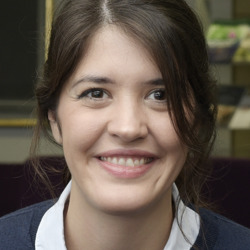
 Natalia Ares
· 1 previous affiliation
- University of OxfordSince 2021
- Assistant Professor · Since 2021
- Current
Research Overview
Natalia Ares focuses on the development of quantum technologies through the integration of experimental physics, machine learning, and quantum thermodynamics. Her research primarily addresses the engineering challenges of scaling quantum processors, with a specific emphasis on automating device control and characterization using artificial intelligence. Based at the University of Oxford, her group investigates the fundamental limits of quantum devices, including the thermodynamic costs of quantum information processing and the coupling of electronic spins to nanomechanical resonators. By combining high-speed radio-frequency measurements with advanced optimization algorithms, she seeks to bridge the gap between microscopic quantum phenomena and macroscopic control systems.
Research Trajectory
The trajectory of Ares’s work reflects a transition from the fundamental study of spin physics in semiconductors to the development of autonomous systems for quantum hardware management. During her doctoral research at CEA Grenoble, she focused on silicon-based devices for quantum computing, exploring the potential of group IV semiconductors for long-coherence qubits. This period was marked by investigations into the electronic spin degree of freedom, particularly in SiGe heterostructures. A significant early contribution involved the characterization of Tunable g-factors in SiGe quantum dots, which demonstrated the ability to manipulate hole spins—a critical step for spintronics and quantum information processing in materials with low hyperfine interaction.
Upon joining the University of Oxford in 2013, Ares expanded her research scope to include fast electrical readout techniques. She became a proponent of radio-frequency (rf) reflectometry, a method capable of measuring impedance changes at microsecond timescales. This technique is essential for studying transient effects and performing projective measurements of qubits. Her methodological contributions in this area are synthesized in her work on Probing quantum devices with radio-frequency reflectometry, which outlines the application of reflectometry to Majorana devices, spin qubits, and mechanical resonators.
In the late 2010s, Ares’s research underwent a significant shift toward the application of machine learning for device automation. As quantum dot architectures increased in complexity, manual tuning became a bottleneck. Her group began developing algorithms to automate the navigation of high-dimensional parameter spaces. This work involved Training on Synthetic Signals in Real Sensor Noise, allowing deep learning models to identify quantum device states despite the inherent noise of experimental hardware. By 2020, her focus matured into the use of Bayesian Optimization with Robust Expert Priors to efficiently locate stable operating regimes in quantum circuits.
More recently, Ares has integrated quantum thermodynamics into her experimental program. This research direction examines the energetic and entropic costs of quantum operations. Her group has pioneered the study of quantum clocks, using charge sensors to monitor tunneling events and quantify the relationship between precision and dissipation. Concurrently, she has advanced the field of nanomechanics, specifically investigating how electron tunneling can drive and stabilize oscillations in carbon nanotubes, creating a "quantum bridge" between electronic and mechanical degrees of freedom.
Current Directions
Ares’s current research is organized around three primary pillars: autonomous quantum control, quantum thermodynamics, and spin-mechanical interfaces.
In the domain of autonomous control, her group is focused on Mitigating Temporal Drift in Noisy Quantum Processors. Recognizing that quantum hardware is subject to environmental fluctuations over time, she is developing real-time compensation strategies that use machine learning to maintain device stability without human intervention. This includes the use of "virtual gates" to cancel electrical cross-talk in large-scale quantum dot arrays, ensuring that high-sensitivity readout remains consistent across wide voltage ranges.
Her work in quantum thermodynamics explores the fundamental limits of measurement and timing. By treating quantum dots as microscopic clockworks, her group investigates the entropic costs associated with extracting classical information from quantum systems. This research is critical for understanding the heat loads that future quantum processors will generate and for designing more efficient quantum thermal machines.
Finally, Ares is pursuing the realization of coherent interfaces between single spins and mechanical motion. By coupling the spin of an electron to the vibrations of a carbon nanotube, her group aims to create new platforms for quantum sensing and information storage. This interdisciplinary effort combines her expertise in carbon nanotube fabrication, spin physics, and high-speed rf readout. Additionally, she participates in broader machine learning research, such as the development of physics-inspired optimizers like VRAdam, which apply principles of kinetic energy and damping to stabilize the training of deep learning models.
Representative Work
The following papers represent key milestones in Ares’s research, illustrating her contributions to spin physics, automated device control, and quantum thermodynamics.
In Tunable g-factors in SiGe quantum dots, Ares and her collaborators reported the first realization of single-hole quantum dots in SiGe. The study demonstrated that the g-factor of these holes could be tuned using external gate voltages, providing a mechanism for selective spin manipulation. This work was foundational for the development of SiGe-based spintronics, highlighting the material's advantages for long-coherence quantum information processing due to the absence of hyperfine interactions in isotopically purified samples.
Ares’s leadership in the automation of quantum hardware is exemplified by Automated long-range compensation of an rf quantum dot sensor. In this senior-author paper, her group developed an algorithm using Bayesian optimization to maintain the sensitivity of a charge sensor while sweeping the voltages of a nearby quantum device. By effectively compensating for electrical cross-talk over a massive 1V x 1V window, this work addressed a major hurdle in the scalability of quantum dot architectures, where the operation of one qubit typically disrupts the readout of its neighbors.
In the field of nanomechanics, Ares served as the senior author for Stability of long-sustained oscillations induced by electron tunneling. This research characterized robust self-oscillations in carbon nanotube quantum dots, where the act of electrons tunneling through the circuit drives mechanical motion. The study revealed a bistable regime where the device could spontaneously switch between stationary and vibrating states, with oscillations persisting for over $10^8$ periods. This discovery provided deep insights into the separation of timescales in electromechanical systems.
The pursuit of a "quantum bridge" is further detailed in Coupling a single spin to the motion of a carbon nanotube. As senior author, Ares led the effort to link an electron spin to the high-frequency vibrations of a mechanical resonator. This coupling is theoretically predicted to allow for the storage of quantum information in mechanical states or the connection of distant qubits. The paper details the experimental challenges of building such an interface and represents a significant step toward hybrid quantum systems.
In Entropic Costs of Extracting Classical Ticks from a Quantum Clock, Ares explored the intersection of quantum information and thermodynamics. Her group realized a quantum clock using a double quantum dot and quantified the thermodynamic cost of its precision. The experiment was the first to probe the interplay between the entropy produced by a microscopic clockwork and the macroscopic measurement apparatus used to record its "ticks." The findings showed that the measurement process itself contributes significantly to the total entropic cost, a result with profound implications for the design of autonomous quantum devices.
Finally, Probing quantum devices with radio-frequency reflectometry serves as a comprehensive review of the fast readout techniques that underpin much of Ares’s experimental work. The paper discusses the utility of reflectometry for measuring resistive and reactive impedance changes at sub-microsecond scales. By detailing applications ranging from qubit projective measurements to the real-time monitoring of mechanical motion, this work establishes the methodological framework necessary for the next generation of high-speed quantum experiments.
Profile updated
| Paper | Venue | Year |
|---|---|---|
| Looping in the Human: Collaborative and Explainable Bayesian OptimizationGitHubma921/ | arXiv | 2023 |
Loading new papers…
Other researchers whose papers cluster into the same research directions — a proxy for overlapping technical interests and shared intellectual neighborhoods.
See something wrong? Report a mistake