

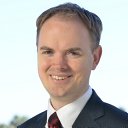
 Mykel Kochenderfer
· 4 previous affiliations
- MIT Lincoln LaboratorySince 2006
- Consultant · Since 2013
- Technical Staff · 2006–2013
- Stanford UniversitySince 2013
- Senior Fellow · Since 2025
- Associate Professor · Since 2020
- Director · Since 2013
- Assistant Professor · 2013–2020
- M.S., Computer Science · 2001–2003
- Researcher · 2006–2013
- University of Edinburgh2003–2006
- Ph.D., Informatics · 2003–2006
Research Overview
Mykel Kochenderfer focuses on robust decision-making systems, probabilistic planning, and autonomous navigation in dynamic environments. His early work established foundational methods for solving complex partially observable Markov decision processes and ensuring safe aircraft collision avoidance. Currently, his research investigates scalable reinforcement learning, human-centered autonomous driving, and the evaluation of reasoning capabilities in large language models.
Research Trajectory
The trajectory of Mykel Kochenderfer’s research begins with foundational work in autonomous decision-making under uncertainty. In 2005, he introduced methods for dynamic state and action space partitioning in Adaptive Modeling and Planning for Reactive Agents, enabling agents to learn optimal policies in real-time within continuous environments. This interest in robust, real-time control naturally extended to aviation safety. In Optimized and Trusted Collision Avoidance for Unmanned Aerial Vehicles using Approximate Dynamic Programming (Technical Report) (2016), he developed a hybrid approach that tuned rule-based resolution logic using approximate dynamic programming, balancing the efficiency of machine learning with the strict certification requirements of aerospace systems.
A major theme in his subsequent work is the advancement of solvers for Partially Observable Markov Decision Processes (POMDPs). Addressing the challenge of continuous observation spaces, he developed POMCPOW: An online algorithm for POMDPs with continuous state, action, and observation spaces (2017). This work utilized double progressive widening and weighted particle filtering to prevent belief collapse, making significant contributions to the research direction of Progressive Widening for Search in Continuous Action Spaces. To make these advanced techniques more accessible to the broader research community, he also introduced POMDPs.jl: A Framework for Sequential Decision Making under Uncertainty, a flexible Julia-based ecosystem for defining and solving complex sequential decision-making problems.
Around 2018, his focus expanded to include autonomous vehicle perception and human-robot interaction. In People as Sensors: Imputing Maps from Human Actions, he proposed inferring the presence of occluded obstacles by observing the braking and steering behaviors of nearby human drivers. This approach advanced the area of Reconstructing Hidden Context from Collective Agent Motion. He also participated in collaborative research on representation learning, such as sparsifying discrete latent spaces in conditional variational autoencoders to maintain multimodality for downstream planning tasks in Evidential Sparsification of Multimodal Latent Spaces in Conditional Variational Autoencoders. This work aligns with the broader area of Evidential Deep Learning for Predictive Uncertainty Quantification. Further collaborative efforts explored socially compliant robotics, demonstrating how to guide robots toward unknown goals while respecting human spatial preferences in Incorporating Human Path Preferences in Robot Navigation with Minimal Interventions (2023).
More recently, his research has investigated the active learning of system dynamics and the formalization of trust in autonomous systems. In Informative Input Design for Dynamic Mode Decomposition (2024), he integrated convex optimization with dynamic mode decomposition to actively learn the physics of complex systems using strategically designed control inputs. Building on his POMDP expertise, he developed a framework for agents to dynamically infer the reliability of external advice in Learning to Trust: Bayesian Adaptation to Varying Suggester Reliability in Sequential Decision Making (2025), allowing systems to strategically decide when to query humans or sensors. He also continued to push the boundaries of POMDP scalability with Bayesian optimized monte carlo planning (2025), which leverages Bayesian optimization to navigate large action spaces within a Monte Carlo Tree Search framework.
In the domain of autonomous driving, his 2025 work emphasizes robust policy learning and adaptation. He addressed the overfitting problem caused by fixed social agent behaviors during training in Robust Driving Policy Learning with Guided Meta Reinforcement Learning. Exploring the integration of human priors into reinforcement learning, his group evaluated human-guided Monte Carlo Tree Search against learning-from-scratch approaches in From Game-Playing to Self-Driving: Comparing AlphaGo vs AlphaZero Approaches for Driving Controls. Additionally, he introduced an approach for vehicles to rapidly adapt to novel scenarios without retraining in Experience Filter: Using Past Experiences on Unseen Tasks or Environments.
By 2026, his research trajectory broadened to address the evaluation and alignment of large-scale machine learning models. He formalized the phenomenon of "Reward Bias Substitution" in Reward Bias Substitution: Single-Axis Bias Mitigations Redirect Optimization Pressure, demonstrating how suppressing one shortcut in a reward model often forces the exploitation of another. He also led work on scaling classic dictionary learning algorithms to interpret large transformer models in DB-KSVD: Scalable Alternating Optimization for Disentangling High-Dimensional Embedding Spaces. Finally, he investigated the fundamental reasoning capabilities of large language models in Reasoning or Recall? Blind Evaluation of LLMs on Numerical Function Tasks, using a blind evaluation protocol to reveal that models often rely on memorized patterns rather than true numerical inference when faced with novel functions.
Current Directions
The most recent papers in the evidence indicate a strong focus on the robustness, interpretability, and evaluation of complex AI systems, alongside continued advancements in autonomous driving policies. Recent work investigates the alignment of reward models, specifically addressing how bias mitigation strategies can inadvertently redirect optimization pressure toward new vulnerabilities. Additionally, there is a significant emphasis on disentangling high-dimensional embedding spaces to better interpret large transformer models. In the context of large language models, current research explores rigorous, blind evaluation protocols to distinguish true numerical reasoning from data recall. Parallel to these efforts in foundation models, ongoing work in autonomous control addresses meta-reinforcement learning for robust driving policies and the integration of human behavioral priors to ensure safety in mixed-autonomy environments.
Profile updated
Loading new papers…
Other researchers whose papers cluster into the same research directions — a proxy for overlapping technical interests and shared intellectual neighborhoods.
See something wrong? Report a mistake