

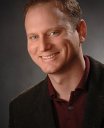
 Mac Schwager
· 1 previous affiliation
- Stanford UniversitySince 2015
- Associate Professor · Since 2021
- Assistant Professor · 2015–2021
Research Overview
Mac Schwager focuses on multi-robot systems, autonomous planning and control, and robotic perception. His trajectory spans early work in decentralized coverage control to advanced game-theoretic planning for autonomous vehicles and differentiable physics simulation. Most recently, his research emphasizes integrating vision-language models and 3D scene representations to enable open-vocabulary navigation and complex manipulation in general-purpose robotics.
Research Trajectory
The trajectory begins with foundational research in decentralized coordination for multi-robot systems. In Decentralized, Adaptive Control for Coverage with Networked Robots (2007) and the subsequent journal article Decentralized, Adaptive Coverage Control for Networked Robots (2009), he developed algorithms that allow networks of robots to dynamically adapt to their environments for optimal spatial coverage.
Moving into highly interactive autonomous systems, his research expanded into the area of Game-Theoretic Planning for Real-Time Multi-Agent Interaction. In Game Theoretic Planning for Self-Driving Cars in Competitive Scenarios (2019), he introduced a planner based on a Sensitivity Enhanced Iterated Best Response algorithm. This approach allowed autonomous vehicles to actively negotiate competitive environments, finding Nash equilibria that produced emergent strategic behaviors like opportunistic overtaking. This work also contributed to the broader fields of Trajectory Planning via Differential Flatness and Scaling Multi-Agent Strategic Interaction. To solve these complex dynamic games more efficiently, he developed ALGAMES: A Fast Solver for Constrained Dynamic Games (2020), which utilized an Augmented Lagrangian formulation to achieve real-time performance in multi-agent trajectory optimization.
Recognizing the need for better physical priors in robot learning, he contributed to the development of Dojo: A Differentiable Simulator for Robotics (2022). This physics engine addressed the long-standing challenge of simulating hard contact by providing smooth, analytic gradients, advancing the research direction of Differentiable Contact Modeling for Robot Planning.
More recently, his work has heavily integrated modern machine learning architectures—such as Vision-Language Models (VLMs) and 3D Gaussian Splatting—into robotic perception and control. In Phys2Real: Fusing VLM Priors with Interactive Online Adaptation for Uncertainty-Aware Sim-to-Real Manipulation (2025), he and his collaborators created a pipeline that uses visual "common sense" from VLMs to help robots manipulate objects with unknown physical properties. This semantic understanding was also applied to robot safety in Semantic-Metric Bayesian Risk Fields: Learning Robot Safety from Human Videos with a VLM Prior (2025), which maps continuous risk based on human demonstration data and VLM priors to provide robots with contextual safety awareness.
For aerial robotics, he led the development of SINGER: An Onboard Generalist Vision-Language Navigation Policy for Drones (2025), enabling drones to navigate to objects described in natural language using only onboard compute and a policy trained in a language-embedded simulator. He further expanded on this with VISTA: Open-Vocabulary, Task-Relevant Robot Exploration with Online Semantic Gaussian Splatting (2025), an active exploration framework that uses semantic Gaussian splatting to prioritize task-relevant areas in unknown environments. The integration of these techniques culminated in GRaD-Nav++: Vision-Language Model Enabled Visual Drone Navigation with Gaussian Radiance Fields and Differentiable Dynamics (2025), a lightweight framework that achieves zero-shot generalization for drone navigation, contributing to the area of Scaling General Purpose Robotics via Vision Language Action Models.
His research also addresses the underlying models and policies driving robot behavior. In ParticleFormer: A 3D Point Cloud World Model for Multi-Object, Multi-Material Robotic Manipulation (2025), he introduced a Transformer-based world model capable of capturing complex multi-material dynamics without requiring time-consuming 3D scene reconstruction. To improve learning from suboptimal demonstrations, he participated in the development of SARM: Stage-Aware Reward Modeling for Long Horizon Robot Manipulation (2026), which uses natural-language annotations to create stable reward signals for long-horizon tasks.
Investigating the fundamental properties of neural architectures, he contributed to Understanding the Mixture-of-Experts with Nadaraya-Watson Kernel (2026), which demonstrated that Mixture-of-Experts routing is mathematically equivalent to classical Nadaraya-Watson regression, offering a simpler and more stable routing mechanism. Finally, in Demystifying Robot Diffusion Policies: Action Memorization and a Simple Lookup Table Alternative (2026), his lab showed that high-performing diffusion policies often rely on action memorization, proposing a highly efficient lookup table alternative that matches performance in low-data regimes.
Current Directions
The most recent papers in the evidence address the efficiency, stability, and fundamental mechanics of robot learning policies and neural architectures. Recent work investigates how to extract reliable reward signals from noisy, long-horizon demonstration data using stage-aware modeling. Additionally, there is a strong focus on demystifying complex generative models in robotics—such as revealing the memorization behaviors inherent in robot diffusion policies and proposing fast, non-parametric alternatives. This extends to foundational analyses of network routing mechanisms, exploring how classical regression principles can stabilize and optimize large-scale Mixture-of-Experts architectures without added computational cost.
Profile updated
Loading new papers…
Other researchers whose papers cluster into the same research directions — a proxy for overlapping technical interests and shared intellectual neighborhoods.
See something wrong? Report a mistake