

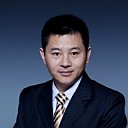
 Shengbo Eben Li
· 1 previous affiliation
- Tsinghua UniversitySince 2020
- Full Professor · Since 2020
1 other author named Shengbo Eben Li: Shengbo Eben Li (Tsinghua University · 3 papers)
Research Overview
Shengbo Eben Li focuses on safe reinforcement learning, optimal control for nonlinear systems, and autonomous vehicular dynamics. His trajectory spans from early work in model predictive control for automotive applications to the development of advanced distributional and generative reinforcement learning algorithms. Recently, he investigates high-frequency robotic control and semi-infinite safety constraints to bridge the gap between theoretical safety guarantees and real-world deployment.
Research Trajectory
Shengbo Eben Li’s early research concentrated on the modeling and control of physical automotive systems. This foundational work included A comparative study of equivalent circuit models for Li-ion batteries (2011) and the development of Model Predictive Multi-Objective Vehicular Adaptive Cruise Control (2011). He subsequently expanded these control strategies to multi-vehicle scenarios, analyzing String stability for vehicular platoon control: Definitions and analysis methods (2019). These efforts established a strong basis in the broader area of Trajectory Planning and Control in Mixed Autonomy Traffic, addressing how automated systems interact safely in complex environments.
Moving into the 2020s, his focus shifted toward integrating neural network approximations with robust optimal control to handle increasingly complex dynamics. He introduced the Ternary Policy Iteration Algorithm for Nonlinear Robust Control (2020), which solves the zero-sum game of robust control by simultaneously training three neural networks. This approach bypassed the traditional need for a pre-stabilized starting controller and optimized over sampled state sets, advancing the research direction of Control and Safety for Non-Affine Nonlinear Systems. He further explored offline control algorithms with Recurrent Model Predictive Control: Learning an Explicit Recurrent Controller for Nonlinear Systems (2022), which adaptively selects prediction horizons based on computing resources, contributing to work in the area of Accelerating Optimal Control via Neural Network Approximation.
Concurrently, he addressed fundamental instabilities in reinforcement learning (RL). To mitigate the chronic issue of Q-value overestimation, he co-developed Distributional Soft Actor-Critic: Off-Policy Reinforcement Learning for Addressing Value Estimation Errors (2022). By modeling a continuous distribution of returns rather than a single mean value, the algorithm adaptively adjusts its learning step size based on uncertainty, improving performance on continuous control tasks.
Safety and robustness in neural control systems subsequently became a central theme of his trajectory. To protect physical hardware from erratic action fluctuations during RL deployment, he participated in designing LipsNet: A Smooth and Robust Neural Network with Adaptive Lipschitz Constant for High Accuracy Optimal Control (2023), which enforces Lipschitz continuity through Multi-dimensional Gradient Normalization. He also advanced the domain of Stabilizing Primal-Dual Dynamics in Constrained Reinforcement Learning with Model-Based Chance-Constrained Reinforcement Learning via Separated Proportional-Integral Lagrangian (2024). This algorithm, SPIL, unified penalty and Lagrangian methods into a proportional-integral framework to prevent over-conservatism in safe control under uncertainty. Alongside this, he explored formal safety guarantees by Synthesizing Control Barrier Functions With Feasible Region Iteration for Safe Reinforcement Learning (2024).
In recent years, his work has pushed the boundaries of generative policies and complex safety constraints. Building on his earlier distributional RL research, he developed Distributional Soft Actor-Critic with Diffusion Policy (2025), utilizing diffusion models to represent both value functions and policies as multimodal distributions. To overcome the high latency typically associated with iterative generative sampling, he introduced the Mean Flow Policy with Instantaneous Velocity Constraint for One-step Action Generation (2026), which models average velocity fields to enable high-quality, single-step action generation for robotic tasks.
His recent safety research tackles structural paradoxes in constrained learning. He developed the Exchange Policy Optimization Algorithm for Semi-Infinite Safe Reinforcement Learning (2025), which manages an infinite number of spatial safety requirements by intelligently swapping constraints into a manageable active set. This significantly advanced the area of Reinforcement Learning with Instantaneous Hard Safety Constraints and the related direction of Reinforcement Learning with Hard Statewise Safety Constraints. He also identified and resolved the "safety paradox"—where a safer policy starves the model of the constraint-violating data needed to learn what is unsafe—by Breaking Safety Paradox with Feasible Dual Policy Iteration (2026), using a secondary policy to intentionally collect unsafe samples while correcting for data shift.
Parallel to these algorithmic advances, he continues to deploy robust estimation and risk models in physical systems. This includes Robust State Estimation for Legged Robots With Dual Beta Kalman Filter (2025), which accounts for foot slippage and leg deformation, and PODAR: A Collision Risk Model Offering Valid Signals for Vehicular Interactions (2025), a spatiotemporal framework for estimating collision risk in autonomous driving scenarios.
Current Directions
The most recent papers in the evidence indicate a strong focus on accelerating generative reinforcement learning and resolving fundamental data-collection bottlenecks in safe RL. Current work investigates how to harness the expressivity of diffusion and flow-based models for continuous control without suffering the latency of multi-step sampling, enabling real-time deployment on high-frequency robotic systems. Additionally, recent research addresses the theoretical limits of safe exploration, developing dual-policy frameworks and semi-infinite constraint optimization techniques to ensure that autonomous agents can learn robust safety boundaries without compromising task performance or requiring exhaustive, unsafe real-world trial and error.
Profile updated
Loading new papers…
Other researchers whose papers cluster into the same research directions — a proxy for overlapping technical interests and shared intellectual neighborhoods.
See something wrong? Report a mistake