

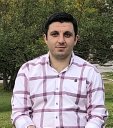
 Moloud Abdar
· 4 previous affiliations
- The University of QueenslandSince 2025
- Researcher · Since 2025
- Deakin University2019–2025
- Postdoc · 2022–2025
- PhD student · 2019–2022
- University of Aizu2016–2018
- Master’s Degree, Computer Science and Engineering · 2016–2018
- Damghan University2012–2015
- Undergrad student · 2012–2015
Research Overview
Moloud Abdar focuses on uncertainty quantification in deep learning, reliable medical artificial intelligence, and the robustness of large foundation models. Her trajectory spans from developing ensemble techniques for disease diagnosis to establishing comprehensive frameworks for uncertainty estimation and selective classification. Recently, she investigates parameter-efficient instruction tuning and mechanistic debiasing in multimodal architectures.
Research Trajectory
Abdar's early work addressed clinical diagnostics through the lens of ensemble learning. She developed A new nested ensemble technique for automated diagnosis of breast cancer, establishing a foundation in building robust classification systems for sensitive healthcare applications where predictive accuracy is paramount.
Recognizing that reliable AI requires models to quantify their own confidence, she led a comprehensive synthesis of the field in A review of uncertainty quantification in deep learning: Techniques, applications and challenges. This extensive review mapped out methodologies across several key research areas, detailing approaches in the direction of Approximating Bayesian Inference with Test Time Dropout, the area of Post-hoc Uncertainty Quantification via Laplace Approximation, and techniques designed for Single Forward Pass Uncertainty for Real-Time Systems. Concurrently, she contributed to natural language processing architectures, participating in the design of ABCDM: An Attention-based Bidirectional CNN-RNN Deep Model for sentiment analysis. This model utilized temporal information flow and attention mechanisms to extract context from both long and short text reviews, demonstrating versatility across multiple datasets.
Returning to medical applications with a deepened focus on probabilistic reliability, she introduced UncertaintyFuseNet: Robust uncertainty-aware hierarchical feature fusion model with Ensemble Monte Carlo Dropout for COVID-19 detection. This architecture combined features from CT scans and X-rays while explicitly incorporating uncertainty estimation to prevent overconfident misdiagnoses, advancing the broader area of Uncertainty Quantification for Reliable Medical AI. That same year, she helped formalize mechanisms for models to abstain from unsafe predictions, co-authoring a Survey on Leveraging Uncertainty Estimation Towards Trustworthy Deep Neural Networks: The Case of Reject Option and Post-training Processing. This work systematically reviewed selective classification, highlighting how deep neural networks can be constrained to defer to human experts when their internal uncertainty exceeds safe thresholds.
Her research subsequently expanded into the robustness and generalization capabilities of large vision-language models. She collaborated on Unknown Prompt, the only Lacuna: Unveiling CLIP's Potential for Open Domain Generalization, a framework that treats open-domain generalization as a multi-class problem. By employing specialized prompts for unknown categories and leveraging diffusion models for synthetic data generation, this approach significantly improved performance on both known and novel categories across diverse visual domains.
Continuing her work with foundation models, she contributed to UMP-Net: Uncertainty-Aware Mixture of Prompts Network for Efficient Instruction Tuning. This research addressed the computational demands and reliability gaps inherent in fine-tuning large language models. By combining a novel mixture of prompts technique with conformal predictions and latent noise prompting, the work provided a parameter-efficient method for models to follow instructions reliably, directly contributing to the research direction of Selective Prediction and Abstention Mechanisms.
Most recently, her work has tackled the dual challenges of novel category recognition and algorithmic fairness in multimodal systems. She co-authored A review of generalized zero-shot learning methods, categorizing approaches for AI systems operating without explicit training data and outlining future pathways for open-vocabulary recognition. In parallel, she participated in developing Locate then Correct: Debiasing Attention Heads in CLIP. This mechanistic interpretability framework surgically identifies and neutralizes spurious correlations within vision transformers—such as biased contextual associations—achieving substantial improvements in accuracy for underrepresented groups without the need for expensive model retraining.
Current Directions
The most recent papers in the evidence indicate a sustained focus on the reliability, efficiency, and fairness of large foundation models. Recent work investigates parameter-efficient instruction tuning, specifically integrating uncertainty estimation and conformal prediction to improve how large language models process complex prompts. Concurrently, research addresses open-world generalization through generalized zero-shot learning, enabling AI systems to recognize novel categories without explicit training data. Another major current direction involves mechanistic interpretability, developing surgical interventions to locate and correct spurious correlations and latent biases within vision-language models. This focus on debiasing and uncertainty quantification aims to make deployed AI systems safer and more equitable without incurring the prohibitive computational costs of full model retraining.
Profile updated
Loading new papers…
Other researchers whose papers cluster into the same research directions — a proxy for overlapping technical interests and shared intellectual neighborhoods.
See something wrong? Report a mistake