

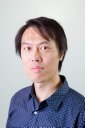
 Hak-Keung Lam
· 1 previous affiliation
- King's College LondonCurrent
- Associate Professor · Current
Research Overview
Hak-Keung Lam focuses on fuzzy-model-based control systems, stability analysis of nonlinear dynamics, and applied machine learning. His early work established relaxed stability conditions for polynomial fuzzy controllers and observers, often applied to complex robotic systems. More recently, his research has expanded to include deep learning architectures for medical diagnostics and autonomous driving control.
Research Trajectory
Lam’s research trajectory is rooted in the theoretical advancement of fuzzy control systems, particularly Takagi-Sugeno (T-S) and polynomial fuzzy-model-based (PFMB) control. In the mid-2010s, his work primarily addressed the mathematical challenges of stability analysis in nonlinear systems. A central problem in this domain is reducing the conservatism of stability conditions. As the first author of Polynomial Fuzzy-Model-Based Control Systems: Stability Analysis via Approximated Membership Functions Considering Sector Nonlinearity of Control Input (2015), Lam proposed a framework where both the polynomial fuzzy model and the controller maintain their own sets of premise membership functions. This work specifically tackled input nonlinearity by bounding the control signal within a sector defined by nonlinear lower and upper bounds, utilizing fuzzy blending to incorporate local information and ensure system stability even under imperfectly matched membership functions.
During this same period, Lam also focused on the design of observers for systems where premise variables cannot be directly measured. In Design of a Polynomial Fuzzy Observer Controller With Sampled-Output Measurements for Nonlinear Systems Considering Unmeasurable Premise Variables (2015), he co-authored a methodology for estimating system states using estimated premise variables. By analyzing the Lyapunov stability of the resulting PFMB observer-control system, this research expanded the class of nonlinear systems that could be effectively managed by polynomial fuzzy observers.
Beyond theoretical stability analysis, Lam has actively participated in applying fuzzy control methodologies to complex physical systems, particularly in robotics. Continuum manipulators, which lack rigid joints and possess highly nonlinear dynamic characteristics, present significant modeling and control challenges. Lam contributed as a co-author to Kinematic Control of Continuum Manipulators Using a Fuzzy-Model-Based Approach (2016), which utilized membership functions to combine linearized state-space models into a comprehensive fuzzy model. This approach enabled the autonomous execution of end-effector trajectory tracking tasks, demonstrating the practical utility of fuzzy controllers in managing modeling inaccuracies in emerging robotic architectures.
Returning to advanced observer design, Lam co-authored Design of Fuzzy Functional Observer-Controller via Higher Order Derivatives of Lyapunov Function for Nonlinear Systems (2017). When system states are entirely unmeasurable for state-feedback control, functional observers can directly estimate the control input, thereby reducing the overall order of the observer. This work introduced a novel form of fuzzy functional observer that facilitated numerical solutions for observer gains while simultaneously guaranteeing system stability, leveraging higher-order derivatives of the Lyapunov function to further relax stability conditions.
In the 2020s, Lam’s work in fuzzy control transitioned toward highly dynamic, real-world applications such as autonomous vehicles. In Fuzzy-Model-Based Output Feedback Steering Control in Autonomous Driving Subject to Actuator Constraints (2021), he helped develop a T-S fuzzy antiwindup output feedback controller. This research addressed the complexities of vehicle lateral dynamics, which are heavily influenced by varying velocities, changing road surface conditions, and actuator constraints, utilizing a varying look-ahead control strategy to maintain stability and tracking performance.
Concurrently, Lam’s collaborative research began to incorporate applied deep learning, particularly for medical diagnostics. As a co-author, he contributed to Appearance-Based Gaze Estimation for ASD Diagnosis (2022), which introduced AttentionGazeNet. This algorithm was designed to accurately estimate a subject's 3D gaze from raw video, providing a more accessible, appearance-based biomarker for Autism Spectrum Disorder (ASD) diagnosis without the need for specialized hospital equipment like MRI or EEG.
Current Directions
The most recent papers in the evidence indicate a diversification of Lam’s research portfolio. While he continues to advance fuzzy-model-based control for complex, uncertain environments—such as autonomous driving and large-scale discrete-time descriptor systems—he is increasingly participating in applied artificial intelligence research.
Recent collaborative work investigates the use of deep learning and feature fusion techniques for medical image analysis and behavioral diagnostics. This includes developing robust, uncertainty-aware neural networks for detecting diseases from medical imaging (such as COVID-19 classification from CT and X-ray data) and utilizing computer vision for non-invasive diagnostic tools. Across both his control theory and machine learning collaborations, a unifying theme is the design of robust systems capable of handling uncertainty, nonlinearities, and complex real-world data.
Profile updated
Loading new papers…
Other researchers whose papers cluster into the same research directions — a proxy for overlapping technical interests and shared intellectual neighborhoods.
See something wrong? Report a mistake