

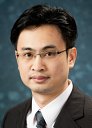
 Minghua Chen
· 5 previous affiliations
- City University of Hong KongSince 2019
- Full Professor · Since 2019
- Shenzhen Research Institute of Big DataSince 2025
- Full Professor · Since 2025
- Chinese University of Hong Kong2007–2019
- Associate Professor · 2013–2019
- Assistant Professor · 2007–2013
- Microsoft Research Asia (China)2006–2007
- Postdoc Researcher · 2006–2007
- University of California, Berkeley2001–2006
- PhD student · 2001–2006
Research Overview
Minghua Chen focuses on machine learning with performance guarantees, online optimization, and the design of energy and networked systems. His trajectory spans foundational work in wireless network flow control to the development of neural network proxies for complex physical infrastructure like power grids. Currently, he investigates projection-free optimization techniques and theoretically grounded neural architectures to ensure strict feasibility in real-time decision-making.
Research Trajectory
Chen’s early research addressed resource allocation and congestion in networked systems. In 2008, he formulated wireless flow control as a convex optimization problem in A General Framework for Flow Control in Wireless Networks, proposing solutions to mitigate bandwidth underutilization caused by physical layer errors rather than standard network congestion. This interest in applied optimization extended to intelligent transportation, as seen in his 2017 work Battery swapping assignment for electric vehicles: A bipartite matching approach.
Around 2020, his focus shifted toward the intersection of machine learning and energy systems, specifically addressing the computational bottlenecks of optimal power flow (OPF). He introduced DeepOPF: A Deep Neural Network Approach for Security-Constrained DC Optimal Power Flow, framing the problem as a high-dimensional mapping from load inputs to generation outputs. This evolved into addressing the more complex AC-OPF problem in DeepOPF: A Feasibility-Optimized Deep Neural Network Approach for AC Optimal Power Flow Problems (2023). By incorporating penalty-based training and zeroth-order optimization, this method ensured that neural network outputs remained physically feasible, contributing to the broader area of Non Convex AC Optimal Power Flow Optimization and establishing a foundation in the research direction of Enforcing Hard Constraints in Neural Networks. Alongside algorithmic development, he applied advanced modeling to grid resilience, analyzing how future climate events impact transmission capacity in European Electricity Grids May Exhibit Heatwave-induced Capacity Bottlenecks (2024).
The challenge of strict constraint satisfaction in neural networks subsequently became a central theme of his work. In 2023, he co-developed Low Complexity Homeomorphic Projection to Ensure Neural-Network Solution Feasibility for Optimization over (Non-)Convex Set, utilizing Invertible Neural Networks (INNs) to map complex constraint boundaries into a simple sphere. This significantly advanced work in the area of Neural Network Proxies for Real Time Optimization. Building on this, the 2025 paper Efficient Bisection Projection to Ensure Neural-Network Solution Feasibility for Optimization over General Set introduced a framework combining an interior point network with a bisection algorithm to guarantee feasibility even under non-convex constraints. This line of inquiry naturally intersected with the area of Projection Free Optimization via Linear Minimization Oracles, leading to Fast Projection-Free Approach (without Optimization Oracle) for Optimization over Compact Convex Set. This optimization framework, Hom-PGD, mathematically warps constraint sets to bypass expensive projections, achieving optimal convergence rates without relying on linear optimization oracles.
Concurrently, Chen investigated the theoretical limits of neural architectures. In Characterizing ResNet's Universal Approximation Capability (2024), his group proved that constant-width ResNets achieve optimal approximation rates with significantly fewer parameters than standard feedforward networks. This theoretical rigor was extended to set-based networks in $\mathcal{O}(\log N)$ Latent Dimension Suffices for Universal Approximation of Permutation-invariant Function (2026), demonstrating that the required width for stable functions grows only logarithmically with the input size. He also explored the capacity of graph neural networks to solve structured optimization problems, providing a proof of their universal approximation capabilities for Second-Order Cone Programs in On the Universality and Complexity of GNN for Solving Second-order Cone Programs.
His most recent work unifies these optimization and generative modeling threads. Gauge Flow Matching: Efficient Constrained Generative Modeling over General Convex Set and Beyond (2026) introduces a framework that ensures generative models strictly obey hard physical boundaries without computational slowdowns. Similarly, Hom-PGD$^+$: Fast Reparameterized Optimization over Non-convex Ball-Homeomorphic Set extends his earlier projection-free methods, using INNs to warp non-convex constraint sets into unit balls, enabling rapid convergence for complex tasks like power grid management and adversarial robustness.
Current Directions
The most recent papers in the evidence, published in 2025 and 2026, indicate a strong focus on the theoretical foundations of neural networks and the development of highly efficient, constraint-aware optimization frameworks. Recent work investigates how to bypass traditional computational bottlenecks in constrained environments, utilizing techniques like homeomorphic projections and gauge mappings to ensure strict feasibility in both predictive modeling and generative tasks. Additionally, ongoing research addresses the universal approximation capabilities of specialized architectures—such as Graph Neural Networks for Second-Order Cone Programs and set-based networks for permutation-invariant functions—aiming to achieve optimal performance with minimal parameter complexity.
Profile updated
Loading new papers…
Other researchers whose papers cluster into the same research directions — a proxy for overlapping technical interests and shared intellectual neighborhoods.
See something wrong? Report a mistake