

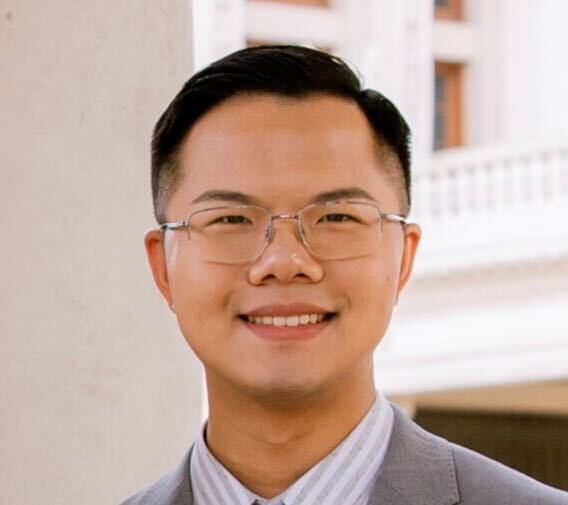
 Wenbo Chen
· 2 previous affiliations
- Amazon (United States)Since 2024
- Researcher · Since 2024
- Georgia Institute of Technology2019–2024
- PhD student · 2019–2024
Research Overview
Wenbo Chen focuses on machine learning for combinatorial optimization, the development of neural optimization proxies, and trustworthy artificial intelligence. His trajectory spans from reinforcement learning for branch-and-bound algorithms to physics-aware models for power grid management and large-scale logistics. Currently, his work addresses the formal verification of deep neural networks and generative policies for complex scheduling environments.
Research Trajectory
Wenbo Chen’s early research explored the intersection of reinforcement learning and traditional combinatorial optimization. In 2020, he collaborated on Improving Learning to Branch via Reinforcement Learning, which formulated the branch-and-bound process in mixed-integer programming as a reinforcement learning problem. By designing a novel set representation and distance function, the work aimed to produce branching policies that were more effective and less myopic than standard human-designed heuristics like strong branching.
Following this foundational work in algorithmic acceleration, Chen shifted his focus toward developing optimization proxies—machine learning models trained to rapidly approximate the solutions of complex, large-scale optimization problems. He introduced this approach in the context of energy systems with Learning Optimization Proxies for Large-Scale Security-Constrained Economic Dispatch (2021). This marked the beginning of a sustained effort to apply neural proxies to domains where traditional solvers are too slow for real-time decision-making.
In 2022, Chen expanded on these themes across both power systems and transportation logistics. He contributed to the RAMC project framework in Risk-Aware Control and Optimization for High-Renewable Power Grids, which integrated uncertainty quantification and physics-informed machine learning to manage the volatility of renewable energy sources. Simultaneously, he developed the Reinforcement Learning from Optimization Proxy (RLOP) framework in Reinforcement Learning from Optimization Proxy for Ride-Hailing Vehicle Relocation. By training a neural network to mimic a Model Predictive Control model and subsequently refining it through reinforcement learning, the system achieved significant speedups over traditional optimization while reducing relocation costs for shared vehicle fleets.
Throughout 2023, Chen’s work on neural proxies matured, addressing strict feasibility constraints and mathematical symmetries across diverse industrial applications. In manufacturing, he developed Two-Stage Learning For the Flexible Job Shop Scheduling Problem, a deep learning framework that decomposed the scheduling problem into assignment and scheduling stages. Utilizing a novel symmetry-breaking technique, the model generated high-quality solutions in milliseconds, outperforming traditional heuristics. In the logistics sector, he applied similar principles to outbound load planning for parcel carriers in Optimization-based Learning for Dynamic Load Planning in Trucking Service Networks. This hybrid proxy combined deep learning with integer programming, employing lexicographic ordering to break symmetries and produce stable, near-optimal plans executable in real-time.
Concurrently, Chen deepened his contributions to the research area of The Limits of Linearized Power Flow Approximations. He introduced the RA-E2ELR framework in Real-Time Risk Analysis with Optimization Proxies, replacing slow industrial solvers with fast, physics-aware neural networks for power grid risk assessment. This approach guaranteed feasible solutions in milliseconds, enabling highly accelerated Monte Carlo simulations while maintaining fidelity to ground-truth risk metrics. He further addressed the scalability of end-to-end learning for power systems in Compact Optimization Learning for AC Optimal Power Flow, utilizing principal component analysis to compress the high-dimensional space of optimal solutions and significantly reduce the number of trainable parameters.
In 2024, Chen consolidated his methodologies for ensuring feasibility and reliability in neural proxies. He proposed the End-to-End Learning and Repair (E2ELR) architecture in End-to-End Feasible Optimization Proxies for Large-Scale Economic Dispatch. By integrating deep neural networks with closed-form, differentiable repair layers and utilizing self-supervised learning, the architecture removed the need for labeled data while guaranteeing operational feasibility on industry-size power grids. Recognizing that fast proxies require rigorous safety guarantees, he also advanced the broader area of Verifying Neural Networks Beyond Piecewise Linear Activations. In Compact Optimality Verification for Optimization Proxies, he introduced a compact formulation that accelerated the verification process, making it possible to provide formal worst-case performance guarantees for non-convex problems like the knapsack problem.
Most recently, Chen has continued to push the boundaries of machine learning in operations research. His 2025 work includes Boosting column generation with graph neural networks for joint rider trip planning and crew shift scheduling and Outbound Load Planning in Parcel Delivery Service Networks Using Machine Learning and Optimization, further integrating graph neural networks and optimization techniques for complex routing and scheduling. In 2026, he collaborated on Latent Spherical Flow Policy for Reinforcement Learning with Combinatorial Actions, introducing the LSFLOW framework. This work brings the expressiveness of generative flow models to combinatorial action spaces by learning a stochastic policy in a latent spherical space and delegating feasibility constraints to a combinatorial solver.
Current Directions
Currently an Applied Scientist at Amazon, Chen’s most recent research focuses on bridging the gap between highly expressive generative models and strict combinatorial constraints. A major theme in his latest work is the integration of generative flow policies into reinforcement learning frameworks to handle complex, multi-modal action spaces such as routing and scheduling. By mapping stochastic policies to latent spherical spaces while relying on deterministic solvers for feasibility, this direction seeks to improve both computational efficiency and decision quality in environments with strict operational rules.
Additionally, his recent papers emphasize the critical need for trustworthy AI in optimization. This involves developing scalable formal verification methods that can provide mathematical guarantees on the worst-case performance of neural optimization proxies, particularly for non-convex problems where traditional verification techniques falter. Alongside verification, he continues to investigate hybrid architectures that combine graph neural networks with classical operations research algorithms, such as column generation, to solve joint planning and scheduling problems in large-scale logistics networks.
Profile updated
Loading new papers…
Other researchers whose papers cluster into the same research directions — a proxy for overlapping technical interests and shared intellectual neighborhoods.
See something wrong? Report a mistake