

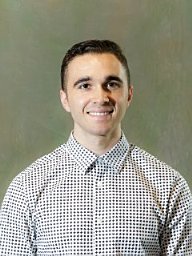
 Miles Cranmer
· 6 previous affiliations
- University of CambridgeSince 2023
- Assistant Professor · Since 2023
- Research Fellow · 2023
- Postdoc · 2023
- Princeton University2018–2023
- PhD student · 2018–2023
- PhD Research Scientist Intern · 2021
- McGill University2014–2018
- Research Assistant · 2017–2018
- Bachelor of Science - BS, Physics · 2014–2018
Research Overview
Miles Cranmer focuses on the intersection of machine learning and the physical sciences, developing methods for interpretable artificial intelligence and scientific discovery. His trajectory spans from symbolic regression and physics-informed neural networks to large-scale foundation models for physics and astronomy. Currently, he investigates compute-adaptive surrogate modeling and the mechanistic interpretability of physics emulators.
Research Trajectory
Miles Cranmer's early research addressed computational bottlenecks in astronomical data processing. He developed Bifrost: a Python/C++ Framework for High-Throughput Stream Processing in Astronomy, an open-source framework designed to simplify GPU-accelerated pipelines for real-time data analysis. Transitioning toward machine learning applications in astrophysics, he introduced deep learning approaches to stellar distance estimation in Modeling the Gaia Color-Magnitude Diagram with Bayesian Neural Flows to Constrain Distance Estimates. By employing normalizing flows, this work provided a catalog of 640 million distance posteriors, improving precision for stars with noisy parallax measurements.
A central theme of his trajectory emerged with efforts to bridge the high-dimensional flexibility of deep learning and the interpretability of classical physics equations, advancing the research direction of Distilling Neural Networks into Closed Form Expressions. In Learning Symbolic Physics with Graph Networks, he combined graph networks with symbolic regression to recover physical laws, such as Newton's law of gravitation, directly from data. He expanded this framework in Discovering Symbolic Models from Deep Learning with Inductive Biases, demonstrating that training graph neural networks with sparsity-promoting inductive biases allows complex systems to be factorized and distilled into compact algebraic equations. These contributions significantly impacted the broader area of Taming the Combinatorial Explosion in Symbolic Regression. Concurrently, he explored methods to embed physical symmetries directly into neural architectures. Lagrangian Neural Networks proposed a model capable of parameterizing arbitrary Lagrangians without requiring canonical coordinates, ensuring that learned models inherently respect conservation laws. Applying machine learning to orbital dynamics, he also contributed to Predicting the long-term stability of compact multiplanet systems, introducing a model that leverages physically motivated features from short simulations to rapidly evaluate exoplanet stability.
Scaling these techniques to broader cosmological and fluid dynamics challenges, his research expanded into the area of Deep Learning Emulators for Cosmological Structure Formation. In Mangrove: Learning Galaxy Properties from Merger Trees, he mapped dark matter merger trees to visible galaxy properties using graph neural networks, drastically accelerating predictions compared to traditional semi-analytic models. He also addressed reliability in cosmological inference with Robust simulation-based inference in cosmology with Bayesian neural networks, implementing Bayesian neural networks to mitigate overconfident predictions when observational data deviates from training simulations. In the domain of fluid dynamics, he collaborated on Learned Simulators for Turbulence, training low-resolution models to capture high-resolution turbulent dynamics, contributing to the broader field of Enforcing Physical Consistency in Data-Driven Models. Returning to symbolic methods, he applied automated discovery to astrophysics in Automated discovery of interpretable gravitational-wave population models, distilling black-box population models into empirical mathematical formulas. To consolidate these symbolic regression techniques into accessible software, he developed Interpretable Machine Learning for Science with PySR and SymbolicRegression.jl, an open-source library utilizing evolutionary algorithms to recover scientific laws from noisy datasets.
Recent work has increasingly focused on large-scale physics foundation models and advanced surrogate modeling. He augmented traditional genetic algorithms with large language models in Symbolic Regression with a Learned Concept Library, using semantic guidance to improve formula discovery. Shifting toward the mechanistic control of foundation models, he investigated causal interventions in Physics Steering: Causal Control of Cross-Domain Concepts in a Physics Foundation Model, demonstrating that injecting specific concept directions into internal activations can manipulate physical phenomena like vorticity. In parallel, his research addressed the area of Learning Partial Differential Equations on Irregular Domains through novel architectural designs. Compute-Adaptive Surrogate Modeling of Partial Differential Equations introduced convolutional modulators to enable dynamic patching and striding for autoregressive prediction tasks. He further refined transformer-based emulators in Overtone: Cyclic Patch Modulation for Clean, Efficient, and Flexible Physics Emulators, eliminating grid artifacts by varying patch sizes during inference. Investigating the training pipelines of these models, On the Value of Tokeniser Pretraining in Physics Foundation Models highlighted the efficiency gains of domain-specific tokeniser pretraining. Continuing to bridge deep learning and symbolic methods, he introduced SymTorch: A Framework for Symbolic Distillation of Deep Neural Networks, automating the extraction of closed-form expressions from trained neural network components.
Current Directions
The most recent papers in the evidence indicate a dual focus on scaling physics foundation models and automating the distillation of interpretable scientific laws. Recent work investigates the architecture and training of large-scale partial differential equation (PDE) emulators, exploring techniques like dynamic patch modulation and domain-specific tokeniser pretraining to improve computational efficiency and eliminate grid artifacts. Alongside these scaling efforts, current research addresses the mechanistic interpretability of these foundation models, demonstrating that internal network activations can be causally steered to control physical concepts across different simulation regimes. Finally, ongoing work continues to advance symbolic regression, developing automated frameworks that seamlessly integrate with deep learning pipelines to distill complex neural network components into human-readable, closed-form mathematical expressions.
Profile updated
Loading new papers…
Other researchers whose papers cluster into the same research directions — a proxy for overlapping technical interests and shared intellectual neighborhoods.
See something wrong? Report a mistake