

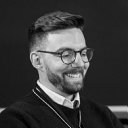
 Francois Lanusse
· 3 previous affiliations
- Researcher · Since 2020
- Postdoc · 2018–2019
- Carnegie Mellon University2015–2018
- Postdoc · 2015–2018
Research Overview
Francois Lanusse focuses on deep learning, statistical modeling, and observational cosmology. His trajectory spans the development of generative models for astronomical surveys to the design of large-scale, multimodal architectures for scientific data. Currently, his research emphasizes building unified foundation models that integrate heterogeneous physical and cosmological modalities.
Research Trajectory
Lanusse’s early work concentrated on applying deep learning to observational cosmology, particularly in preparing for next-generation telescope surveys. He introduced deep generative models to calibrate weak lensing measurements in Deep Generative Models of Galaxy Images for the Calibration of the Next Generation of Weak Lensing Surveys. Following this, he led an evaluation of automated algorithms for identifying rare cosmic alignments in The strong gravitational lens finding challenge, demonstrating that convolutional neural networks could outperform human experts in achieving high purity. This early focus laid the groundwork for his ongoing interest in the area of Beyond Two-Point Statistics in Cosmological Inference.
Between 2020 and 2022, his research expanded to address uncertainty quantification and interpretability in machine learning models for physics. He participated in developing Bayesian frameworks for inverse problems, such as the approach detailed in Denoising Score-Matching for Uncertainty Quantification in Inverse Problems, which leveraged annealed Hamiltonian Monte Carlo sampling to provide robust uncertainty estimates. To address the need for interpretable surrogate models, he contributed to Adaptive wavelet distillation from neural networks through interpretations, a method for penalizing feature attributions in the wavelet domain. This interest in interpretability extended to the research direction of Physics-Based Validation of Machine Learning via Feature Attribution, as seen in his co-authored work Transformation Importance with Applications to Cosmology. Here, the authors proposed attributing importance to features in transformed input spaces to ensure models learn physically relevant signals rather than simulation artifacts. He also co-authored a broader perspective on the field in Bayesian uncertainty quantification for machine-learned models in physics.
Around 2023, his trajectory shifted toward adapting large-scale architectures for scientific datasets. He participated in the design of continuous number encodings for large language models in xVal: A Continuous Number Encoding for Large Language Models, addressing the unique difficulties of tokenizing numerical data. Concurrently, he contributed to the broader field of Foundation Models for Scientific Machine Learning by exploring pretraining strategies for spatiotemporal surrogate models in Multiple Physics Pretraining for Spatiotemporal Surrogate Models. In parallel, he developed specialized generative and differentiable models for astrophysics. He co-developed a Unified Framework for Diffusion Generative Models in SO(3): Applications in Computer Vision and Astrophysics, creating score-based models tailored for 3D rotations. He also co-created GOTHAM, a transformer-based model detailed in Teaching dark matter simulations to speak the halo language, which generates realistic dark matter halo catalogs from computationally efficient approximate simulations.
This period culminated in the development of cross-modal and omnimodal foundation models for astronomy. He helped introduce AstroCLIP: a cross-modal foundation model for galaxies, an architecture capable of embedding both galaxy images and spectra into a unified latent space for zero-shot learning. Expanding on this, he co-developed a universal spectral tokenizer in Universal Spectral Tokenization via Self-Supervised Panchromatic Representation Learning, advancing the study of Emergent Physical Representations in Latent Spaces by learning continuous wavelength embeddings across diverse astronomical surveys. This line of inquiry led directly to AION-1: Omnimodal Foundation Model for Astronomical Sciences, a large-scale model that unifies 39 different astronomical data types—from 2D images to 1D spectra and scalar catalogs—into a single transformer architecture.
Most recently, his collaborative work has expanded to encompass generalist physical simulations. He participated in evaluating self-supervised methods in Representation Learning for Spatiotemporal Physical Systems, investigating how compressed latent spaces capture physical information to aid in the area of Symbolic Discovery of Governing Physical Equations. He also contributed to Walrus: A Cross-domain Foundation Model for Continuum Dynamics, a billion-parameter model designed to emulate fluid dynamics and wave propagation across diverse scales, advancing the broader direction of Foundation Models for Generalist Physical Simulation.
Current Directions
The most recent work in the evidence focuses on scaling foundation models to generalist physical simulations and continuum dynamics. A major theme is the use of self-supervised representation learning to capture the underlying mechanics of spatiotemporal systems, moving beyond raw pixel prediction to learn robust, physically meaningful latent spaces. This includes developing massive, cross-domain models capable of emulating complex fluid and wave dynamics, emphasizing long-term stability and the mitigation of compounding errors in autoregressive physical simulators.
Profile updated
Loading new papers…
Other researchers whose papers cluster into the same research directions — a proxy for overlapping technical interests and shared intellectual neighborhoods.
See something wrong? Report a mistake