

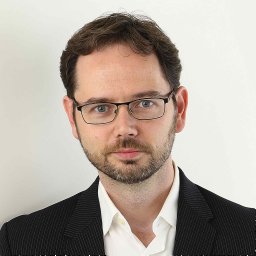
 Mark Crowley
· 5 previous affiliations
- University of WaterlooSince 2015
- Associate Professor · Since 2022
- Assistant Professor · 2015–2022
- Element AI2017–2019
- Faculty Research Fellow · 2017–2019
- Oregon State University2012–2014
- Postdoctoral Researcher · 2012–2014
- University of British Columbia2003–2011
- PhD student · 2005–2011
- Teaching Assistant Training Coordinator · 2006–2008
- MSc, Computer Science · 2003–2005
- IBM (Canada)1999–2003
- Software Engineer · 1999–2003
1 other author named Mark Crowley: Mark Crowley (1 paper)
Research Overview
Mark Crowley focuses on reinforcement learning, manifold learning, and spatial-temporal decision making in complex, uncertain environments. His trajectory spans from early work on probabilistic graphical models and forest ecosystem management to large-scale multi-agent systems and dimensionality reduction. Recently, his research investigates causal representation learning, digital chemistry, and the social alignment of artificial intelligence systems.
Research Trajectory
The trajectory begins with foundational work in probabilistic modeling and decision-making under uncertainty. Early research addressed the design of Bayesian networks, specifically introducing a shielding method to mitigate the unintended side effects of adding local constraints during model construction in Adding Local Constraints to Bayesian Networks. This interest in complex decision-making naturally extended to large-scale environmental challenges. In Seeing the Forest Despite the Trees: Large Scale Spatial-Temporal Decision Making, he explored spatial-temporal planning, touching on areas such as state space independent sample complexity in reinforcement learning. He subsequently formalized these challenges in the context of forest ecosystem management, developing equilibrium policy gradients to optimize actions across thousands of spatial locations over long planning horizons in Using Equilibrium Policy Gradients for Spatiotemporal Planning in Forest Ecosystem Management. Continuing in the domain of computational sustainability, he participated in developing algorithms for Markov decision processes (MDPs) defined by black-box simulators, contributing heuristics for efficient exploration and earlier termination guarantees in PAC optimal MDP planning with application to invasive species management.
By 2020, the focus expanded significantly into multi-agent reinforcement learning (MARL) and its application to autonomous systems. He guided research into centralized training techniques for decentralized execution, demonstrating how communication protocols and memory modules could improve convergence in autonomous driving simulators in Deep Multi Agent Reinforcement Learning for Autonomous Driving. This work on vehicular coordination continued with the introduction of a distributed nonlinear model predictive control framework that integrated metric learning to manage dynamic cut-in and cut-out maneuvers in heterogeneous vehicle platoons in Distributed Nonlinear Model Predictive Control and Metric Learning for Heterogeneous Vehicle Platooning with Cut-in/Cut-out Maneuvers. Concurrently, he maintained an active interest in environmental applications, co-authoring a comprehensive scoping review that identified an "analytics gap" in the transition from traditional statistical modeling to complex machine learning for real-time prescriptive decision-making in A review of machine learning applications in wildfire science and management.
Returning to the theoretical foundations of MARL, his group conducted an empirical investigation into the strengths and weaknesses of independent reinforcement learning algorithms across cooperative, competitive, and mixed environments in Investigation of Independent Reinforcement Learning Algorithms in Multi-Agent Environments. To address the scaling bottlenecks inherent in massive multi-agent systems, he collaborated on a novel framework for decentralized mean field games, enabling heterogeneous agents to learn using only local information in Decentralized Mean Field Games. This work intersected with broader themes such as overcoming the agent homogeneity assumption and decentralized multi-agent reinforcement learning.
Parallel to his reinforcement learning research, he has made sustained contributions to manifold learning and feature extraction. He introduced Quantile-Quantile Embedding (QQE), a method that allows practitioners to specify target distributions when embedding high-dimensional data into lower dimensions in Quantile–Quantile Embedding for distribution transformation and manifold embedding with ability to choose the embedding distribution. This deep engagement with feature extraction culminated in the publication of a comprehensive textbook, Elements of Dimensionality Reduction and Manifold Learning, which bridges classical geometric techniques like principal component analysis with modern neural network-based approaches.
In recent years, his work has increasingly incorporated causal inference to improve the robustness and generalization of machine learning models. He oversaw the development of a generative causal representation learning framework designed to disentangle invariant physical laws from environment-specific styles, significantly improving out-of-distribution human trajectory prediction in Generative Causal Representation Learning for Out-of-Distribution Motion Forecasting. This was followed by Implicit Causal Representation Learning via Switchable Mechanisms, which introduced a mechanism switch variable to recover latent causal variables from data using soft interventions, advancing the capacity for causal discovery and disentanglement.
During this period, he also explored how reinforcement learning could accelerate scientific discovery and leverage diverse knowledge sources. He contributed to the research direction of Decoupled Modular Frameworks for Rapid Scientific Experimentation by co-developing an open-source, interactive simulated laboratory for digital chemistry in ChemGymRL: An Interactive Framework for Reinforcement Learning for Digital Chemistry. Additionally, he addressed sample inefficiency in complex MARL environments by designing a two-level Q-learning approach that allows agents to simultaneously learn from multiple external demonstrators in Learning from Multiple Independent Advisors in Multi-agent Reinforcement Learning.
The most recent phase of his trajectory examines the social and strategic dimensions of multi-agent systems and AI alignment. In Can Standard MARL Metrics Distinguish Communicative from Strategic Action?, he and his collaborators demonstrated that standard aggregate utility metrics often fail to distinguish between genuine consensus and coerced equilibria, introducing a coercion index to expose strategic manipulation by dominant agents. Building on this critique of standard optimization targets, he co-authored Rethinking AI Alignment: From Static Rewards to Social Reinforcement Learning. This work frames AI hallucinations and moral drift as symptoms of "feedback collapse" and proposes treating alignment as an ongoing social negotiation rather than a static programming task, touching on areas such as breaking the scalar reward bottleneck in language model alignment.
Current Directions
Recent work investigates the intersection of multi-agent reinforcement learning, causal representation, and the social alignment of artificial intelligence. The most recent papers in the evidence address the limitations of standard aggregate metrics in multi-agent systems, proposing new indices to distinguish genuine consensus from strategic coercion. Additionally, current research explores "Social Reinforcement Learning" as a framework to prevent feedback collapse and moral drift in AI systems, treating alignment as an ongoing social negotiation rather than a static objective. Alongside these alignment challenges, ongoing work continues to advance implicit causal representation learning, utilizing switchable mechanisms and soft interventions to better recover and disentangle latent causal variables in complex environments.
Profile updated
Loading new papers…
Other researchers whose papers cluster into the same research directions — a proxy for overlapping technical interests and shared intellectual neighborhoods.
See something wrong? Report a mistake