

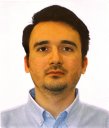
 Benyamin Ghojogh
· 3 previous affiliations
- University of WaterlooSince 2017
- Researcher · Since 2021
- PhD student · 2017–2021
- Sharif University of Technology2015–2017
- MS student · 2015–2017
- Amirkabir University of Technology2011–2015
- Undergrad student · 2011–2015
Research Overview
Benyamin Ghojogh focuses on dimensionality reduction, subspace learning, and manifold embedding within machine learning. His trajectory spans the development of generalized discriminant analysis methods to extensive theoretical surveys of foundational machine learning algorithms. Recent work investigates the stochastic properties of locally linear embedding and the mechanics of recurrent neural networks.
Research Trajectory
Ghojogh’s early research primarily addressed the mathematical foundations of subspace learning, specifically focusing on eigenvalue and generalized eigenvalue problems. In 2019, he formalized new approaches to discriminant analysis that sought to unify and extend existing linear dimensionality reduction techniques. A central contribution from this period is Roweis Discriminant Analysis: A Generalized Subspace Learning Method. In this first-author work, Ghojogh proposed a generalized framework that encompasses Principal Component Analysis (PCA), Supervised PCA, and Fisher Discriminant Analysis (FDA) as special cases. The paper also introduced a novel variant, Double Supervised Discriminant Analysis, which utilizes label information twice to improve class separation, alongside kernelized and dual formulations of the method.
Following the theoretical development of Roweis Discriminant Analysis, Ghojogh applied these generalized subspace learning techniques to computer vision tasks. In Roweisposes, Including Eigenposes, Supervised Eigenposes, and Fisherposes, for 3D Action Recognition (2020), he demonstrated how these generalized eigenvalue frameworks could be adapted for 3D human action recognition. By establishing methods analogous to classical face recognition techniques (like eigenfaces and Fisherfaces), this work provided a structured, foundational approach to modeling human poses in lower-dimensional spaces.
Concurrently, Ghojogh expanded his focus to nonlinear dimensionality reduction and distribution transformation. In 2020, he introduced Quantile-Quantile Embedding for Distribution Transformation, Manifold Embedding, and Image Embedding with Choice of Embedding Distribution. This method leveraged the statistical concept of quantile-quantile plots to allow researchers to transform data distributions into any desired theoretical or empirical reference sample. By giving users explicit control over the embedding distribution, the technique improved upon standard dimensionality reduction methods like t-SNE and PCA. This work aligns with the broader area of Aligning Distributions Beyond Mean and Variance, addressing the challenge of matching complex probability distributions in high-dimensional feature spaces.
In 2021, Ghojogh’s output shifted heavily toward comprehensive pedagogical and survey literature, producing a series of detailed tutorials on foundational machine learning topics. These papers synthesized vast amounts of literature on optimization, generative models, and graphical models. A representative example of this synthesis is Laplacian-Based Dimensionality Reduction Including Spectral Clustering, Laplacian Eigenmap, Locality Preserving Projection, Graph Embedding, and Diffusion Map: Tutorial and Survey. This first-author tutorial provided a unified mathematical perspective on nonlinear feature extraction methods derived from graph Laplacians, contributing to the research direction of Scalable Manifold Learning for High Dimensional Data. During this highly productive period, he also collaborated on numerical optimization research, serving as second author on Vector Transport Free Riemannian LBFGS for Optimization on Symmetric Positive Definite Matrix Manifolds, which investigated quasi-Newton methods for optimization on curved spaces.
By 2022, Ghojogh returned to primary theoretical research in manifold learning, seeking to bridge different paradigms of dimensionality reduction. In Theoretical Connection between Locally Linear Embedding, Factor Analysis, and Probabilistic PCA, he re-examined Locally Linear Embedding (LLE) from a stochastic perspective. By treating the linear reconstruction weights of LLE as latent factors and solving the reconstruction step via expectation maximization, Ghojogh established formal theoretical links between LLE, factor analysis, and probabilistic PCA. This research directly advanced themes such as Local Linear Reconstruction for Manifold Learning, which explore how high-dimensional data concentrates on low-dimensional, non-uniform manifolds.
Current Directions
The most recent papers in the evidence indicate a continued dual focus on the theoretical properties of manifold learning and the pedagogical synthesis of complex neural architectures. Ghojogh’s recent primary research investigates the stochastic and probabilistic interpretations of classical dimensionality reduction techniques, aiming to unify spectral methods with latent variable models.
Alongside this theoretical work, Ghojogh remains active in producing extensive surveys of deep learning methodologies. His most recent work from 2023 focuses on the mechanics of sequence modeling, detailing the mathematical evolution of Recurrent Neural Networks (RNNs) and Long Short-Term Memory (LSTM) networks. This ongoing effort to document and unify the mathematical foundations of machine learning—from generalized eigenvalue problems to modern deep sequence models—remains a defining characteristic of his research trajectory.
Profile updated
Loading new papers…
Other researchers whose papers cluster into the same research directions — a proxy for overlapping technical interests and shared intellectual neighborhoods.
See something wrong? Report a mistake