

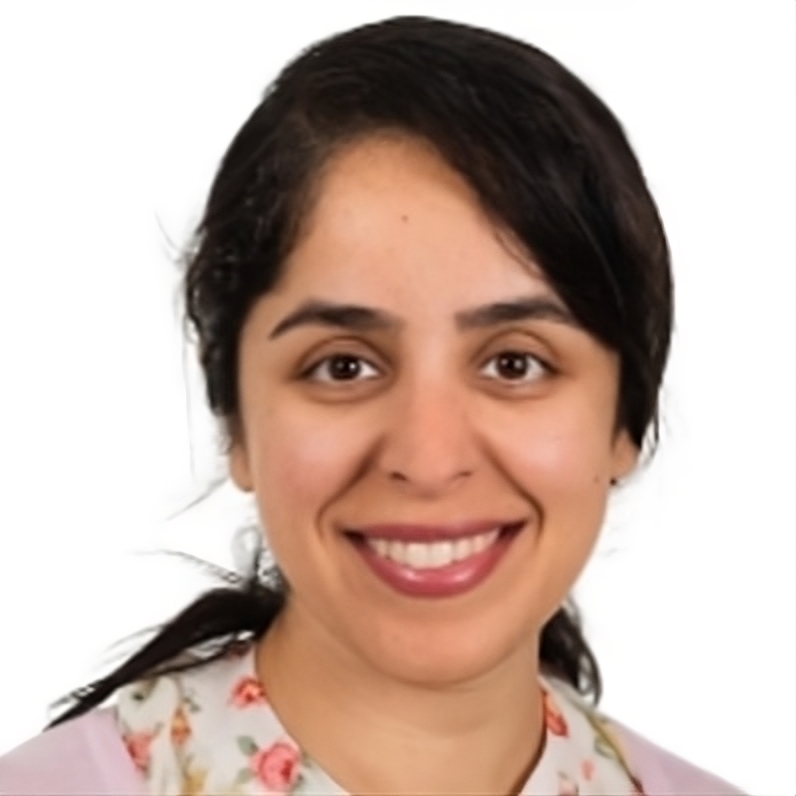
 Zahra Gharaee
· 8 previous affiliations
- University of WaterlooSince 2022
- Principal Researcher · Since 2024
- Postdoc · 2022–2024
- Open Text (Canada)Since 2026
- AI Transformation Lead · Since 2026
- Vision and Image Processing Group2022–2025
- Senior Machine Learning Engineer · 2024–2025
- Machine Learning Engineer · 2022–2024
- WASP – Wallenberg AI, Autonomous Systems and Software Program2018–2022
- Research and Industry Liaison · 2018–2022
- Computer Vision and Learning Systems (CVL)2018–2022
- Computer Vision Research Engineer · 2018–2022
- Linköping University2018–2022
- Postdoc · 2018–2022
- Lund University2014–2018
- Applied Scientist · 2014–2018
- PhD student · 2018
- K.N.Toosi University of Technology2005–2012
- MS student · 2009–2012
- Undergrad student · 2005–2009
- Master of Engineering - MEng, Mechatronics, Robotics, and Automation Engineering
Research Overview
Zahra Gharaee focuses on representation learning, causal inference, and the development of large-scale multimodal datasets for complex systems. Her research trajectory spans several domains, including cognitive modeling for action recognition, reinforcement learning for autonomous systems, and biodiversity assessment. Currently, she investigates implicit causal representation learning and the application of large language models (LLMs) and agentic AI to interdisciplinary problems. Her work frequently addresses the challenges of processing nonstationary time-series data and the integration of disparate data modalities, such as visual imagery and genetic sequences, to improve automated classification and reasoning.
Research Trajectory
Gharaee’s early research was primarily situated within the field of cognitive science, where she explored how artificial neural networks could model human action recognition and segmentation. This work addressed the fundamental problem of identifying discrete actions within continuous, unsegmented streams of movement data. By developing multi-layer architectures, she investigated Hierarchical Temporal Integration in Deep Recurrent Networks, which allowed models to capture both the rapid, millisecond-level fluctuations of joint movements and the longer-term temporal structures that define specific actions. A key methodological contribution during this period was the use of hierarchical Self-Organizing Maps (SOMs) to represent the dynamics of joint movements, incorporating both first- and second-order dynamics to improve categorization accuracy.
Around 2021, Gharaee’s focus expanded to include autonomous systems and reinforcement learning (RL). She developed Bayesian RL frameworks for vision-based vehicular control, specifically addressing the challenge of learning robust control signals from noisy sensor data. This research utilized temporal difference learning combined with online Gaussian Mixture Models (GMMs) to enable agents to navigate complex environments, such as those found in the CARLA simulator. This work contributed to the broader field of Anticipatory Planning for Fluid Human Robot Collaboration by emphasizing the importance of semantic segmentation as a prior for decision-making. Her findings during this period suggested that training agents on "perfect" ground-truth data can lead to superior performance even when the agents are deployed using noisy, estimated sensor inputs, a counter-intuitive result that has implications for the design of robust autonomous controllers.
In the transition to her more recent work, Gharaee began addressing the "memory explosion" problem in long-video analysis. She participated in research that reframed object segmentation in long videos as a challenge for Visual Place Recognition Across Extreme Appearance Changes and continual learning. By introducing regularization-based and reconstruction-based replay techniques, she contributed to methods that allow models to maintain high accuracy over thousands of frames with a fixed memory footprint. This period also saw an increased focus on Constraining Spatial Attention with Temporal Motion Signals, ensuring that deep learning models for video analysis focus on relevant temporal dynamics rather than static environmental biases.
Current Directions
Gharaee’s current research program is characterized by a shift toward large-scale multimodal learning and the theoretical foundations of causal representation. A major pillar of her current work is the BIOSCAN project, which aims to catalog global insect biodiversity. As a lead researcher on this initiative, she has overseen the curation of massive datasets that pair high-resolution insect imagery with genetic information, such as DNA barcodes. This work addresses the limitations of traditional taxonomic assessment by providing the machine learning community with the resources needed to train models capable of automated, image-based species classification.
In parallel, Gharaee is investigating implicit causal representation learning, particularly the challenge of disentanglement in the absence of known ground-truth graph structures. This research explores how models can learn causal mechanisms from observational and interventional data. A significant focus is placed on "soft interventions," which are more realistic in real-world scenarios than the highly controlled "hard interventions" typically required by causal models. This work involves the development of switchable mechanisms and latent variables to capture the subtle influences of soft interventions on causal variables.
Furthermore, she is exploring the intersection of generative models and video analysis. This includes research into Multi-Person Coordination in Generative Human Motion and the use of Mixture of Experts (MoE) architectures for video relationship detection. By replacing monolithic neural networks with sparsely-gated committees of specialized models, she aims to improve the computational efficiency and accuracy of detecting complex interactions in video data. Her recent interests also extend to the development of LLM-powered agentic AI and the application of Adaptive Temporal Windowing for Nonstationary Time Series to improve the stability and reasoning capabilities of AI agents in dynamic environments.
Representative Work
Action in Mind: A Neural Network Approach to Action Recognition and Segmentation In this 2018 work, Gharaee proposed a multi-layer artificial neural network architecture designed for real-time action recognition and segmentation. The system addressed the problem of identifying human actions from continuous data streams by implementing levels of processing that could handle online real-time requirements and the involvement of objects in action sequences. This research laid the foundation for her subsequent work on hierarchical cognitive architectures.
Online recognition of unsegmented actions with hierarchical SOM architecture This paper introduces a three-layer cognitive architecture based on self-organizing neural networks to recognize unsegmented actions in online experiments. The method uses a first-layer SOM to represent unique features of action sequences as key activations, which are then adjusted through learning trials to provide input for subsequent layers. This approach effectively determines the start and end points of actions within a continuous stream, solving a critical problem in automated video analysis and human-robot interaction.
A Bayesian Approach to Reinforcement Learning of Vision-Based Vehicular Control Gharaee presented a reinforcement learning method for autonomous driving that employs temporal difference learning within a Bayesian framework. The system learns to generate vehicle control signals directly from camera data, which is preprocessed into semantic segmentation maps. A key finding of this research was that training on ground-truth semantic data significantly improves performance during deployment, even when the agent must rely on estimated, noisy segmentation maps in real-world testing.
BIOSCAN-1M Insect Dataset As the lead author of this 2023 study, Gharaee introduced a curated dataset of one million insect records to facilitate automated biodiversity assessment. Each record includes expert taxonomic classification, raw nucleotide barcode sequences, and associated images. This dataset serves as a benchmark for training computer-vision models to perform taxonomic classification and provides a unique resource for studying the relationship between visual phenotypes and genetic markers.
Video Relationship Detection Using Mixture of Experts This work introduces MoE-VRD, a framework that applies Mixture of Experts architectures to the task of detecting relationships between objects in video sequences. By utilizing a sparsely-gated committee of smaller, specialized models, the framework achieves state-of-the-art performance on benchmark datasets. The research demonstrates that MoE architectures can maintain high computational efficiency while handling the complexity of temporal relationship detection.
Disentanglement in Implicit Causal Models via Switch Variable In this 2024 paper, Gharaee investigates the problem of learning causal representations from observational and interventional data without prior knowledge of the underlying graph structure. The research focuses on the challenges posed by soft interventions, which indirectly affect causal mechanisms rather than forcing direct changes. By introducing a "switch variable" mechanism, the work proposes a method for achieving disentanglement in implicit causal models, making them more applicable to real-world data where fully controlled environments are unavailable.
Profile updated
Loading new papers…
Other researchers whose papers cluster into the same research directions — a proxy for overlapping technical interests and shared intellectual neighborhoods.
See something wrong? Report a mistake