

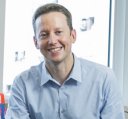
 Mark Campbell
3 previous affiliations
- Cornell Tech2001–2026
- Full Professor · 2001–2026
- University of Washington1997–2001
- Assistant Professor · 1997–2001
- Postdoc · 1996–1997
- PhD student · 1990–1995
Research Overview
Mark Campbell focuses on autonomous systems, 3D perception, and the perception-planning pipeline for robotics and self-driving vehicles. His work spans from early collision monitoring in aerospace applications to advanced machine learning techniques for depth estimation, sensor fusion, and domain adaptation. Recently, he investigates collaborative perception and generative models to improve autonomous navigation in complex, unstructured, and adverse environments.
Research Trajectory
Following early research in aerospace applications, such as his work on Collision monitoring within satellite clusters (2005), Campbell's focus shifted toward the perception-planning pipeline for ground-based autonomous systems. A significant contribution to the area of Geometric Representations for Long-Range Monocular 3D Perception came with Pseudo-LiDAR From Visual Depth Estimation: Bridging the Gap in 3D Object Detection for Autonomous Driving (2019). This work demonstrated that the performance gap between expensive LiDAR and standard cameras in 3D object detection stems largely from data representation. By converting 2D depth maps into 3D point clouds, the approach substantially improved image-based detection accuracy. Concurrently, he explored human-robot interaction in the research direction of Text-Based Person Search and Re-identification, developing an interactive system in Interactive Natural Language-Based Person Search (2020) that allows robots to ask clarifying questions to locate specific individuals in crowds.
A major theme in Campbell's subsequent work is reducing the reliance on expensive, manually annotated datasets for autonomous driving. Contributing to the broader area of Efficient 3D Object Detection via Label Minimization, his group developed methods to train models using alternative signals. In Learning to Detect Mobile Objects from LiDAR Scans Without Labels (2022), he advanced the field of Unsupervised Object Discovery from Motion to Appearance and contributed to work in Bridging the Geometry Gap in 3D Perception by demonstrating how to train 3D object detectors without human-drawn bounding boxes, thereby avoiding the brittleness associated with domain-specific annotations. This effort to improve generalization and automate annotation is also evident in Sequential Joint Shape and Pose Estimation of Vehicles with Application to Automatic Amodal Segmentation Labeling (2022) and Exploiting Playbacks in Unsupervised Domain Adaptation for 3D Object Detection in Self-Driving Cars (2022), which utilized repeated traversals of the same routes to adapt perception systems to new environments.
To address the challenges of real-world driving beyond ideal conditions, Campbell and collaborators introduced Ithaca365: Dataset and Driving Perception under Repeated and Challenging Weather Conditions (2022). This large-scale dataset captures diverse weather events over a year and a half, providing a benchmark for amodal perception in heavy snow and rain. Addressing physical occlusions in urban environments, he contributed to the direction of Generative Semantic Map Inpainting for Autonomous Navigation with Planning Paths through Occlusions in Urban Environments (2022). This framework uses an inpainting model to infer the geometry of hidden spaces at intersections, allowing vehicles to plan dynamically feasible and longer paths through occluded areas.
Continuing the focus on environmental robustness, Unsupervised Domain Adaptation for Self-Driving from Past Traversal Features (2023) introduced Historically Guided Domain Adaptation (Hist-DA). By leveraging the persistence of static environmental features across multiple unlabeled drives, the method filters noisy pseudo-labels during self-training. Similarly, Image-to-Image Translation for Autonomous Driving from Coarsely-Aligned Image Pairs (2023) presented a novel approach to adapt images from adverse weather to clear conditions using coarsely aligned pairs, easing the data collection burden. This trajectory of weather-aware perception was further extended in SWIFT: Strategic Weather-informed Image-based Forecasting for Trajectories (2024).
Most recently, Campbell's research has expanded into multi-agent and collaborative perception. He participated in the development of Mixed Signals: A Diverse Point Cloud Dataset for Heterogeneous LiDAR V2X Collaboration (2025), a benchmark for Vehicle-to-Everything (V2X) systems that demonstrates how sharing data between vehicles and infrastructure improves perception in complex urban settings. To overcome the high cost of collecting multi-car data, he co-authored Transfer Your Perspective: Controllable 3D Generation from Any Viewpoint in a Driving Scene (2025), a generative framework that synthesizes collaborative sensor data from single-car datasets. Additionally, Learning 3D Perception from Others' Predictions (2025) explores how a "learner" vehicle can train its own 3D object detector by using the predictions of nearby "expert" vehicles as labels, achieving high performance while drastically reducing the need for manual annotations.
Current Directions
The most recent papers in the evidence indicate a strong focus on collaborative perception and generative data synthesis for autonomous driving. Recent work investigates how autonomous vehicles can share information and learn from one another to overcome individual sensor limitations and occlusions. This includes developing Vehicle-to-Everything (V2X) frameworks where "learner" vehicles utilize the predictions of nearby "expert" vehicles or infrastructure to train their own perception models without manual annotations. Additionally, current research explores the use of generative models to synthesize novel viewpoints from single-vehicle data, effectively bridging the gap between simulation and reality to train robust multi-agent systems without the prohibitive costs of real-world multi-car data collection.
Profile updated
Loading new papers…
Other researchers whose papers cluster into the same research directions — a proxy for overlapping technical interests and shared intellectual neighborhoods.
See something wrong? Report a mistake