

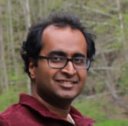
 Bharath Hariharan
· 4 previous affiliations
- Cornell TechSince 2017
- Assistant Professor · Since 2017
- Cornell UniversityCurrent
- Current
- Meta (United States)2015–2017
- Postdoc · 2015–2017
- PhD student · 2010–2015
Research Overview
Bharath Hariharan focuses on computer vision, visual reasoning, and label-efficient learning. His early work established foundational architectures for object detection and semantic segmentation before expanding into compositional reasoning and few-shot learning methodologies. Currently, his research investigates multimodal perception, remote sensing applications, and the extraction of physical and semantic correspondences from generative models.
Research Trajectory
Bharath Hariharan’s early research focused on building robust feature representations for dense prediction tasks in computer vision. In 2014, he introduced Simultaneous Detection and Segmentation, proposing a convolutional neural network architecture that combined bounding box and region foreground features to identify and precisely outline individual object instances. He advanced this focus on spatial precision the following year by developing Hypercolumns for object segmentation and fine-grained localization. This work created a novel feature representation that aggregated information across all layers of a network at each pixel, improving performance on fine-grained localization tasks. Continuing to refine multi-scale feature extraction, he later participated in the development of Feature Pyramid Networks for Object Detection, an architecture that exploited the inherent hierarchical structure of deep convolutional networks to build high-level semantic feature maps at all scales with marginal extra computational cost.
Around 2017, his research expanded to address how machine learning models process and reason about visual and textual information, contributing significantly to the research direction of Decomposing Perception and Reasoning in Multimodal Models. To diagnose the capabilities and biases of visual reasoning systems, he co-developed CLEVR: A Diagnostic Dataset for Compositional Language and Elementary Visual Reasoning. Because existing benchmarks often allowed models to exploit statistical shortcuts without performing actual reasoning, CLEVR provided detailed annotations to isolate specific reasoning abilities. Building on these insights, he collaborated on Inferring and Executing Programs for Visual Reasoning. This work proposed a modular system comprising a neural program generator that constructed an explicit representation of the reasoning process and an execution engine that produced the final answer, thereby avoiding the black-box mapping that often leads to bias exploitation.
Simultaneously, he began tackling the data bottleneck in deep learning by investigating low-shot visual recognition. This body of work advanced the area of Hallucinating Training Samples in Latent Feature Space as well as the broader direction of Transferring Feature Variance to Data Scarce Classes. In Low-Shot Visual Recognition by Shrinking and Hallucinating Features, he presented representation regularization techniques and methods to synthesize additional training examples for data-starved classes. He extended this paradigm in Low-Shot Learning From Imaginary Data, which combined a meta-learner with a hallucinator model. By optimizing both jointly, the system could better learn novel visual concepts from minimal examples by simulating how objects might look from different views.
Moving into the 2020s, his focus on data efficiency evolved to include self-supervised and transfer learning paradigms, contributing to the domain of Label Efficient Learning via Self Supervised Pretraining. In Self-training For Few-shot Transfer Across Extreme Task Differences, he investigated techniques for specialized domains—such as medical or satellite imagery—where large labeled base datasets are unavailable for pre-training. To formalize why such transfer succeeds across different tasks, he authored A theoretically grounded characterization of feature representations, proposing intuitive measurements to evaluate a feature space's suitability for target applications. He also explored unsupervised methods in PiCIE: Unsupervised Semantic Segmentation Using Invariance and Equivariance in Clustering, incorporating geometric consistency as an inductive bias to extend clustering from image-level to pixel-level assignments in uncurated, scene-centric data. Continuing the theme of resource-constrained learning, he guided work on Learning Efficient Models From Few Labels By Distillation From Multiple Tasks, which introduced a weighted multi-source distillation method to train efficient models using limited labeled data by leveraging diverse source domains.
In recent years, his research has increasingly leveraged generative models for perception and tackled complex physical and environmental monitoring tasks. In Emergent Correspondence from Image Diffusion, his group demonstrated that pre-trained diffusion networks inherently learn deep semantic representations, allowing for the extraction of pixel-level correspondences without additional training or labels.
His recent applied work addresses dynamic scenes and Earth observation. He oversaw the creation of MONITRS: Multimodal Observations of Natural Incidents Through Remote Sensing, a dataset designed to track disaster progression using satellite imagery and natural language annotations. He also investigated the reliability of AI in this domain in Towards LLM Agents for Earth Observation, introducing the UnivEARTH benchmark to evaluate how well language agents can automate geospatial analysis using external APIs. In the realm of physical understanding, his lab introduced a novel zero-shot system for Tracking and Understanding Object Transformations, addressing the challenge of tracking objects that undergo severe state changes, such as slicing or metamorphosis. He also directed the development of ObjectCarver: Semi-automatic segmentation, reconstruction and separation of 3D objects, which separates individual objects from reconstructed 3D scenes with minimal user input. Finally, he collaborated on Δynamics: Language-Based Representation for Inferring Rigid-Body Dynamics From Videos, a vision-language framework that generates structured text configurations for physics simulation to infer rigid-body properties directly from monocular videos.
Current Directions
The most recent papers in the evidence indicate a strong focus on applying advanced multimodal and generative models to complex, dynamic environments. One major current direction involves Earth observation and remote sensing, where recent work investigates the use of vision-language models and LLM agents to automate the analysis of satellite imagery for disaster monitoring. This includes benchmarking the reliability and execution capabilities of these agents in real-world geospatial tasks.
Another active area of research centers on physical scene understanding and 3D object dynamics. This encompasses developing frameworks to track objects undergoing severe state transformations, separating individual 3D objects from complex reconstructed scenes, and utilizing language as a unified representation to infer rigid-body dynamics directly from video data. Through these efforts, the research aims to bridge the gap between static visual recognition and the understanding of dynamic, physically grounded systems.
Profile updated
Loading new papers…
Other researchers whose papers cluster into the same research directions — a proxy for overlapping technical interests and shared intellectual neighborhoods.
See something wrong? Report a mistake