

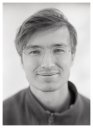
 Marcus Greiff
· 3 previous affiliations
- Toyota Research InstituteSince 2024
- Researcher · Since 2024
- Researcher · 2021–2024
- Automatic Control2017–2021
- PhD student · 2017–2021
Research Overview
Marcus Greiff focuses on geometric control theory, autonomous vehicle dynamics, and optimization for safety-critical systems. His early work addressed motion planning and robust tracking for aerial and ground vehicles operating under complex constraints. More recently, his research investigates differentiable control architectures, physics-informed machine learning, and risk-averse planning to enable robust autonomous operation at the physical limits of handling.
Research Trajectory
Marcus Greiff’s early research established foundational methods in geometric control and trajectory generation for complex dynamical systems. In 2018, he investigated rotational singularities in geometric controllers, proposing a singularity-free method in Incremental Reference Generation for Nonsingular Control on $SE (3)$ that enables complex maneuvers on the special Euclidean group without compromising closed-loop stability. Concurrently, he explored time-optimal motion planning through convex optimization, introducing a novel approach in A Time-Warping Transformation for Time-Optimal Movement in Differentially Flat Systems. Expanding from individual vehicle dynamics to multi-agent systems, his work incorporated viability theory to manage time-varying motion constraints. This led to the development of temporal viability regulation frameworks in Temporal viability regulation for control affine systems with applications to mobile vehicle coordination under time-varying motion constraints and heuristic algorithms for generating feasible trajectories across heterogeneous vehicle networks in Feasible coordination of multiple homogeneous or heterogeneous mobile vehicles with various constraints.
Between 2021 and 2023, Greiff focused extensively on the robustness and environmental adaptability of aerial robotics. He addressed the optimal tuning of attitude controllers subject to natural disturbances in Tuning and Analysis of Geometric Tracking Controllers on SO(3), utilizing alternating semidefinite programming to minimize error-state trajectories. Extending robust control to target tracking, he contributed to Target Localization and Circumnavigation With Integral Action in R², which modeled system velocities to reject bounded load disturbances for both aerial and ground vehicles. His contributions to the research direction of Geometric Control on the Special Euclidean Group advanced significantly with Quadrotor Control on $\text{SU}(2)\times \mathbb{R}^{3}$ with SLAM Integration, where he developed a specialized geometric controller integrated with real-time simultaneous localization and mapping to navigate complex environments without external positioning. To handle environmental uncertainty, he later proposed a convex polynomial optimization method in Quadrotor Motion Planning in Stochastic Wind Fields that directly minimizes the squared norm of UAV thrust under known stochastic input uncertainties.
In 2024, Greiff’s work broadened to include advanced estimation techniques and perception systems. He tackled joint state and measurement-noise parameter estimation for nonlinear state-space models in Asynchronous Variational-Bayes Kalman Filtering, developing a filter capable of processing independent, variable-rate measurement sources sequentially. This expertise in probabilistic filtering was applied to global navigation satellite systems (GNSS) to mitigate multi-path biases and modeling errors. He introduced a binary classification approach in Bayesian Measurement Masks for GNSS Positioning to identify and remove erroneous observations, and subsequently developed a recursive mixed-integer Kalman filtering framework in A System-Level Cooperative Multiagent GNSS Positioning Solution that improves positioning accuracy across a network of agents without requiring inter-agent communication. During this period, he also participated in the broader area of Surface-Aware Importance Sampling for Neural Radiance Fields, collaborating on A Probability-Guided Sampler for Neural Implicit Surface Rendering to improve the scalability and accuracy of 3D scene reconstruction by modeling probability densities along projection rays.
Most recently, Greiff has integrated physics-informed machine learning with advanced predictive control to push autonomous vehicles to their dynamic limits. Contributing to the area of Autonomous Control at the Physical Limits of Handling, he co-authored One Model to Drift Them All: Physics-Informed Conditional Diffusion Model for Driving at the Limits, which leverages diffusion models to capture complex vehicle dynamics for tasks like drifting. This focus on challenging driving conditions continued with Semantic Property Maps for Driving Applications, a framework that fuses visual semantics with real-time physics estimates to predict road friction ahead of the vehicle. To safely execute maneuvers in such unpredictable environments, he advanced the research direction of Overcoming Worst-Case Conservatism in Safe Control through Risk-Averse Model Predictive Control for Racing in Adverse Conditions, employing a Conditional Value-at-Risk constraint to maintain control over wet patches. His recent methodological work supports these high-performance applications; in Solving Quadratic Programs with Slack Variables via ADMM without Increasing the Problem Size, he introduced a smoothed projection technique to efficiently handle infeasible quadratic programs. Returning to aerial platforms, he formalized safe navigation in Invariant Set Planning for Quadrotors: Design, Analysis, Experiments using robust positive invariant sets. Finally, his work in the area of Deep Equilibrium Models and Implicit Differentiation culminated in Differentiable Model Predictive Control on the GPU, which accelerates differentiable MPC for large-scale machine learning, enabling real-world vehicles to learn robust, high-speed maneuvers.
Current Directions
The most recent papers in the evidence indicate a strong focus on bridging machine learning and optimal control for high-performance autonomous systems. Recent work investigates differentiable optimization layers, specifically accelerating Model Predictive Control (MPC) on GPUs to enable real-time learning of complex vehicle dynamics. A major theme in this current research is operating safely at the physical limits of handling—such as high-speed drifting or navigating adverse weather conditions. To achieve this, current efforts address risk-averse planning formulations, including Conditional Value-at-Risk (CVaR) constraints, and the development of predictive semantic property maps that fuse exteroceptive vision with proprioceptive physics estimates. Methodologically, this involves refining quadratic programming solvers and leveraging implicit differentiation to make safety-critical control architectures both computationally efficient and fully differentiable for end-to-end learning.
Profile updated
| Paper | Venue | Year |
|---|---|---|
| Differentiable Model Predictive Control on the GPUGitHubToyotaResearchInstitute/ | arXiv | 2025 |
Loading new papers…
Other researchers whose papers cluster into the same research directions — a proxy for overlapping technical interests and shared intellectual neighborhoods.
See something wrong? Report a mistake