

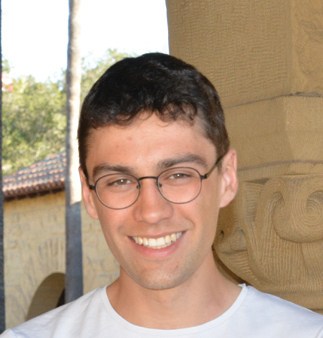
 Thomas Lew
· 2 previous affiliations
- Toyota Research InstituteCurrent
- Current
- Researcher · 2023–2025
- Stanford University2019–2023
- PhD student · 2019–2023
Research Overview
Thomas Lew focuses on decision-making algorithms for autonomous systems, stochastic optimal control, and reachability analysis. His early work developed robust trajectory optimization and safety verification methods for complex robotic platforms. Currently, his research investigates uncertainty-aware control, GPU-accelerated differentiable optimization, and risk-averse planning to enable reliable autonomy in highly dynamic and unpredictable environments.
Research Trajectory
His early research explored robust navigation in visually degraded environments, introducing Contact Inertial Odometry: Collisions are your Friends (2019). This work demonstrated how physical impacts could be used to correct velocity drift, contributing to the broader area of Robust Multi-Modal Perception for Adverse Weather Conditions. Concurrently, he participated in developing Trajectory Optimization on Manifolds: A Theoretically-Guaranteed Embedded Sequential Convex Programming Approach, which advanced the research direction of Manifold Constrained Dynamics via Projected Differential Equations.
In 2020, his focus expanded to safety verification with Sampling-based Reachability Analysis: A Random Set Theory Approach with Adversarial Sampling, addressing the challenge of computing reachable sets for uncertain systems. Continuing this emphasis on safety, he collaborated on Control Barrier Functions for Cyber-Physical Systems and Applications to NMPC (2021). This research bridged continuous-time safety theory and discrete-time robotic implementation by explicitly accounting for discretization errors, advancing work in the area of Optimization Based Safety Filtering via Control Barrier Functions. To handle systems with highly uncertain dynamics, he subsequently developed a sequential exploration-exploitation framework in Safe Active Dynamics Learning and Control: A Sequential Exploration-Exploitation Framework (2022).
In 2023, he provided a unifying theoretical analysis for continuous-time optimal control in Analysis of Theoretical and Numerical Properties of Sequential Convex Programming for Continuous-Time Optimal Control, contributing to the area of Bridging Direct and Indirect Methods via Sequential Convex Programming. By 2024, his research increasingly addressed stochastic programming and risk-averse control. He proposed a robust relaxation technique for expected value equality constraints in Sample Average Approximation for Stochastic Programming with Equality Constraints, which supported the direction of Robust Trajectory Planning via Belief Space Optimization. He also introduced a continuous-time planning formulation with an average-value-at-risk constraint in Risk-Averse Trajectory Optimization via Sample Average Approximation.
In 2025, his work on geometric set estimation yielded significant theoretical results. He developed computationally tractable methods for nonlinear systems in Convex Hulls of Reachable Sets and established tighter mathematical bounds in Estimating the Convex Hull of the Image of a Set with Smooth Boundary: Error Bounds and Applications. Both papers advanced the research direction of Quadratic Convergence in Geometric Set Estimation. That same year, he bridged deterministic and stochastic optimal control using rough path theory in Rough Stochastic Pontryagin Maximum Principle and an Indirect Shooting Method. He also improved optimization algorithms by introducing a smoothed projection step in Solving Quadratic Programs with Slack Variables via ADMM without Increasing the Problem Size.
Applying these risk-averse principles to highly dynamic tasks, he developed a Conditional Value-at-Risk approach for autonomous racing in Risk-Averse Model Predictive Control for Racing in Adverse Conditions. He further explored driving at the limits of handling by leading research on active information gathering in First, Learn What You Don't Know: Active Information Gathering for Driving at the Limits of Handling.
His most recent work in 2026 focuses on accelerating optimization and addressing open-world autonomy. He contributed to neural network-based initialization techniques in Learning-based warm-starting for fast sequential convex programming and trajectory optimization and participated in framing system-level challenges for out-of-distribution data in A system-level view on out-of-distribution data in robotics. As a Research Scientist at the Toyota Research Institute, he recently directed the development of DiffMPC, a GPU-accelerated tool detailed in Differentiable Model Predictive Control on the GPU, which enables the scalable integration of differentiable optimization into large-scale machine learning.
Current Directions
The most recent papers in the evidence indicate a strong focus on scaling optimization for real-time control and managing uncertainty in highly dynamic environments. Recent work investigates GPU-accelerated differentiable Model Predictive Control (MPC) to enable fast, parallel-friendly optimization that integrates seamlessly with large-scale machine learning pipelines. Additionally, current research addresses risk-averse planning and active information gathering for systems operating at the limits of handling, such as autonomous vehicles navigating adverse conditions. This involves developing theoretical tools—including rough path theory for stochastic optimal control and advanced geometric set estimation—to provide robust performance guarantees for autonomous systems facing out-of-distribution scenarios.
Profile updated
Loading new papers…
Other researchers whose papers cluster into the same research directions — a proxy for overlapping technical interests and shared intellectual neighborhoods.
See something wrong? Report a mistake