

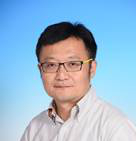
 Lei Chen
· 4 previous affiliations
- Full Professor · Since 2021
- Full Professor · Since 2016
- Current
- University of Waterloo2000–2005
- PhD student · 2000–2005
- Austrian Institute of Technology1996–1997
- MS student · 1996–1997
- Tianjin University1990–1994
- Undergrad student · 1990–1994
23 other authors named Lei Chen: Lei Chen (Nanjing University of Posts and Telecommunications · 106 papers), Lei Chen (Huawei Technologies (China) · 49 papers), Lei Chen (Tsinghua University · 45 papers), Lei CHEN (Finvolution Group · Peking University · 42 papers), Lei Chen (University of Science and Technology of China · 28 papers), and 18 more
Research Overview
Lei Chen focuses on large-scale data management, probabilistic databases, and data-driven machine learning. His trajectory spans foundational work in spatial-temporal data processing and graph analytics to recent innovations in neural architecture search and stream learning. Currently, he investigates the intersection of large language models, knowledge graphs, and efficient retrieval systems for complex reasoning tasks.
Research Trajectory
Lei Chen’s early research established foundational techniques in spatial and temporal data management, particularly concerning the challenges of noise and uncertainty in real-world datasets. He introduced the Edit Distance on Real sequence (EDR) in Robust and Fast Similarity Search for Moving Object Trajectories to provide a robust distance function capable of handling the sampling variations and sensor errors inherent in moving object data. As his focus expanded into probabilistic data, he contributed to the area of Probabilistic Graph Representation and Querying. This is exemplified by Efficient Subgraph Search over Large Uncertain Graphs, which tackled the complexities of querying graph structures where nodes or edges carry probabilistic existence. He also continued to advance spatial data processing, participating in collaborative research on real-time spatial matching with Online Minimum Matching in Real-Time Spatial Data: Experiments and Analysis., aligning with his broader contributions to the research direction of Future-Aware Dispatching for Dynamic Spatial Matching.
As the scale of data and the demands of machine learning grew, his focus shifted toward integrating advanced analytics directly with database systems and distributed architectures, including work in the area of Native Machine Learning Execution Inside Relational Databases. His broader algorithmic contributions during this period also encompass the research direction of Robust Initialization for Centroid Based Clustering. In 2020, his group developed Interstellar: Searching Recurrent Architecture for Knowledge Graph Embedding, a hybrid-search algorithm for neural architecture search (NAS) tailored to relational paths in knowledge graphs. This work significantly advanced the broader field of Hierarchical Search Spaces for Efficient Neural Architecture Discovery.
Addressing the challenges of continuous data streams, he proposed a system for efficient online model updates in Camel: Managing Data for Efficient Stream Learning, utilizing coreset selection to accelerate training and prevent catastrophic forgetting. In parallel, he contributed to the area of Horizontal Scaling for Billion Scale Graph Analytics through collaborative work on SANCUS: Staleness-Aware Communication-Avoiding Full-Graph Decentralized Training in Large-Scale Graph Neural Networks, which focused on optimizing decentralized training for massive graph structures.
Recent years have seen a concentrated focus on the optimization and application of Large Language Models (LLMs), alongside continued advancements in graph learning, indexing, and distributed systems. In the domain of data structures, he evaluated machine learning models used directly for storage layout in How good are multi-dimensional learned indexes? An experimental survey. He also addressed evolving network structures with A Selective Learning Method for Temporal Graph Continual Learning, tackling the problem of maintaining knowledge of old node classes as new ones appear over time. Additionally, he explored performance predictability in distributed consensus systems with InTime: Towards Performance Predictability In Byzantine Fault Tolerant Proof-of-Stake Consensus.
A significant portion of his recent trajectory centers on making LLMs more efficient and reliable. He surveyed acceleration techniques in A Survey on Large Language Model Acceleration based on KV Cache Management, detailing strategies for improving memory utilization during inference. He explored adapting pretrained models for specific scholarly tasks in Adapting Pretrained Language Models for Citation Classification via Self-Supervised Contrastive Learning. Bridging LLMs and architecture design, he developed Structuring Benchmark into Knowledge Graphs to Assist Large Language Models in Retrieving and Designing Models, which organizes historical performance records into a Knowledge Benchmark Graph to retrieve optimal model designs for unseen datasets. To improve retrieval systems, Semi-Parametric Retrieval via Binary Bag-of-Tokens Index tackled the trade-off between fast traditional indexing and computationally expensive neural retrievers in Retrieval-Augmented Generation (RAG) pipelines.
His most recent work pushes the boundaries of retrieval-augmented reasoning and dialogue generation. Beyond Single-View Indexing: Structure-Aware Multi-View Retrieval for Knowledge-Based VQA introduced the SCAR framework to intelligently combine multiple knowledge views for visual question answering. To improve the reliability of generative models, VoG: Enhancing LLM Reasoning through Stepwise Verification on Knowledge Graphs developed a framework to mitigate LLM hallucinations by verifying reasoning steps against knowledge graphs in real-time. Finally, Context-Driven Incremental Compression for Multi-Turn Dialogue Generation presented a framework for maintaining coherent, long-term conversations by incrementally compressing context, avoiding the memory overhead of processing entire dialogue histories.
Current Directions
Recent work investigates the optimization and reliability of Large Language Models (LLMs) in complex, knowledge-intensive applications. A primary focus is on enhancing retrieval-augmented generation (RAG) and reasoning capabilities by tightly integrating LLMs with structured knowledge graphs. This involves developing frameworks that verify reasoning steps in real-time to prevent hallucinations, as well as designing multi-view retrieval systems that intelligently synthesize diverse knowledge sources for multi-modal tasks. Additionally, current research addresses the computational bottlenecks of deploying LLMs for long-context applications, exploring techniques such as key-value cache management and incremental context compression to maintain coherent, multi-turn dialogues efficiently without prohibitive memory costs.
Profile updated
Loading new papers…
Other researchers whose papers cluster into the same research directions — a proxy for overlapping technical interests and shared intellectual neighborhoods.
See something wrong? Report a mistake