

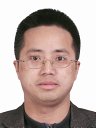
 Lei Chen
· 1 previous affiliation
- Full Professor · Since 2019
- Associate Professor · 2012–2019
- Assistant Professor · 2006–2012
23 other authors named Lei Chen: Lei Chen (Hong Kong University of Science and Technology · 1,160 papers), Lei Chen (Huawei Technologies (China) · 49 papers), Lei Chen (Tsinghua University · 45 papers), Lei CHEN (Finvolution Group · Peking University · 42 papers), Lei Chen (University of Science and Technology of China · 28 papers), and 18 more
Research Overview
Lei Chen focuses on the development of robust machine learning frameworks, matrix completion techniques, and computational models for high-dimensional data analysis. His work spans several domains, including medical informatics, computer vision, and network science, with a particular emphasis on addressing challenges related to data sparsity, noise, and complex structural correlations. His research trajectory has evolved from early investigations into neural network architectures for pattern recognition toward sophisticated transductive and inductive learning models for clinical prognosis and robust feature selection in graph-based environments.
Research Trajectory
The early stages of Chen’s research were characterized by an exploration of neural network architectures, specifically focusing on associative memory and pattern recognition. In Distance-Based Sparse Associative Memory Neural Network Algorithm for Pattern Recognition, Chen introduced distance-weighted approaches to improve exponential correlation associative memory (ECAM). This work was notable for integrating biological visual perception mechanisms and small-world network phenomena into neural evolution rules, aiming to enhance image processing capabilities through sparse connectivity. This period established a foundational interest in how structural constraints within a network—whether biological or artificial—influence the efficiency of information retrieval and pattern identification.
By the early 2010s, Chen’s focus expanded to include the management and discovery of distributed digital resources. This shift is exemplified by the development of the Clustering facilitated web services discovery model based on supervised term weighting and adaptive metric learning. In this work, Chen addressed the challenges of non-semantic web service discovery by utilizing WordNet and latent semantic indexing to represent services as low-dimensional feature vectors. By employing a modified Kernel batch self-organizing map (KBSOM), the model improved the precision of service discovery in an increasingly crowded digital ecosystem. This transition marked a move toward semantic feature engineering and adaptive metric learning, which would become recurring themes in his later algorithmic work.
During this same period, Chen engaged with the complexities of data privacy and structural analysis in interconnected systems. His work touched upon Structural Anonymization for Privacy Preserving Graph Data, where the research addressed the vulnerability of de-identified datasets to "fingerprinting" based on a user's neighborhood or connection patterns. This interest extended to Differential Privacy for Evolving Graph Structures, reflecting a concern for maintaining privacy in dynamic environments like social networks or financial transaction logs. Furthermore, his participation in research regarding Heterogeneous Differential Privacy suggests an early involvement in decentralized machine learning, specifically focusing on how to apply non-uniform privacy budgets across diverse populations.
Medical Informatics and Matrix Completion
A significant pivot in Chen’s career occurred in the mid-2010s, as he began applying matrix completion and multi-task learning to critical problems in medical imaging and clinical prognosis. This work often centered on high-grade gliomas (HGG), where non-invasive prediction of molecular indicators is vital for treatment planning. In Multi-label Inductive Matrix Completion for Joint MGMT and IDH1 Status Prediction for Glioma Patients, Chen proposed an online inductive learning strategy to predict MGMT promoter methylation and IDH1 mutation statuses. This model was designed to handle the inherent sparsity and missing data common in clinical datasets, providing a computational alternative to invasive surgical biopsies.
Chen further refined these techniques in Multi-Label Nonlinear Matrix Completion With Transductive Multi-Task Feature Selection for Joint MGMT and IDH1 Status Prediction of Patient With High-Grade Gliomas. By introducing nonlinear components and transductive feature selection, this work addressed the limitations of linear models in capturing the complex, multimodal nature of neuroimaging data. These contributions established Chen as a key researcher in the application of Multivariate Logistic Regression for Risk Factor Isolation and advanced matrix factorization within the biomedical domain.
The application of these mathematical frameworks extended beyond classification into survival analysis. In Multi-task regression learning for survival analysis via prior information guided transductive matrix completion, Chen addressed the "censored data" problem—where the event of interest is not observed for all subjects within the study period. By formulating survival prediction as a prior-information-guided matrix completion task, the model (PigTMC) effectively handled high-dimensional, small-sample-size data, which is a frequent constraint in longitudinal medical studies. This work demonstrated a sophisticated integration of clinical domain knowledge with transductive learning.
Robust Machine Learning and Graph Theory
In recent years, Chen’s research has focused on the robustness of machine learning models against complex noise and the optimization of graph-based learning. This is evident in his work on multi-label learning and hypergraph construction. While participating in the development of frameworks like SPL-MLL, which identifies predictable "landmark" labels, and HNOML, which addresses hybrid noise in both features and labels, Chen has contributed to the broader field of robust pattern recognition.
His methodological interests also include Mapping Complex Herbal Formulas to Modern Signaling Pathways, applying computational modeling to bridge traditional medicine and modern pharmacology. Additionally, his work has touched upon specialized physical modeling, such as Trapping Electromagnetic Waves through Hierarchical Internal Reflections, which involves designing materials that absorb rather than reflect radiation, suggesting an interest in the hierarchical modeling of complex physical systems.
A major recent contribution to graph-based learning is found in Joint Feature and Differentiable k-NN Graph Learning using Dirichlet Energy. In this work, Chen and his collaborators developed a deep learning framework that performs unsupervised feature selection and graph learning simultaneously. By utilizing Dirichlet Energy as a measure of feature importance and Optimal Transport to make k-Nearest Neighbor (k-NN) graph construction differentiable, the model can identify informative features even when they are obscured by heavy noise. This represents a significant advancement in making graph-based models more end-to-end and resilient to data quality issues.
Current Directions
Chen’s most recent work indicates a move toward computer vision tasks in extreme environmental conditions, specifically focusing on human-centric analysis. As the senior author of Robust Low-Light Human Pose Estimation through Illumination-Texture Modulation, Chen has overseen the development of a frequency-based "divide-and-conquer" framework for pose estimation in low-visibility settings. This approach moves away from uniform pixel-level enhancement—which often introduces artifacts—and instead focuses on task-relevant information by applying dynamic illumination correction to low-frequency components while preserving high-frequency textures.
This current focus on illumination-texture modulation reflects a broader interest in robust feature learning under adverse conditions. It integrates his long-standing expertise in noise handling and adaptive learning with the practical requirements of modern computer vision. Throughout his career, Chen has consistently sought to develop algorithms that remain effective when data is incomplete, noisy, or structurally complex, moving from the theoretical foundations of neural networks to high-impact applications in medicine and visual sensing.
Profile updated
Loading new papers…
Other researchers whose papers cluster into the same research directions — a proxy for overlapping technical interests and shared intellectual neighborhoods.
See something wrong? Report a mistake