

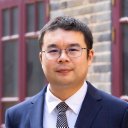
 Lefei Zhang
· 1 previous affiliation
- Wuhan UniversitySince 2017
- Full Professor · Since 2017
Research Overview
Lefei Zhang focuses on computer vision, remote sensing image analysis, and representation learning. His trajectory spans early foundational work in hyperspectral feature extraction and active learning to recent advancements in deep clustering, state space models, and semi-supervised segmentation. Currently, he investigates scalable architectures for multimodal segmentation, autonomous driving trajectories, and high-dimensional spectral modeling.
Research Trajectory
Zhang’s early research established foundational techniques for processing and classifying complex remote sensing data. In 2012, he introduced a patch alignment framework in On Combining Multiple Features for Hyperspectral Remote Sensing Image Classification, which optimally combined spectral, texture, and shape features into a unified low-dimensional representation. Expanding on dimensionality reduction, he collaborated on Tensor Discriminative Locality Alignment for Hyperspectral Image Spectral-Spatial Feature Extraction (2013), applying multilinear algebra to remove redundant information from spectral-spatial features. As deep learning began to transform the field, he contributed to a comprehensive overview of these shifts in Deep Learning for Remote Sensing Data: A Technical Tutorial on the State of the Art (2016), detailing how hierarchical feature representations could be leveraged for pixel-based classification.
In the mid-2010s, Zhang’s focus expanded to robust clustering and active learning methodologies. He proposed novel matrix approximation techniques in Robust Manifold Matrix Factorization for Joint Clustering and Feature Extraction (2017), addressing the vulnerability of conventional squared residue minimization to noise and outliers. Concurrently, he participated in developing active learning frameworks designed to optimize sample selection. This included work on Robust and Discriminative Labeling for Multi-Label Active Learning Based on Maximum Correntropy Criterion (2017), which handled outlier labels by merging uncertainty and representativeness measures. This work advanced the broader research areas of Scaling Active Learning to Large Unlabeled Pools and Hybrid Uncertainty and Diversity Sampling for Active Learning. He further contributed to the latter area through Exploring Representativeness and Informativeness for Active Learning (2017), which unified these criteria via a two-sample discrepancy problem. Continuing his work on clustering, he designed a dynamic affinity matrix learning approach in Self-Representative Manifold Concept Factorization with Adaptive Neighbors for Clustering (2018), achieving strong performance on high-dimensional datasets by combining a dynamic global graph with a static local graph regularizer.
Moving into the 2020s, Zhang increasingly integrated deep learning architectures with clustering and generative tasks. He introduced a novel contrastive learning framework in Dual Mutual Information Constraints for Discriminative Clustering (2023), which minimized feature-level redundancy while maximizing instance-level similarity. This significantly contributed to the research directions of Joint Representation Learning and Clustering and Differentiable Clustering for End-to-End Representation Learning. His research group also addressed generative modeling challenges, such as structural coherence in diffusion models, by developing a Structure-Aware Inpainting Learning scheme in Eliminating the Cross-Domain Misalignment in Text-guided Image Inpainting (2024).
By 2025, Zhang’s work demonstrated a strong emphasis on state space models, scalable semi-supervised learning, and diverse applications ranging from remote sensing to autonomous systems. He developed HSRMamba: Contextual Spatial-Spectral State Space Model for Single Hyperspectral Image Super-Resolution (2025), adapting Mamba architectures to capture both local and global structural relationships, thereby advancing the area of Modeling Spectral Signatures as Ordered Sequences. In the domain of semi-supervised learning, he tackled scale sensitivity with ScaleMatch: Multi-scale Consistency Enhancement for Semi-supervised Semantic Segmentation (2025) and oversaw the development of a highly scalable approach for Earth observation in S5: Scalable Semi-Supervised Semantic Segmentation in Remote Sensing (2025), utilizing a massive curated dataset and Mixture-of-Experts fine-tuning. His team also explored the statistical signatures of AI-generated content in Imitate Before Detect: Aligning Machine Stylistic Preference for Machine-Revised Text Detection (2025) and redefined end-to-end autonomous driving with ResAD: Normalized Residual Trajectory Modeling for End-to-End Autonomous Driving (2025), shifting the learning task to predict normalized residuals relative to a physics-based reference.
Most recently, in 2026, Zhang has focused on adapting powerful foundation models for specialized visual tasks. His lab proposed MPG-SAM 2: Adapting SAM 2 with Mask Priors and Global Context for Referring Video Object Segmentation, integrating multimodal encoders to align video and textual features. He also collaborated on OFL-SAM2: Prompt SAM2 with Online Few-shot Learner for Efficient Medical Image Segmentation, introducing a prompt-free framework for label-efficient medical imaging. Concurrently, he continued to push the boundaries of hyperspectral analysis with MambaMoE: Mixture-of-spectral-spatial-experts state space model for hyperspectral image classification.
Current Directions
The most recent papers in the evidence indicate a strong focus on adapting large-scale foundation models and state space architectures for specialized, high-dimensional visual tasks. A primary direction involves modifying the Segment Anything Model (SAM 2) for complex domains—such as referring video object segmentation and medical image segmentation—by minimizing the need for manual prompting and leveraging online few-shot learning and global context awareness. Additionally, ongoing work investigates the application of Mamba-based state space models to hyperspectral imaging. By integrating spatial-spectral contexts and Mixture-of-Experts (MoE) frameworks, these architectures are being tailored to handle the unique sequence-modeling challenges of remote sensing data. Finally, recent research addresses scalable semi-supervised learning and trajectory modeling, emphasizing the use of massive curated datasets and physics-informed residual predictions to improve performance in Earth observation and autonomous driving systems.
Profile updated
Loading new papers…
Other researchers whose papers cluster into the same research directions — a proxy for overlapping technical interests and shared intellectual neighborhoods.
See something wrong? Report a mistake