

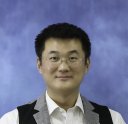
 Kaisheng Ma
· 4 previous affiliations
- Tsinghua UniversitySince 2024
- Associate Professor · 2024–2030
- Current
- Pennsylvania State University2013–2018
- PhD student · 2013–2018
- Peking University2010–2013
- MS student · 2010–2013
- Hangzhou Dianzi University2006–2010
- Undergrad student · 2006–2010
Research Overview
Kaisheng Ma focuses on artificial intelligence algorithm design, hardware-software co-design for neural network accelerators, and brain-computer interfaces. His trajectory spans from early work on energy-harvesting processors to developing highly efficient, miniaturized models through sparsity and distillation techniques. Currently, his research emphasizes multimodal large language models, diffusion architectures, and integrating neural signals directly into generative visual pipelines.
Research Trajectory
His early research addressed the challenges of ultra-low-power applications powered by unreliable ambient sources. He explored design spaces for specialized systems in Architecture exploration for ambient energy harvesting nonvolatile processors, focusing on architectures that tolerate power variation while maintaining computational progress.
Transitioning toward the optimization of deep neural networks, his focus shifted to model miniaturization and hardware-software co-design. To address the computational costs of increasingly deep networks, he proposed a general training framework in Be Your Own Teacher: Improve the Performance of Convolutional Neural Networks via Self Distillation. This work shrinks network size while preserving accuracy, contributing significantly to the area of Internal Self-Distillation for Efficient Neural Network Training. Concurrently, he investigated structural optimizations for mobile and edge deployment. He participated in developing new sparsity dimensions in PCONV: The Missing but Desirable Sparsity in DNN Weight Pruning for Real-Time Execution on Mobile Devices, which balances the high accuracy of fine-grained pruning with hardware efficiency. Building on this, his group introduced a fine-grained regular 1D pruning method in PCNN: Pattern-based Fine-Grained Regular Pruning Towards Optimizing CNN Accelerators. By leveraging a novel Sparsity Pattern Mask, this approach achieves substantial compression rates and speedups on custom 55nm architectures. Together, these efforts advanced the research directions of Hardware Aligned Pruning for Accelerated Inference and Hardware Friendly Sparsity for Practical Neural Network Compression.
In subsequent years, the scope of his algorithmic research broadened to encompass novel training paradigms and 3D perception. He developed a framework to replace traditional task-specific auxiliary losses with augmentation-based contrastive learning in Contrastive Deep Supervision, improving generalization across various vision tasks and aligning with the broader area of The Sensitivity of Multi-Objective Loss Balancing. Extending these efficiency principles to spatial data, he introduced a structured knowledge distillation framework in PointDistiller: Structured Knowledge Distillation Towards Efficient and Compact 3D Detection. By prioritizing informative dense regions over sparse noise in local geometric structures, this method allows lightweight models to match cumbersome 3D detectors, advancing work in Why Distilled Students Can Outperform Their Teachers. This interest in 3D environments culminated in ShapeLLM: Universal 3D Object Understanding for Embodied Interaction, a multimodal large language model that unifies 3D point clouds and language instructions for embodied AI, contributing to the research direction of Open-Vocabulary 3D Perception via 2D Foundation Models.
By 2025, his research portfolio expanded into highly interdisciplinary domains, notably brain-computer interfaces (BCI) and clinical AI. He explored the direct integration of neural signals into generative visual pipelines, addressing the limitations of implicit brain signal interpretation. This led to MindPainter: Efficient Brain-Conditioned Painting of Natural Images via Cross-Modal Self-Supervised Learning, which uses visual perception brain signals as explicit prompts for image editing, and the related framework MindCustomer: Multi-Context Image Generation Blended with Brain Signal. In the medical domain, he applied his expertise in model compression to computational pathology with Human visual attention-inspired knowledge distillation underlying interpretable computational pathology. This strategy distills the hierarchical attention patterns of human experts into lightweight AI models, ensuring clinical interpretability.
Alongside these applications, he continued to push the boundaries of hardware systems and signal processing. He investigated memory bottlenecks in modern accelerators in SoMa: Identifying, Exploring, and Understanding the DRAM Communication Scheduling Space for DNN Accelerators, proposing multi-layer dataflow scheduling to leverage large on-chip buffers. He also explored secure inference paradigms in WPC: Weight Plaintext Compression for CNN Inference based on RNS-CKKS, and contributed to advanced imaging techniques with Enhancing 3D migration images resolution: A fast and robust implicit point spread function deconvolution method based on wavenumber domain representation.
Most recently, his focus has targeted the computational efficiency of emerging generative architectures. In 2026, he introduced techniques to optimize Diffusion Large Language Models (dLLMs). He developed GIFT: Guided Importance-Aware Fine-Tuning for Diffusion Language Models, which intelligently assigns training weights based on predictive entropy to improve reasoning performance. To address inference costs, he proposed ES-dLLM: Efficient Inference for Diffusion Large Language Models by Early-Skipping, a training-free framework that identifies and skips unimportant tokens with stable internal states, achieving massive speedups without sacrificing generation quality.
Current Directions
The most recent papers in the evidence highlight three primary research directions:
- Efficient Generative Architectures: Recent work investigates the optimization of Diffusion Large Language Models (dLLMs). This includes developing training-free early-skipping mechanisms to drastically reduce inference costs by bypassing redundant token computations, as well as importance-aware fine-tuning strategies that leverage predictive entropy to enhance reasoning capabilities.
- Brain-Computer Interfaces for Visual Generation: He is actively exploring cross-modal self-supervised learning to bridge human neural activity and generative AI. This involves using visual perception brain signals as direct, explicit prompts for natural image generation and editing, aiming for more personalized and intuitive human-computer interaction.
- Hardware-Algorithm Co-Design: He continues to address the physical constraints of AI deployment, focusing on multi-layer DRAM communication scheduling for DNN accelerators and exploring cryptographic compression techniques for secure neural network inference.
Profile updated
Loading new papers…
Other researchers whose papers cluster into the same research directions — a proxy for overlapping technical interests and shared intellectual neighborhoods.
See something wrong? Report a mistake