

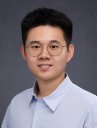
 Chuanguang Yang
· 1 previous affiliation
- Chinese Academy of SciencesSince 2018
- Associate Professor · Since 2025
- Assistant Professor · 2023–2025
- PhD student · 2018–2023
Research Overview
Chuanguang Yang focuses on efficient artificial intelligence, developing techniques such as knowledge distillation, model quantization, and network pruning for visual recognition and generative models. His trajectory spans foundational work in lightweight neural architectures to advanced distillation frameworks for computer vision. Most recently, his research addresses the computational bottlenecks of large-scale diffusion models and 3D world models, enabling high-fidelity video and image generation under strict resource constraints.
Research Trajectory
Early work focused on optimizing neural network architectures to reduce computational overhead. In EENA: Efficient Evolution of Neural Architecture, he contributed to an evolutionary framework that significantly reduced the computational cost of Neural Architecture Search (NAS) through function-preserving network morphisms, addressing challenges in preserving structural building blocks during evolutionary crossover. Building on this theme of architectural efficiency, he developed Gated Convolutional Networks with Hybrid Connectivity for Image Classification, which introduced a module to reduce the redundancy of DenseNet architectures by squeezing and exciting multi-scale features.
A major theme in his trajectory is knowledge distillation, particularly focusing on the broader areas of The Output Centric Knowledge Distillation Bottleneck and Knowledge Distillation via Internal Representation Alignment. He introduced Multi-View Contrastive Learning for Online Knowledge Distillation and Hierarchical Self-supervised Augmented Knowledge Distillation, leveraging self-supervised signals to enrich the "dark knowledge" transferred between networks. This approach was further formalized in Knowledge Distillation Using Hierarchical Self-Supervision Augmented Distribution, which demonstrated how distributing self-supervised tasks across network layers improves student performance in both offline and online settings.
Expanding distillation to dense prediction tasks, he developed Cross-Image Relational Knowledge Distillation for Semantic Segmentation (CIRKD). This method teaches lightweight segmentation models to mimic global, cross-image pixel relationships from a high-capacity teacher, contributing to the research direction of Aligning Feature Spaces Across Heterogeneous Neural Architectures. He also advanced teacher-free distillation paradigms with Online Knowledge Distillation via Mutual Contrastive Learning for Visual Recognition, proposing a mutual contrastive learning framework that aggregates cross-network embedding information collaboratively.
As models grew in scale, his research expanded to address the computational overhead of iterative model pruning. His research group introduced SGLP: A Similarity Guided Fast Layer Partition Pruning for Compressing Large Deep Models, a framework that groups and removes entire redundant layers based on representational similarity rather than evaluating them in isolation. In parallel, he explored cross-modal applications, guiding the development of Prototype-Driven Multi-Feature Generation for Visible-Infrared Person Re-identification. This work utilized learnable prototypes to bridge the modality gap between visible and infrared imagery, aligning with the area of Parallel Multi Scale Convolutional Feature Extraction. Returning to distillation, he addressed the complexities of utilizing multiple teacher networks in Multi-Teacher Knowledge Distillation with Reinforcement Learning for Visual Recognition. By employing a reinforcement learning agent to dynamically assign sample-wise weights based on the capacity gap between teachers and the student, this framework optimized knowledge transfer across classification and detection tasks.
More recently, his focus has shifted toward generative AI and 3D understanding. He introduced HSRDiff: A Hierarchical Self-Regulation Diffusion Model for Stochastic Semantic Segmentation, which tackles visual ambiguity in safety-critical domains like medical imaging through a hierarchical conditioning mechanism. In the realm of image generation, he developed Multi-party Collaborative Attention Control for Image Customization (MCA-Ctrl), a tuning-free framework that coordinates parallel diffusion processes to enable high-quality, subject-specific image customization without feature leakage. His collaborative work also extends to 3D vision and continual learning. He participated in the development of Geometric Feature Embedding for Effective 3D Few-Shot Class Incremental Learning (3D-FLEG), which embeds raw spatial geometric data to help models learn new 3D object categories without catastrophic forgetting, advancing the direction of Orthogonal Subspaces and Parameter Isolation for Continual Learning.
The most recent phase of his trajectory addresses the extreme computational demands of video generation and world models. He contributed to Q-VDiT: Towards Accurate Quantization and Distillation of Video-Generation Diffusion Transformers, a specialized quantization framework that maintains temporal consistency at ultra-low bit-widths, addressing challenges in the area of The Performance Cliff in Ultra Low Bit Quantization. This line of research continued with QuantSparse: Comprehensively Compressing Video Diffusion Transformer with Model Quantization and Attention Sparsification, further reducing the memory and compute tax of massive video diffusion transformers. Finally, his collaborative work explores training-free acceleration techniques for generative models. He participated in the design of Fast-SAM3D: 3Dfy Anything in Images but Faster, which intelligently allocates compute during single-view 3D reconstruction. He subsequently directed the development of WorldCache: Accelerating World Models for Free via Heterogeneous Token Caching, which accelerates diffusion-based world models by caching tokens based on their trajectory curvature. In complex 3D multimodal reasoning, Yang also contributed to SceneScaffold: Active Scene-State Construction for Unified 3D Scene Understanding, a framework that restructures the visual bottleneck of 3D large multimodal models into role-aware spatial scaffolds to resolve spatial ambiguity and relational reasoning. Furthering training-free efficiency for generative video, Yang co-developed Sol$^{3}$: Accelerating Video Diffusion for Free via Hierarchical Sparse Attention Routing, which uses Gaussian-guided hierarchical routing and heterogeneous statistics to selectively allocate exact computations from blocks down to tokens.
Current Directions
The most recent papers in the evidence address the computational bottlenecks of large-scale generative models, specifically video diffusion transformers and 3D world models. Recent work investigates training-free acceleration techniques, such as heterogeneous token caching and attention sparsification, to deploy massive generative architectures under strict hardware constraints. Additionally, ongoing research explores ultra-low bit quantization for video generation and tuning-free attention control mechanisms for personalized text-to-image diffusion models, aiming to balance high-fidelity synthesis with operational efficiency.
Profile updated
Loading new papers…
Other researchers whose papers cluster into the same research directions — a proxy for overlapping technical interests and shared intellectual neighborhoods.
See something wrong? Report a mistake