

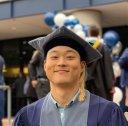
 Junhyung Lyle Kim
· 5 previous affiliations
- J.P. MorganSince 2024
- Researcher · Since 2024
- Rice University2019–2024
- PhD student · 2019–2024
- Visiting student · 2023
- Research intern · 2022
- University of Chicago2013–2019
- Research assistant · 2017–2019
- Undergrad student · 2013–2017
Research Overview
Junhyung Lyle Kim focuses on quantum computing algorithms, continuous optimization, and machine learning. His early work addressed non-convex optimization and quantum state tomography, establishing foundational methods for scalable state reconstruction. More recently, his research investigates quantum dimensional speedups and zeroth-order optimization, bridging theoretical quantum advantages with practical algorithmic frameworks.
Research Trajectory
Kim’s early research explored the intersection of machine learning and optimization. In 2021, he participated in work on neural network pruning, contributing to theoretical characterizations of pre-training duration and subnetwork performance in Provably Efficient Lottery Ticket Discovery. This work provided mathematical grounding for why large-scale models are difficult to prune early in training, touching upon the broader area of Scaling Theoretical Guarantees from Shallow to Deep Networks.
Concurrently, a major focus emerged around quantum state tomography and non-convex optimization. He introduced Momentum-Inspired Factored Gradient Descent (MiFGD) in Fast quantum state reconstruction via accelerated non-convex programming, achieving significant speedups for multi-qubit systems by factoring the density matrix and applying Nesterov-style momentum. This approach connects to themes within the research direction of Basins of Attraction in Nonconvex Optimization. He expanded on this framework in 2023 with Local Stochastic Factored Gradient Descent for Distributed Quantum State Tomography, proposing a distributed protocol to learn low-rank factors of density matrices across local machines, proving local convergence for restricted strongly convex and smooth loss functions.
Between 2022 and 2024, Kim advanced the theoretical understanding of stochastic optimization algorithms. He analyzed the dominant training algorithms in Convergence and Stability of the Stochastic Proximal Point Algorithm with Momentum, examining the stability of implicit stochastic updates. He further explored optimization dynamics in When is Momentum Extragradient Optimal? A Polynomial-Based Analysis. Alongside these core optimization studies, he contributed to foundational statistical methods, including an analysis of error propagation in principal component analysis in On the Error-Propagation of Inexact Hotelling's Deflation for Principal Component Analysis, and the optimization of variational inequalities in Solving hidden monotone variational inequalities with surrogate losses.
Addressing the challenges of distributed training environments, Kim developed an adaptive algorithm for highly heterogeneous data in Adaptive Federated Learning with Auto-Tuned Clients. This method allows individual clients to automatically tune their step sizes based on local data geometry, contributing to the research direction of Adaptive Optimization via Local Smoothness Estimation and intersecting with the area of Zero Shot Hyperparameter Transfer Across Model Scales.
Transitioning deeper into quantum algorithms while serving as a Quantum Computing Research Scientist at JPMorganChase, Kim began addressing the quantum linear system problem. He proposed a meta-algorithm inspired by classical methods in A Catalyst Framework for the Quantum Linear System Problem via the Proximal Point Algorithm, which approximates solution vectors while mitigating the condition number bottleneck. He also examined classical analogs, providing a rigorous, simplified analysis of sub-sampling techniques in A simple analysis of a quantum-inspired algorithm for solving low-rank linear systems.
His most recent work heavily emphasizes quantum speedups for continuous optimization. He introduced novel quantum algorithms in Fast Zeroth-Order Convex Optimization with Quantum Gradient Methods, demonstrating exponential dimensionality speedups using noisy function evaluations. This work advances the research direction of Quantum Dimensional Speedups in Optimization and the broader area of Zeroth Order Stochastic Optimization. Additionally, he collaborated on identifying theoretical mechanisms beyond tunneling for quantum advantage in Mechanisms for Quantum Advantage in Global Optimization of Nonconvex Functions, linking Schrödinger operators to classical Langevin diffusion. He also participated in exploring the theoretical landscape of real-valued coordinate optimization in On Speedups for Convex Optimization via Quantum Dynamics.
In 2026, Kim continued to investigate limits and speedups across quantum algorithms and classical optimization. In The Quartic Gap Between Quantum and Dequantized Algorithms for Linear Algebra Is Tight, Kim and collaborators proved that the near-quartic worst-case separation between quantum linear algebra algorithms and dequantized classical sampling algorithms is tight up to logarithmic factors across a broad suite of linear-algebraic problems. Turning to hypergraph inference, they co-developed hypergraph cycle enumeration in Hypergraph cycle enumeration for efficient inference of planted k-XOR with smooth trade-off, matching Kikuchi hierarchy guarantees on planted noisy k-XOR while yielding subquadratic speedups via quantum walks. Additionally, Kim contributed to A Fully Polynomial Approximation Algorithm for the Sherrington-Kirkpatrick Model, introducing a grouped incremental approximate message passing method that achieves an approximation guarantee with work polynomial in both dimension and inverse accuracy.
Current Directions
Recent work investigates the theoretical and practical boundaries of quantum algorithms for continuous optimization. A primary focus is on achieving quantum dimensional speedups in zeroth-order convex optimization, where noisy function evaluations can be leveraged to match the efficiency of classical algorithms that require full gradient access.
Additionally, ongoing research explores the mechanisms underlying quantum advantage in global, nonconvex optimization. By connecting Schrödinger operators to classical Langevin diffusion, this work seeks to understand how real-space adiabatic quantum algorithms can efficiently navigate complex optimization landscapes that typically bottleneck classical methods. Finally, there is a continued interest in bridging quantum and classical paradigms, including establishing tight query separations between quantum and dequantized linear algebra, leveraging quantum walks for planted hypergraph inference, and designing fully polynomial approximation schemes for spin-glass models like Sherrington-Kirkpatrick.
Profile updated
Loading new papers…
Other researchers whose papers cluster into the same research directions — a proxy for overlapping technical interests and shared intellectual neighborhoods.
See something wrong? Report a mistake