

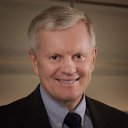
 John M Dolan
· 1 previous affiliation
- Carnegie Mellon UniversitySince 1996
- Full Professor · Since 2011
- Associate Professor · 2003–2011
- Assistant Professor · 1996–2003
Research Overview
John M Dolan focuses on autonomous driving, safe reinforcement learning, and human-robot collaboration. His trajectory spans from early work in human driver behavior prediction and hierarchical planning to the development of robust safety filters using control barrier functions. Recently, his research investigates universal dynamics models and off-road navigation, emphasizing safety guarantees for agile robotic mobility in complex environments.
Research Trajectory
Dolan’s research arc begins with a strong emphasis on understanding and predicting human behavior to inform autonomous vehicle control. In 2018, he explored these dynamics in Lane-Change Intention Estimation for Car-Following Control in Autonomous Driving. He expanded on this by leveraging drone-based bird's-eye view traffic data to train LSTM models for predicting human drivers' intentions and future trajectories in Human Driver Behavior Prediction based on UrbanFlow* (2020). This foundational work in intention estimation aligns with the broader area of Modeling Reciprocal Dynamics in Multi-Agent Trajectory Prediction. During this period, he also investigated structured decision-making frameworks, contributing to the research direction of Hierarchical Reinforcement Learning for Complex Task Decomposition through the development of a Hierarchical Reinforcement Learning Method for Autonomous Vehicle Behavior Planning (2020). Concurrently, his focus on rigorous operational safety began to take shape with ReachFlow: An Online Safety Assurance Framework for Waypoint-Following of Self-driving Cars (2020).
By 2022, Dolan’s work increasingly integrated deep learning with formal safety guarantees, particularly through the use of Control Barrier Functions (CBFs). His group proposed methods to synthesize CBF-based safe controllers that actively avoid input saturation in Safe Control Under Input Limits with Neural Control Barrier Functions, advancing the research direction of Scaling Reachability Analysis with Neural Network Solvers. He also collaborated on novel approaches to offline reinforcement learning; in BATS: Best Action Trajectory Stitching, the authors treated static datasets as graphs to piece together disconnected trajectories using short model-based plans, contributing to work in the area of Trajectory Stitching for Offline Reinforcement Learning. Additionally, he participated in addressing optimism bias in sequence modeling with Addressing Optimism Bias in Sequence Modeling for Reinforcement Learning, which introduced the SPLT Transformer for robust max-min planning—a contribution to the area of Scaling Reinforcement Learning to High-Dimensional Visual Observations.
In 2023, Dolan applied these safety-critical learning frameworks to highly dynamic and uncertain environments, such as autonomous racing and systems with unknown physical properties. He co-authored Synthesis and verification of robust-adaptive safe controllers, detailing a systematic approach to designing safety filters for robots operating under parametric uncertainty. In the domain of high-speed navigation, he explored combining the flexibility of end-to-end deep learning with the rigorous safety of CBFs in Towards Safety Assured End-to-End Vision-Based Control for Autonomous Racing. This was complemented by Towards Optimal Head-to-head Autonomous Racing with Curriculum Reinforcement Learning, which demonstrated how agents could master complex vehicle dynamics at the friction limit by gradually transitioning from simple models to high-fidelity dynamics. To handle unpredictable environmental changes like wind or heavy payloads, he helped develop SafeDPA in Safe Deep Policy Adaptation, a framework bridging adaptive dynamics models with CBF safety filters.
Moving into 2024, Dolan’s research extended these robust control strategies to unstructured off-road environments and universal dynamics modeling. His lab introduced WROOM: An Autonomous Driving Approach for Off-Road Navigation, an end-to-end reinforcement learning system that utilizes a novel simulator and policy distillation to enable wheeled robots to navigate challenging terrains safely. He continued to refine safety filters in Disturbance Observer-based Control Barrier Functions with Residual Model Learning for Safe Reinforcement Learning, which simultaneously corrects for static model inaccuracies and fast-changing external disturbances, advancing the research direction of Optimization Based Safety Filtering via Control Barrier Functions. This focus on robust, real-time control was further explored in Delay-Aware Robust Control for Safe Autonomous Driving and Racing. Broadening the scope of robotic control, he collaborated on AnyCar to Anywhere: Learning Universal Dynamics Model for Agile and Adaptive Mobility, a transformer-based model designed to control various wheeled robots with zero-shot generalization despite state estimation errors.
Finally, his 2025 work investigates perception improvements for autonomous systems, exploring how to optimize neural network architectures to turn low-cost sensor data into high-fidelity representations in The Impact of 2D Segmentation Backbones on Point Cloud Predictions Using 4D Radar.
Current Directions
The most recent work in the evidence addresses perception and control challenges for autonomous mobility in complex, unstructured environments. Recent research investigates how to optimize neural network architectures for low-cost sensors, such as turning 4D radar data into high-fidelity point clouds while avoiding the overfitting that can occur with overly large models. Additionally, current efforts continue to refine safety-critical reinforcement learning and universal dynamics modeling. This includes developing end-to-end systems for off-road navigation and creating robust safety filters that combine residual model learning with disturbance observers, focusing on enabling wheeled robots to adapt to challenging terrains, external disturbances, and state estimation errors with rigorous safety guarantees.
Profile updated
Loading new papers…
Other researchers whose papers cluster into the same research directions — a proxy for overlapping technical interests and shared intellectual neighborhoods.
See something wrong? Report a mistake