

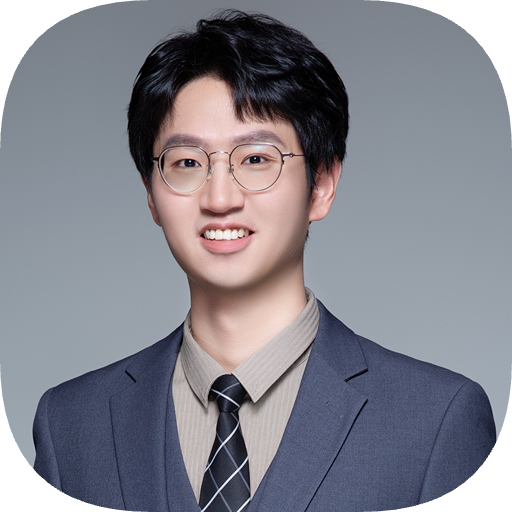
 Zhiyu Huang
· 7 previous affiliations
- DiscoverSince 2024
- Postdoc · Since 2024
- Current
- University of California, Los AngelesSince 2024
- Postdoctoral Scholar · Since 2024
- Research Intern · 2024
- Nanyang Technological University2019–2024
- Doctor of Philosophy - PhD, Robotics & Intelligent Systems · 2019–2024
- PhD student · 2019–2023
- Visiting Researcher · 2023
- Chongqing University2015–2019
- Research Assistant · 2017–2019
- Bachelor of Engineering - BE, Vehicle Engineering · 2015–2019
Research Overview
Zhiyu Huang focuses on the intersection of robotics, mobility, and artificial intelligence, developing algorithms for perception, prediction, and decision-making in autonomous systems. His trajectory spans from deep reinforcement learning and human-guided navigation to generative models for traffic simulation. Currently, his work emphasizes vision-language-action models and latency-aware frameworks for end-to-end autonomous driving and embodied AI.
Research Trajectory
His early work centered on modeling human driving behavior to inform the design of safe and personalized autonomous systems. He developed an internal reward function-based model to emulate human decision-making in Modeling Human Driving Behavior in Highway Scenario using Inverse Reinforcement Learning. This research utilized a structural assumption about discrete latent intentions to make maximum entropy inverse reinforcement learning tractable, contributing to the broader area of Integrating Lateral and Longitudinal Vehicle Control.
To address sample efficiency and reward design challenges in deep reinforcement learning, he explored the research direction of Bootstrapping Reinforcement Learning with Imitation alongside methods for Mitigating Compounding Errors in Behavioral Cloning. In Efficient Deep Reinforcement Learning With Imitative Expert Priors for Autonomous Driving, he introduced a framework that incorporates human prior knowledge through expert demonstration and policy derivation. He further explored human-like decision-making with a predictive behavior planning framework in Conditional Predictive Behavior Planning With Inverse Reinforcement Learning for Human-Like Autonomous Driving, which learns to generate and evaluate trajectory proposals from human driving data. He also investigated the area of Value Based Filtering for Learning from Imperfect Guidance and contributed to Sensor Noise Robustness for Sim-to-Real Transfer through collaborative work on Human-Guided Reinforcement Learning With Sim-to-Real Transfer for Autonomous Navigation, combining human intelligence with reinforcement learning for unmanned ground vehicles.
His focus on complex multi-agent interactions led to significant work in the research direction of Interactive Motion Planning for Autonomous Vehicles. To handle these environments, he proposed the GameFormer model in GameFormer: Game-theoretic Modeling and Learning of Transformer-based Interactive Prediction and Planning for Autonomous Driving, formulating interaction prediction using hierarchical game theory and a novel Transformer decoder structure.
A major subsequent theme in his trajectory became the tight integration of prediction and planning, often utilizing differentiable architectures and Partially Observable Markov Decision Processes (POMDPs). In Learning Online Belief Prediction for Efficient POMDP Planning in Autonomous Driving, he developed a Transformer-based prediction model with a recurrent memory module to dynamically update latent belief states, paired with Monte-Carlo Tree Search for planning. He addressed the traditional separation of prediction and planning modules by proposing a differentiable integrated framework in Differentiable Integrated Motion Prediction and Planning With Learnable Cost Function for Autonomous Driving. This approach was further refined in DTPP: Differentiable Joint Conditional Prediction and Cost Evaluation for Tree Policy Planning in Autonomous Driving, which introduced a query-centric Transformer for ego-conditioned motion prediction alongside a learnable context-aware cost function.
Concurrently, he began leveraging generative AI, specifically diffusion models, for traffic simulation and policy generation. In Versatile Scene-Consistent Traffic Scenario Generation as Optimization with Diffusion, he introduced Versatile Behavior Diffusion (VBD) to predict scene-consistent multi-agent interactions, advancing methods for reactive traffic simulation and socially aware motion planning. Building on these generative techniques, he proposed a generation-then-evaluation planning paradigm in Gen-Drive: Enhancing Diffusion Generative Driving Policies with Reward Modeling and Reinforcement Learning Fine-tuning, using a behavior diffusion model as a scene generator and a reward model trained with vision-language model assistance.
His recent trajectory integrates large-scale models into end-to-end driving and embodied AI. He participated in developing the Hybrid-Prediction integrated Planning (HPP) framework in Hybrid-Prediction Integrated Planning for Autonomous Driving, which aligns prediction patterns with future planning interactions. Moving toward unified architectures, he contributed to AutoVLA: A Vision-Language-Action Model for End-to-End Autonomous Driving with Adaptive Reasoning and Reinforcement Fine-Tuning, a model that tokenizes physical trajectories to enable hierarchical reasoning and adaptive switching between rapid reactive control and deep chain-of-thought evaluation. Most recently, he introduced a "Think-in-Control" framework in TIC-VLA: A Think-in-Control Vision-Language-Action Model for Robot Navigation in Dynamic Environments. This work addresses temporal mismatches in streaming perception and real-time robotic control by decoupling high-level semantic reasoning from fast reactive execution, explicitly modeling inference latency to improve sim-to-real transfer.
Current Directions
Recent work investigates the application of large-scale Vision-Language-Action (VLA) models to end-to-end autonomous driving and robot navigation. The most recent papers in the evidence address the integration of "dual-process" reasoning into physical AI agents, allowing systems to adaptively switch between rapid, reactive control for simple environments and deep, chain-of-thought semantic reasoning for complex hazards. A major open problem in this domain is the temporal mismatch caused by the high inference latency of large models; current research tackles this by explicitly modeling delayed reasoning and ego-motion offsets, decoupling slow high-level planning from fast, real-time control to enable safe, continuous navigation in dynamic environments.
Profile updated
Loading new papers…
Other researchers whose papers cluster into the same research directions — a proxy for overlapping technical interests and shared intellectual neighborhoods.
See something wrong? Report a mistake