

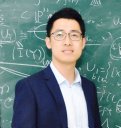
 Jie Zhang
1 previous affiliation
- Fudan University2010–2024
- Full Professor · 2016–2024
- Associate Professor · 2010–2016
23 other authors named Jie Zhang: Jie Zhang (Nanyang Technological University · 387 papers), Jie Zhang (Agency for Science, Technology and Research · 162 papers), Jie ZHANG (Hong Kong University of Science and Technology · 132 papers), Jie Zhang (Chinese Academy of Sciences · 88 papers), Jie Zhang (Peking University · 45 papers), and 18 more
Research Overview
Jie Zhang focuses on the intersection of computational neuroscience, complex network theory, and machine learning. Currently a Professor at the Institute of Science and Technology for Brain-inspired Intelligence (ISTBI) at Fudan University, Zhang’s work spans the development of graph-based learning algorithms, the analysis of large-scale neuroimaging data to identify biomarkers for psychiatric disorders, and the optimization of generative models for proteins and natural language. The trajectory of this research reflects a transition from the fundamental mathematical properties of nonlinear systems and network topology toward the application of these principles in understanding biological intelligence and engineering artificial systems.
Research Trajectory
The early phase of Zhang’s research, beginning around 2006, was grounded in nonlinear dynamics and chaos theory. Initial investigations focused on the behavior of nonlinear maps under periodic perturbations, as seen in Chaos inducement and Enhancement in Two Particular Nonlinear Maps Using Weak Periodic/quasiperiodic Perturbations. This foundational work in mathematical modeling soon evolved into the study of complex networks, specifically how the structural properties of a network influence its functional output. A significant contribution during this period was the exploration of "rich-club" connections—the tendency of high-degree nodes in a network to be more densely connected to each other than expected by chance. In Optimizing and controlling functions of complex networks by manipulating rich-club connections, Zhang demonstrated that the functional building blocks, or motifs, of scale-free networks could be significantly altered by rewiring a small fraction of these hub connections, providing a mechanism for the optimization and control of network-wide functions.
By 2010, Zhang began applying these network and dynamical systems perspectives to biological data. Early work in this vein included the study of Rhythmic Dynamics and Synchronization via Dimensionality Reduction: Application to Human Gait, which utilized dimensionality reduction techniques to understand the synchronization of human movement. This interest in biological systems deepened into a sustained focus on neuroimaging and computational psychiatry. Zhang’s work in this area often addresses the "curse of dimensionality" inherent in high-dimensional biological datasets, employing methods such as Feature Selection via Minimum Redundancy Maximum Relevance to identify the most informative neural markers.
In the mid-2010s and early 2020s, Zhang’s research increasingly integrated advanced machine learning techniques, particularly graph neural networks (GNNs) and matrix sketching. This work addressed the computational bottlenecks of processing large-scale data while preserving structural integrity. For instance, Zhang participated in research on Randomization or Condensation?: Linear-Cost Matrix Sketching Via Cascaded Compression Sampling, which established a theoretical link between matrix low-rank decomposition and lossy signal compression to improve memory efficiency. This period also saw a focus on the "resolution dilemmas" of graph classification, where traditional pooling methods often lose interpretable structural information.
Most recently, Zhang’s work has converged on the development of generative models and high-order learning frameworks. This includes participation in the design of Bipartite Graph Representations for Mathematical Optimization and the exploration of Morphological Nuance Preservation in Affective NLP. The current focus extends to the "anticipatory capacity" of large language models and the application of generative modeling to protein engineering, representing a move toward systems that not only analyze biological data but also simulate and design biological structures.
Computational Neuroscience and Adolescent Development
A major pillar of Zhang’s recent work involves the analysis of the Adolescent Brain Cognitive Development (ABCD) study, the largest long-term study of brain development and child health in the United States. As a senior author and PI, Zhang has led investigations into the structural neural markers of psychiatric disorders in preadolescents.
In Common and Disorders-Specific Cortical Thickness Alterations in Internalizing, Externalizing and Thought Disorders over a 2-year Period in the Preadolescents of the ABCD Study, Zhang and colleagues analyzed brain scans from over 11,000 participants. The study revealed that internalizing (e.g., anxiety, depression) and externalizing (e.g., conduct disorder) behaviors are associated with specific patterns of cortical thickness. While some alterations in regions related to cognitive control are shared across disorders, others are unique and linked to distinct genetic markers and cell types, such as microglia and dopaminergic neurons. This research provides neurobiological evidence for regrouping psychiatric symptoms into dimensional categories, a theme further explored in Common and disorder-specific cortical thickness alterations in internalizing, externalizing and thought disorders during early adolescence: an Adolescent Brain and Cognitive Development study.
This line of work also intersects with the study of Temporal Alignment for Neural Speech Decoding, where the goal is to bridge the biological "lag" between neural intent and physical output. By understanding the genetic and neural determinants of complex traits—including Neural and genetic determinants of creativity—Zhang’s research seeks to build a comprehensive map of how the brain’s structural architecture supports its functional diversity.
Graph Representation Learning and Optimization
Parallel to the work in neuroscience, Zhang has made significant contributions to the field of graph representation learning. This work is motivated by the need to extract informative features from complex systems without the loss of predictive power.
Zhang’s research has addressed the over-smoothing risk in graph attention networks (GATs), where increasing the attention range can lead to indistinguishable node embeddings. In Node Embedding and Classification with Adaptive Structural Fingerprint, Zhang explored the use of "structural fingerprints" that automatically adjust to local graph topology. This approach allows different spatial scales of graph structures to interact through multi-head attention, providing a more flexible framework for node classification than standard message-passing architectures.
Furthermore, Zhang has participated in efforts to resolve the Bridging Inconsistent Annotation Protocols in Face Alignment and the challenges of Elastic Resource Reconfiguration for Deep Learning Systems. The latter involves optimizing how deep learning jobs utilize GPU resources in shared clusters, moving away from rigid "gang" scheduling toward more fluid, fault-tolerant configurations.
Current Directions in Generative Modeling
The most recent phase of Zhang’s work involves the application of contrastive learning and generative modeling to high-dimensional data. In High-Order Contrastive Learning with Fine-grained Comparative Levels for Sparse Ordinal Tensor Completion, Zhang contributed to a framework (HOCTC) that improves the prediction of missing values in sparse tensors, such as those found in traffic flow or recommendation systems, by moving beyond binary "positive vs. negative" comparisons to fine-grained ordinal levels.
In the domain of biotechnology, Zhang has participated in the Research Journey of Generative Protein Modeling, which examines how generative models can overcome the computational costs of traditional protein engineering methods like directed evolution. This work aims to efficiently discover new proteins with desired functions by exploring potential structures more broadly than rational design allows.
Finally, Zhang’s work in 2026 has extended to the reasoning capabilities of large language models. In Next-ToBE: Probabilistic Next Token-Bag Exploitation for Activating Anticipatory Capacity in LLMs, Zhang was part of a team that developed a training framework to encourage models to "look ahead" by predicting a weighted "bag" of future tokens rather than just the immediate next token. This method has shown significant gains in math and coding tasks, suggesting a new path for activating latent reasoning capacities in artificial agents.
Representative Work
-
Optimizing and controlling functions of complex networks by manipulating rich-club connections (2011) As the first author, Zhang established that the functional motifs of scale-free networks are highly sensitive to the connectivity of their most prominent hubs. By introducing a motif-based method to detect these "rich-clubs," the paper provided a framework for optimizing network functions through minimal structural interventions.
-
Common and Disorders-Specific Cortical Thickness Alterations in Internalizing, Externalizing and Thought Disorders over a 2-year Period in the Preadolescents of the ABCD Study (2021) Serving as the senior author (PI), Zhang led this large-scale neuroimaging study which identified both shared and unique cortical thickness patterns across different classes of psychiatric disorders in children. The findings linked these structural changes to specific genetic and cellular markers, supporting a move toward neurobiologically-grounded clinical practices.
-
Randomization or Condensation?: Linear-Cost Matrix Sketching Via Cascaded Compression Sampling (2017) In this work, Zhang contributed to the development of a matrix sketching algorithm that reduces the computational and memory bottlenecks of large-scale factorizations. The research uncovered a theoretical connection between low-rank decomposition and lossy signal compression, enabling more efficient scientific computing.
-
Node Embedding and Classification with Adaptive Structural Fingerprint (2022) This paper addresses the over-smoothing problem in graph neural networks. Zhang explored a method for contextualizing nodes with "structural fingerprints" that adapt to local topology, allowing for more effective message passing across various spatial scales of a graph.
-
Structural Landmarking and Interaction Modelling: on Resolution Dilemmas in Graph Classification (2020) Zhang participated in the development of SLIM, an inductive neural network model designed to overcome "resolution dilemmas" in graph classification. The model focuses on preserving structural information that is typically lost during standard graph-pooling operations by modeling the interactions between components.
-
Next-ToBE: Probabilistic Next Token-Bag Exploitation for Activating Anticipatory Capacity in LLMs (2026) As part of a collaborative effort, Zhang contributed to the Next-ToBE framework, which replaces standard next-token prediction with a probabilistic "token-bag" approach. This method activates the anticipatory capacity of large language models, leading to improved performance in complex reasoning tasks such as mathematics and programming.
Profile updated
Loading new papers…
Other researchers whose papers cluster into the same research directions — a proxy for overlapping technical interests and shared intellectual neighborhoods.
See something wrong? Report a mistake