

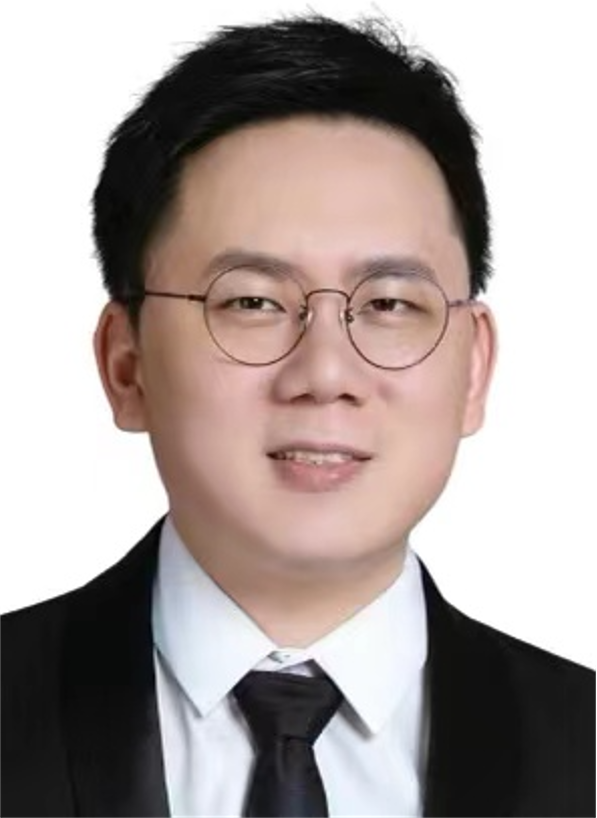
 Jie Zhang
· 3 previous affiliations
- Peking UniversitySince 2021
- Assistant Professor · Since 2021
- Postdoc · 2020–2021
- Individual2015–2020
- PhD student · 2015–2020
23 other authors named Jie Zhang: Jie Zhang (Nanyang Technological University · 387 papers), Jie Zhang (180 papers), Jie Zhang (Agency for Science, Technology and Research · 162 papers), Jie ZHANG (Hong Kong University of Science and Technology · 132 papers), Jie Zhang (Chinese Academy of Sciences · 88 papers), and 18 more
Research Overview
Jie Zhang focuses on the design of high-performance storage systems and specialized computer architectures for big data and artificial intelligence. His research addresses the bottlenecks of data migration and the limitations of the memory wall in traditional architectures. Currently, his work emphasizes memory tiering, disaggregated memory systems, and efficient inference for large language models.
Research Trajectory
Zhang's early research established foundational tools and optimizations for modern solid-state drives. In 2017, he introduced SimpleSSD: Modeling Solid State Drives for Holistic System Simulation, a high-fidelity simulator that bridges the gap between simplistic trace-based models and slow cycle-accurate simulators. By modeling the complete storage stack and integrating with full-system simulators, this work advanced the research direction of Hardware Accelerated Emulation and Cross Layer Simulation. Building on the need to optimize the storage stack, he subsequently developed FlashShare: Punching Through Server Storage Stack from Kernel to Firmware for Ultra-Low Latency SSDs, which addressed latency bottlenecks from the operating system down to the device firmware.
As storage hardware continued to outpace traditional software stacks, Zhang's focus expanded to storage-class memory and kernel-bypass techniques. He explored hardware-automated memory-over-storage solutions in Revamping Storage Class Memory With Hardware Automated Memory-Over-Storage Solution. To synthesize the growing shift away from kernel-mediated I/O, his lab published A Survey on User-Space Storage and Its Implementations. This comprehensive review detailed techniques that provide applications with direct, high-speed access to NVMe SSDs and persistent memory, contributing to the broader area of Computing at the Data Source with In-Memory Architectures and related efforts to eliminate software bottlenecks in ultra-low latency storage.
In 2024, Zhang advanced both internal SSD architectures and emerging memory interconnects. To mitigate random read bottlenecks in flash storage, he introduced LearnedFTL: A Learning-Based Page-Level FTL for Reducing Double Reads in Flash-Based SSDs, which integrates machine learning indexes into the Flash Translation Layer to improve tail latency and throughput. He also contributed to the design of self-governing all-flash arrays with BIZA: Design of Self-Governing Block-Interface ZNS AFA for Endurance and Performance.
Concurrently, Zhang began addressing the challenges of memory pooling and tiering enabled by Compute Express Link (CXL). With collaborators, he developed A Comprehensive Simulation Framework for CXL Disaggregated Memory (CXL-DMSim), an open-source, full-system simulator validated against real-world silicon to explore disaggregated memory performance. He further advanced the area of Orchestrating Data Across Heterogeneous Memory Hierarchies by introducing NeoMem: Hardware/Software Co-Design for CXL-Native Memory Tiering, a system that offloads memory access profiling to dedicated hardware on CXL devices for low-overhead hot page detection.
Zhang's recent trajectory heavily emphasizes scalable disaggregated memory runtimes, CXL-based resource sharing, and hardware-software co-design for large language model (LLM) inference. Continuing his work in heterogeneous memory, he developed Exploring Memory Tiering Systems in the CXL Era via FPGA-based Emulation and Device-Side Management, which introduced the HeteroBox emulation platform and HeteroMem device-side tiering solution. To support multithreaded applications in these environments, he proposed Beehive: A Scalable Disaggregated Memory Runtime Exploiting Asynchrony of Multithreaded Programs. His ongoing optimization of the storage stack yielded Aeolia: A Fast and Secure Userspace Interrupt-Based Storage Stack.
Addressing resource stranding in cloud infrastructure, Zhang's group designed XBOF: A Cost-Efficient CXL JBOF with Inter-SSD Compute Resource Sharing, a novel storage architecture allowing busy SSDs to borrow idle processors and memory from neighboring drives via CXL. A major recent focus has been optimizing memory and storage for LLM inference. He contributed to Memory Offloading for Large Language Model Inference with Latency SLO Guarantees (Select-N), a system that dynamically tunes offloading intervals to maximize host memory usage while maintaining strict service level objectives. He also explored in-storage computation for LLMs with InstAttention: In-Storage Attention Offloading for Cost-Effective Long-Context LLM Inference. Most recently, he introduced LouisKV: Efficient KV Cache Retrieval for Long Input-Output Sequences, a framework that exploits the temporal locality of attention to accelerate inference for ultra-long sequences.
Current Directions
The most recent papers in the evidence point to two primary areas of ongoing research. First, Zhang is actively investigating CXL-enabled disaggregated memory and storage architectures. This work addresses resource stranding and memory wall limitations by developing transparent memory tiering systems, scalable runtimes for multithreaded programs, and novel resource-sharing frameworks that allow storage devices to pool compute and memory capabilities.
Second, his recent work addresses the severe memory bottlenecks associated with Large Language Model (LLM) inference. By designing latency-aware memory offloading systems, in-storage attention mechanisms, and decoupled Key-Value (KV) cache retrieval frameworks, this research focuses on efficiently serving ultra-long input-output sequences without exceeding GPU memory capacities or violating strict service-level objectives.
Profile updated
Loading new papers…
Other researchers whose papers cluster into the same research directions — a proxy for overlapping technical interests and shared intellectual neighborhoods.
See something wrong? Report a mistake