

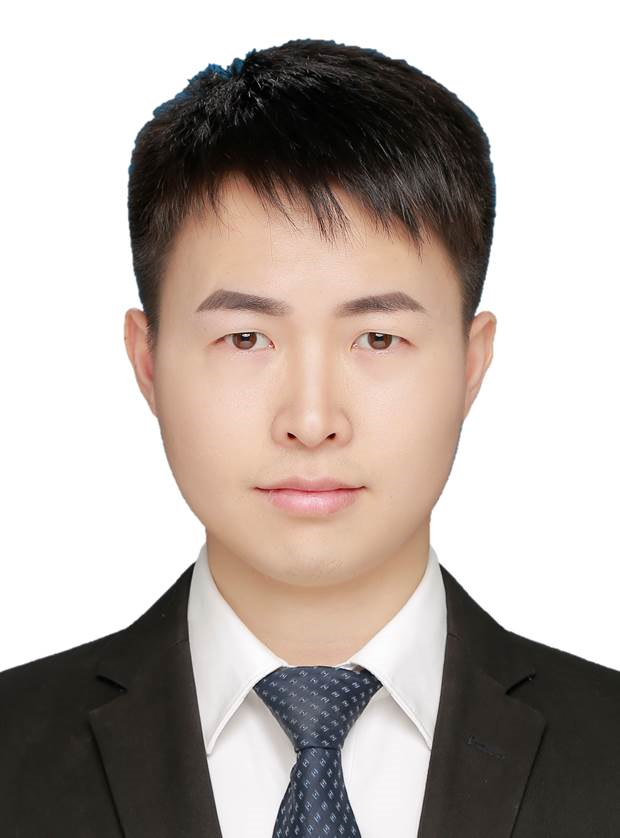
 Jie Zhang
· 1 previous affiliation
- Chinese Academy of SciencesSince 2011
- Associate Professor · Since 2019
- Assistant Professor · 2017–2019
- PhD student · 2011–2017
23 other authors named Jie Zhang: Jie Zhang (Nanyang Technological University · 387 papers), Jie Zhang (180 papers), Jie Zhang (Agency for Science, Technology and Research · 162 papers), Jie ZHANG (Hong Kong University of Science and Technology · 132 papers), Jie Zhang (Peking University · 45 papers), and 18 more
Research Overview
Jie Zhang focuses on computer vision, machine learning, and AI safety, with a particular emphasis on adversarial robustness and domain generalization. His early work addressed facial landmark detection and face anti-spoofing under challenging conditions like occlusion and domain shift. Recently, his research has centered on the trustworthiness of large vision-language models, exploring both adversarial vulnerabilities and proactive defense mechanisms.
Research Trajectory
His early research primarily addressed the foundational computer vision challenge of facial landmark detection. He introduced Coarse-to-Fine Auto-Encoder Networks (CFAN) for Real-Time Face Alignment, which cascaded successive stacked auto-encoder networks to model the nonlinear inference of facial landmarks. Building on this architecture, he tackled the specific problem of occlusion in Occlusion-Free Face Alignment: Deep Regression Networks Coupled with De-Corrupt AutoEncoders, developing a method to automatically recover genuine facial appearance from occluded parts rather than simply discarding them.
Expanding into broader video analysis and security domains, he participated in developing PAS-Net: Pose-based and Appearance-based Spatiotemporal Networks Fusion for Action Recognition, a network architecture that fused pose knowledge with appearance information to improve recognition robustness. Around the same time, his focus shifted heavily toward AI safety, specifically face anti-spoofing and forgery detection across varying domains. He contributed to Single-Side Domain Generalization for Face Anti-Spoofing, proposing an end-to-end framework designed to learn a generalized feature space where real faces remain compact while fake faces disperse across domains. This theme continued in Unknown Aware Feature Learning for Face Forgery Detection, which utilized an asymmetric triplet loss to aggregate real samples, thereby learning an accurate real-image distribution to better detect unseen forgery methods.
His work in forgery detection eventually matured into the broader research direction of Generalizing Deepfake Detection to Unseen Forgery Methods. A key contribution to this area was Real face foundation representation learning for generalized deepfake detection, which demonstrated that modeling the distribution of real faces through masked image modeling effectively exposes underlying artifacts in deepfakes, thereby improving cross-manipulation generalization. Concurrently, he advanced the area of Asymmetric Spatiotemporal Decoupling for Video Models with Collaboratively Self-Supervised Video Representation Learning for Action Recognition. This framework jointly learns dynamic motion and static context features via generative pose prediction and discriminative context matching, optimizing them further with a video generation branch.
The proliferation of Large Vision-Language Models (LVLMs) prompted a major expansion of his research into evaluating and securing these complex systems. He led the development of comprehensive evaluation frameworks, including REVAL: A Comprehension Evaluation on Reliability and Values of Large Vision-Language Models, which assesses models across 144,000 image-text samples to provide a holistic understanding of their cognitive and perceptual limitations. To stress-test these perception abilities without the risk of data leakage, he introduced Dysca: A Dynamic and Scalable Benchmark for Evaluating Perception Ability of LVLMs, utilizing synthetic images to reveal vulnerabilities in top-tier models when faced with non-realistic styles and adversarial noise. He also addressed the stability-plasticity dilemma in continual learning with Steering Vision-Language Pre-trained Models for Incremental Face Presentation Attack Detection, a framework that adapts models like CLIP for new spoofing attacks—such as 3D masks—without forgetting previous ones, using hierarchical prompts and selective weight protection.
A significant portion of his recent trajectory focuses on the adversarial robustness of generative models and LVLMs, exploring both offensive vulnerabilities and defensive countermeasures. On the offensive side, he investigated stealthy attack vectors, participating in Towards Invisible Backdoor Attack on Text-to-Image Diffusion Model, which replaced obvious trigger words with subtle grammatical structures to evade detection. He also developed V-Attack: Targeting Disentangled Value Features for Controllable Adversarial Attacks on LVLMs, a method that manipulates internal value features to trick reasoning models into misidentifying specific objects while maintaining scene coherence. Extending this to the temporal domain, he contributed to T2VAttack: Adversarial Attack on Text-to-Video Diffusion Models, demonstrating how subtle text prompt changes can collapse video generation semantics or freeze motion entirely.
Complementing these vulnerability assessments, he has actively developed proactive defenses. He proposed Towards Transferable Defense Against Malicious Image Edits, a bimodal framework that injects imperceptible perturbations to immunize images against unauthorized AI editing by optimizing for flat minima in the loss landscape. Most recently, he collaborated on Contrastive Spectral Rectification: Test-Time Defense towards Zero-shot Adversarial Robustness of CLIP, a training-free method that filters high-frequency adversarial noise to protect vision-language models with minimal computational overhead.
Current Directions
The most recent papers in the evidence center heavily on the security, reliability, and adversarial robustness of Large Vision-Language Models (LVLMs) and generative diffusion models. This includes developing dynamic, synthetic benchmarks to evaluate model perception without data leakage, as well as probing the vulnerabilities of text-to-image and text-to-video systems through structural backdoors and targeted feature manipulation. Concurrently, there is a strong focus on proactive defense mechanisms, such as test-time spectral rectification for zero-shot robustness and transferable immunization techniques designed to protect digital media against malicious, AI-driven edits.
Profile updated
Loading new papers…
Other researchers whose papers cluster into the same research directions — a proxy for overlapping technical interests and shared intellectual neighborhoods.
See something wrong? Report a mistake