

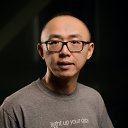
 Jiayu Zhou
· 6 previous affiliations
- I-Connect FoundationSince 2020
- Vice President and Co-Founder · Since 2020
- University of MichiganSince 2024
- Full Professor · Since 2026
- Associate Professor · Since 2024
- Current
- Associate Professor · 2024–2026
- Michigan State University2015–2024
- Professor · 2024
- Associate Professor · 2021–2024
- Assistant Professor · 2015–2021
- Staff Research Scientist · 2015
- Senior Research Scientist · 2014–2015
- Arizona State University2009–2014
- Research Associate · 2010–2014
- PhD student · 2009–2014
- Research Assistant · 2009–2010
- Beijing Jiaotong University2004–2008
- Bachelor of Science (B.Sc.), Computer Science and Technology · 2004–2008
3 other authors named Jiayu Zhou: Jiayu Zhou (1 paper), Jiayu Zhou (1 paper), Jiayu Zhou (1 paper)
Research Overview
Jiayu Zhou focuses on large-scale machine learning, health informatics, and the integration of domain knowledge into predictive models. His early work developed multi-task and transfer learning techniques to handle complex, heterogeneous datasets. Recently, his research emphasizes privacy-preserving federated learning and the application of generative artificial intelligence to clinical decision-making and early disease diagnosis.
Research Trajectory
Zhou's early research focused on data visualization and multi-task learning (MTL), particularly for complex medical datasets. His initial work included algorithmic approaches to graph layout, such as Visualization of Large-Scale Weighted Clustered Graph: A Genetic Approach. He subsequently developed MTL frameworks to track neurodegenerative disorders, introducing A multi-task learning formulation for predicting disease progression to model cognitive decline in Alzheimer's disease. To better capture the underlying relationships between related learning tasks, he proposed Clustered Multi-Task Learning Via Alternating Structure Optimization. Alongside these predictive models, Zhou contributed to scalable optimization techniques for high-dimensional data, participating in the development of Lasso Screening Rules via Dual Polytope Projection to accelerate sparse representation learning.
As his focus on health informatics deepened, Zhou addressed the challenge of training models on sensitive, distributed medical records. This led to Privacy-Preserving Distributed Multi-Task Learning with Asynchronous Updates, which established frameworks for sharing predictive knowledge without compromising patient privacy. He expanded on these foundations by investigating the mechanics of differential privacy in non-convex optimization. His group's research in the area of Dynamic Noise Scheduling for Differentially Private Learning yielded Dynamic Privacy Budget Allocation Improves Data Efficiency of Differentially Private Gradient Descent. He also applied these privacy-preserving techniques to other sensitive domains, developing A Privacy-Preserving Hybrid Federated Learning Framework for Financial Crime Detection. This work advanced the broader research direction of The Privacy-Utility Trade-off in Differentially Private Learning and explored challenges related to the field of Gradient Clipping Dynamics in Differentially Private Training.
In recent years, Zhou has integrated large language models (LLMs) and generative AI into his distributed learning and health informatics pipelines. To handle heterogeneous client data in decentralized systems, his lab introduced Distributed In-Context Learning under Non-IID Among Clients, contributing to the field of Personalized Federated Learning for Heterogeneous Data. He has also continued to refine foundational machine learning methods, investigating hyperparameter stability in Towards Stability of Parameter-free Optimization and addressing algorithmic fairness through Cross-modality debiasing: using language to mitigate sub-population shifts in imaging. In the realm of model security, his team proposed Safe and Robust Watermark Injection with a Single OoD Image to protect the intellectual property of deep neural networks.
Zhou's recent clinical applications heavily leverage natural language processing to extract insights from unstructured medical data. For cognitive assessment, he developed Translingual Language Markers for Cognitive Assessment from Spontaneous Speech, a framework that identifies mild cognitive impairment across different languages. He also combined traditional supervised learning with LLMs in Augmented Risk Prediction for the Onset of Alzheimer's Disease from Electronic Health Records with Large Language Models to handle sparse clinical records. To address information overload in acute care settings, his group designed Dual-stage and Lightweight Patient Chart Summarization for Emergency Physicians, utilizing edge-deployed small language models to summarize patient histories locally. Expanding his generative AI research into the physical sciences, Zhou recently introduced Chain-of-Generation: Progressive Latent Diffusion for Text-Guided Molecular Design, a progressive denoising strategy for generating high-fidelity molecular structures. Zhou also developed Language-Induced Priors for Domain Adaptation, leveraging LLMs to translate textual descriptions of target domains into priors that guide source selection under cold-start data scarcity. Additionally, Zhou contributed to Structural Rationale Distillation via Reasoning Space Compression, which distills reasoning capabilities into smaller models by constraining teachers to reusable reasoning path banks.
Current Directions
Recent work investigates the application of generative AI and small language models (SLMs) to specialized, high-stakes domains. A primary focus is the deployment of lightweight, privacy-preserving language models on edge devices to assist with clinical workflows, such as summarizing patient charts in emergency medicine without relying on cloud infrastructure. Additionally, Zhou is exploring text-guided diffusion models for scientific discovery, developing progressive generation techniques that improve the structural fidelity of AI-designed molecules. His current research also continues to address the integration of unstructured data—such as spontaneous speech and electronic health records—into predictive models for early disease detection and cognitive assessment.
Profile updated
Loading new papers…
Other researchers whose papers cluster into the same research directions — a proxy for overlapping technical interests and shared intellectual neighborhoods.
See something wrong? Report a mistake