

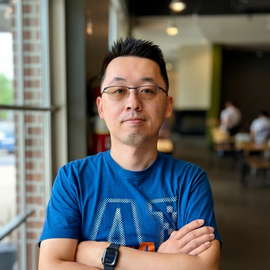
 Junyuan Hong
· 6 previous affiliations
- National University of SingaporeSince 2026
- Assistant Professor · Since 2026
- Massachusetts General Hospital2025–2026
- Researcher · 2025–2026
- The University of Texas at Austin2023–2025
- Postdoc · 2023–2025
- Michigan State University2018–2023
- PhD student · 2018–2023
- Sony AI2022
- Intern · 2022
- MS student · 2015–2018
- Undergrad student · 2011–2015
Research Overview
Junyuan Hong focuses on trustworthy machine learning, the cognitive behaviors of artificial intelligence, and privacy-preserving systems. His research trajectory spans foundational work in federated learning and unsupervised pretraining to the safety alignment and optimization of large language models. Currently, he investigates the intersection of cognitive science and AI safety, developing robust reasoning frameworks and applications for cognitive health.
Research Trajectory
Hong’s early research addressed the robustness of machine learning representations, particularly in subspace-based learning. In Disturbance Grassmann Kernels for Subspace-Based Learning, he and his co-authors developed a method to account for the instability of linear subspaces, deriving a dual optimization approach for linear classifiers that maintains robustness even when instances are subjected to known disturbance distributions.
In subsequent years, Hong made significant contributions to distributed machine learning, focusing on the challenges of data and hardware heterogeneity in federated systems. He participated in the development of FedGen, detailed in Data-Free Knowledge Distillation for Heterogeneous Federated Learning, which introduced a framework that trains a lightweight generator on the server to capture ensemble knowledge without requiring external proxy data. This work advanced the research direction of Prototype Based Federated Learning and the broader area of Synthetic Data Distillation for Heterogeneous Federated Learning. Building on the need for adaptable distributed systems, he introduced a Split-Mix strategy in Efficient Split-Mix Federated Learning for On-Demand and In-Situ Customization. This approach allows participants with varying hardware constraints to quickly load models of different sizes and robustness levels, contributing to work in the area of Disentangling Data Distributions with Auxiliary Batch Normalization.
As large language models (LLMs) became central to artificial intelligence, Hong’s focus expanded to their theoretical foundations, privacy guarantees, and safety under compression. To provide a rigorous basis for how knowledge transfers from unlabeled data to downstream tasks, he developed a representation transferability metric and a novel regularization method in On the Generalization Ability of Unsupervised Pretraining. Addressing the tension between model utility and data protection, he proposed a framework for offsite prompt tuning in DP-OPT: Make Large Language Model Your Privacy-Preserving Prompt Engineer. By utilizing a differentially-private ensemble mechanism, this system allows users to generate high-quality prompts locally for deployment to cloud LLMs without leaking sensitive training data, advancing the research direction of Privacy Preserving Architectures for Large Language Models and the related area of Dynamic Noise Scheduling for Differentially Private Learning. Concurrently, he investigated how efficiency techniques impact model alignment in Decoding Compressed Trust: Scrutinizing the Trustworthiness of Efficient LLMs Under Compression, evaluating whether standard quantization and pruning methods preserve a model's safety and ethical constraints alongside its general intelligence.
In his most recent work, Hong has extensively investigated the alignment, optimization, and cognitive behaviors of LLMs, often leading these projects as a principal investigator. A major theme of this recent period is robust safety alignment. In LoX: Low-Rank Extrapolation Robustifies LLM Safety Against Fine-tuning, his research group introduced a training-free method that extrapolates the safety subspace of an aligned LLM, protecting it against adversarial fine-tuning. Further exploring alignment methodologies, More is Less: The Pitfalls of Multi-Model Synthetic Preference Data in DPO Safety Alignment revealed that using synthetic preference data generated solely by the model itself yields safer outcomes than multi-model data, which can inadvertently encourage reward hacking.
Parallel to safety alignment, Hong has developed novel techniques for prompt optimization and reasoning, contributing to the broader area of General Purpose Reasoning from Specialized Reinforcement Learning. In AD-VF: LLM-Automatic Differentiation Enables Fine-Tuning-Free Robot Planning from Formal Methods Feedback, he introduced a framework that treats prompts as trainable parameters, using formal logic verification as a feedback signal to debug and refine robot planning prompts without updating model weights. To scale these textual optimization processes, he identified the "Implicit Context Wall" in Scaling Textual Gradients via Sampling-Based Momentum and proposed a sampling-based momentum strategy to carry insights across iterations without exceeding context limits.
Finally, Hong's trajectory includes a distinct focus on the intersection of AI and cognitive health. In LLMs Can Get "Brain Rot"!, he documented how exposing LLMs to high-engagement, low-substance social media content causes a measurable decline in reasoning, memory, and safety, inducing phenomena akin to human cognitive degradation. Applying AI constructively to cognitive care, he developed a dynamic reminiscence therapy system in Demo: Can Visual Stimulation Enhance Reminiscence-Therapy Chatbot?. This chatbot combines LLMs with real-time 3D memory visualization, dynamically generating personalized visual reconstructions based on autobiographical details collected during conversation.
Current Directions
The most recent papers in the evidence point toward a unified focus on the intersection of cognitive science, healthcare, and trustworthy AI. Recent work investigates the vulnerabilities of large language models to data degradation—such as the loss of reasoning capabilities from low-quality training data—and explores methods to maintain safety alignment during fine-tuning. Additionally, Hong is actively developing AI-driven applications for cognitive health, including dynamic, visually stimulated reminiscence therapy chatbots designed to support emotional well-being. A parallel focus involves advancing textual optimization techniques, treating prompts as trainable parameters to improve reasoning and formal safety compliance in complex domains like robotics.
Profile updated
Loading new papers…
Other researchers whose papers cluster into the same research directions — a proxy for overlapping technical interests and shared intellectual neighborhoods.
See something wrong? Report a mistake