

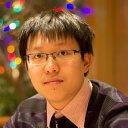
 Jianfei Chen
· 1 previous affiliation
- Tsinghua UniversitySince 2010
- Associate Professor · Since 2023
- Assistant Professor · 2021–2023
- Postdoc · 2019–2021
- PhD student · 2014–2019
- Undergrad student · 2010–2014
Research Overview
Jianfei Chen focuses on accelerating deep learning inference and training through low-precision quantization, sparse attention mechanisms, and scalable probabilistic modeling. His trajectory spans early work in scalable Bayesian inference and graph neural networks to recent breakthroughs in ultra-low-bit training and hardware-aware model compression. Currently, his research addresses the memory and computational bottlenecks of large language and vision models using 4-bit quantization and differentiable structured pruning.
Research Trajectory
Jianfei Chen’s early research focused on scalable probabilistic modeling and Bayesian inference. He developed Scalable Inference for Logistic-Normal Topic Models, introducing a partially collapsed Gibbs sampling algorithm to handle the non-conjugacy between logistic-normal priors and multinomial topic mixing proportions. He continued this focus on hardware-aware topic modeling with SaberLDA: Sparsity-Aware Learning of Topic Models on GPUs. Shifting to graph representation learning, he addressed the recursive neighborhood expansion problem that limits the scalability of graph convolutional networks. He introduced Stochastic Training of Graph Convolutional Networks with Variance Reduction, advancing the research direction of Scaling Graph Neural Networks Beyond Neighbor Explosion.
In the early 2020s, his focus expanded to generative modeling and neural compression. He proposed Implicit Normalizing Flows, generalizing standard normalizing flows by defining mappings implicitly through root-finding equations rather than explicit invertible transformations. Addressing inference latency in learned compression, he developed Fast Lossless Neural Compression with Integer-Only Discrete Flows, utilizing 8-bit integer arithmetic and learnable filter pruning to achieve significant speedups over existing neural models. He also participated in the development of exact ODE solvers for diffusion models, contributing to DPM-Solver: A Fast ODE Solver for Diffusion Probabilistic Model Sampling in Around 10 Steps, which analytically computes the linear part of the diffusion solution to accelerate sampling.
A major theme in his recent trajectory is extreme low-precision training and inference for large-scale models. He collaborated on Memory Efficient Optimizers with 4-bit States, which tackled the zero-point problem to compress optimizer states, advancing the area of Reducing Optimizer State Memory Overhead in Training. He also contributed to Training Transformers with 4-bit Integers, utilizing Hadamard quantizers to manage activation outliers and leverage score sampling to exploit gradient sparsity, a key development in the direction of Fused Quantization Kernels for Deep Learning Acceleration. Expanding on hardware-aware sparsity, his lab explored V:N:M sparse patterns for GPUs in Beyond 2:4: exploring V:N:M sparsity for efficient transformer inference on GPUs, contributing to the broader field of Accelerating Sparse Neural Networks on Dense Hardware.
His group has extensively optimized Transformer attention mechanisms to reduce quadratic scaling bottlenecks. He led the development of SageAttention: Accurate 8-Bit Attention for Plug-and-play Inference Acceleration and its successor SageAttention2: Efficient Attention with Thorough Outlier Smoothing and Per-thread INT4 Quantization, which aggressively quantize attention calculations to 8-bit and 4-bit formats while maintaining accuracy across modalities. Alongside quantization, he addressed attention sparsity with SpargeAttn: Training-Free Sparse Attention Accelerating Any Model Inference. Investigating the accuracy degradation inherent in ultra-low precision, he introduced the TetraJet framework in Oscillation-Reduced MXFP4 Training for Vision Transformers, identifying and mitigating issues in the research area of Weight Oscillation in Low Precision Training. Beyond efficiency, his group also advanced video generation by replacing Gaussian noise priors with input images in FrameBridge: Improving Image-to-Video Generation with Bridge Models, and improved Mixture-of-Experts architectures with ReMoE: Fully Differentiable Mixture-of-Experts with ReLU Routing, replacing traditional TopK routing with a smooth, differentiable gate.
Most recently, his work scales these efficiency paradigms to massive language models. He led Deterministic Differentiable Structured Pruning for Large Language Models, replacing stochastic mask sampling with a deterministic ReLU-based approach and an annealed soft surrogate. Continuing the push for 4-bit training stability, he developed TetraJet-v2: Accurate NVFP4 Training for Large Language Models with Oscillation Suppression and Outlier Control. He also participated in the design of disaggregated inference pipelines, contributing to HexGen-3: A Fully Disaggregated LLM Serving Framework with Fine-Grained Heterogeneous Resource Autoscaling, which separates prefill, attention, and feed-forward network stages to optimize resource allocation.
Chen's group also tackled large-scale distributed training efficiency and further attention acceleration for video generation. Chen supervised SS-HSDP: Efficient and Flexible Sharded Data Parallelism via Runtime-Update Decoupling, decoupling runtime parameters from update parameters to accommodate diverse optimizers and avoid redundant data movement. In video diffusion models, Chen contributed to trainable sparse attention via SpargeAttention2: Trainable Sparse Attention via Hybrid Top-k+Top-p Masking and Distillation Fine-Tuning, which utilizes hybrid masking and distillation fine-tuning to reach high sparsity, and participated in SLA2: Sparse-Linear Attention with Learnable Routing and Quantization-aware Training, combining learnable routing with quantization-aware fine-tuning to accelerate diffusion attention.
Current Directions
The most recent papers in the evidence address the extreme computational and memory demands of Large Language Models (LLMs) and Vision Transformers. A primary focus is stabilizing ultra-low precision training, specifically 4-bit formats (NVFP4 and MXFP4), by suppressing weight oscillation and controlling activation outliers. Additionally, recent work investigates deterministic, differentiable structured pruning to accelerate inference without the overhead of stochastic masking. Finally, Chen is exploring fully disaggregated serving frameworks alongside decoupled sharded data parallelism for distributed training, as well as trainable sparse and sparse-linear attention mechanisms to accelerate video diffusion models.
Profile updated
Loading new papers…
Other researchers whose papers cluster into the same research directions — a proxy for overlapping technical interests and shared intellectual neighborhoods.
See something wrong? Report a mistake