

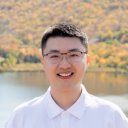
 Yujun Lin
· 3 previous affiliations
- Nvidia (United States)Current
- Current
- Researcher · 2025–2026
- PhD student · 2018–2025
- Tsinghua University2014–2018
- Undergrad student · 2014–2018
Research Overview
Yujun Lin focuses on efficient deep learning, hardware-algorithm co-design, and model compression. His early work addressed communication bottlenecks in distributed training and resource-constrained inference for edge devices. More recently, his research centers on scaling foundation models, developing extreme low-precision quantization and system optimizations to accelerate large language models and diffusion models.
Research Trajectory
His early research addressed the significant communication overhead inherent in large-scale distributed machine learning. In 2018, he introduced Deep Gradient Compression: Reducing the Communication Bandwidth for Distributed Training, which identified that the vast majority of gradient exchange during training is redundant. By transmitting only the most critical gradients, this method achieved massive compression rates, allowing large models to be trained efficiently over standard networks. This work contributed significantly to the research areas of Sparse Gradient Compression for Distributed Training and Low-Overhead Gradient Sparsification for Distributed Training. He later expanded on distributed challenges with collaborators in the domain of Staleness Mitigation in Asynchronous Federated Learning, participating in the development of Delayed Gradient Averaging: Tolerate the Communication Latency for Federated Learning, which restructures the averaging step to allow local computation to proceed in parallel with high-latency communication.
Concurrently, his research explored efficient architectures for spatial data and edge devices, emphasizing the co-design of algorithms and hardware. In 3D vision, he co-developed Point-Voxel CNN for Efficient 3D Deep Learning, a hybrid approach that represents inputs as points to reduce memory consumption while performing convolutions in voxel space to maintain memory locality. To further optimize spatial processing, he designed PointAcc: Efficient Point Cloud Accelerator, a specialized hardware architecture built to handle the extreme sparsity and complex mapping operations inherent to point cloud data. This hardware-software co-design philosophy naturally extended to tiny machine learning; he contributed to MCUNet: Tiny Deep Learning on IoT Devices, a framework that jointly optimizes neural architectures and lightweight inference engines for microcontrollers. To automate these optimizations, he participated in creating HAQ: Hardware-Aware Automated Quantization With Mixed Precision, utilizing reinforcement learning to find optimal bitwidths for different network layers based on specific hardware constraints. He further advanced automated design by introducing NAAS: Neural Accelerator Architecture Search, a framework that holistically searches neural architectures, accelerator designs, and compiler mappings in a single optimization loop.
In 2022, he applied neural architecture search principles to emerging computing paradigms, contributing to the area of Quantum Circuit Sparsification for Noise Mitigation. This work included QuantumNAS: Noise-Adaptive Search for Robust Quantum Circuits, a framework that decouples circuit training from searching and uses hardware-aware noise feedback to discover robust circuits for noisy intermediate-scale quantum computers.
In recent years, his focus has shifted toward the efficiency of large-scale foundation models, particularly in the broader area of Scaling Deep Learning to Extreme Low Precision. He developed QServe:W4A8KV4 Quantization and System Co-design for Efficient LLM Serving, an algorithm-system co-design that mitigates the runtime overhead of dequantization on GPUs, enabling efficient large-batch cloud serving with 4-bit weights and KV caches. He also addressed the memory demands of generative vision models. He co-authored SVDQuant: Absorbing Outliers by Low-Rank Component for 4-Bit Diffusion Models, which preserves image fidelity in 4-bit diffusion models by absorbing outliers into a high-precision low-rank branch. He further contributed to FourTune: Towards Fully 4-Bit Efficient Post-Training for Diffusion Models, extending 4-bit quantization to weights, activations, and gradients during post-training. For video generation, he participated in Quant VideoGen: Auto-Regressive Long Video Generation via 2-Bit KV-Cache Quantization, leveraging spatiotemporal redundancy to drastically reduce memory requirements. Beyond quantization, he explored architectural efficiency in image synthesis, contributing to SANA: Efficient High-Resolution Text-to-Image Synthesis with Linear Diffusion Transformers, which combines latent compression and linear attention to accelerate generation.
Most recently, his work has intersected with the area of Scaling Language Model Reasoning Beyond Verifiable Rewards. He collaborated on Taming the Long-Tail: Efficient Reasoning RL Training with Adaptive Drafter, which utilizes idle GPU cycles during long-tail response generation to train a lightweight drafter model for speculative decoding. He also contributed to QeRL: Beyond Efficiency - Quantization-enhanced Reinforcement Learning for LLMs, demonstrating that the noise introduced by 4-bit quantization can act as a regularizer that improves exploration during reinforcement learning, matching full-parameter fine-tuning accuracy with significantly fewer computational resources.
Current Directions
The most recent papers in the evidence indicate a strong focus on the efficient training and deployment of large-scale foundation models, encompassing both large language models and diffusion models. Recent work investigates extreme low-precision techniques, such as 4-bit and 2-bit quantization for weights, activations, and KV caches, to alleviate memory bottlenecks during inference and post-training. Additionally, this research addresses the computational overhead of reinforcement learning for reasoning-heavy language models, exploring methods like adaptive speculative decoding and quantization-enhanced exploration to accelerate training while maintaining or improving model performance.
Profile updated
Loading new papers…
Other researchers whose papers cluster into the same research directions — a proxy for overlapping technical interests and shared intellectual neighborhoods.
See something wrong? Report a mistake