

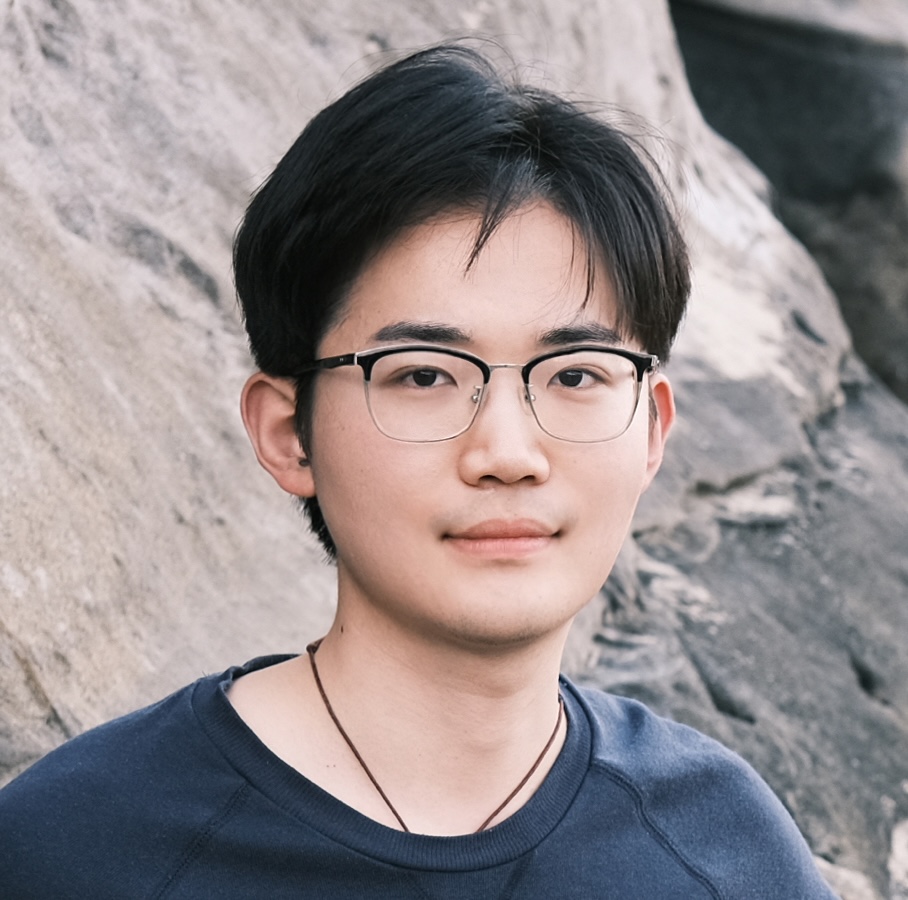
 Jintao Zhang
· 1 previous affiliation
- Tsinghua UniversityCurrent
- Current
- PhD student · 2024–2026
Research Overview
Jintao Zhang focuses on efficient machine learning systems and data management, specializing in accelerating model inference and optimizing database queries. His early work explored learned cardinality estimation before shifting toward hardware-aware quantization and sparse attention mechanisms for large-scale transformers. Currently, he investigates extreme low-precision execution and scalable architectures for generative video and language models.
Research Trajectory
Jintao Zhang’s early research centered on data management, specifically addressing the challenges of query optimization through machine learning. In 2021, he participated in evaluating the design space of learned models for database queries in Learned Cardinality Estimation: A Design Space Exploration and A Comparative Evaluation. Building on this foundation, he developed an advisor system to dynamically select the most suitable cardinality estimation models for diverse datasets in AutoCE: An Accurate and Efficient Model Advisor for Learned Cardinality Estimation.
In 2025, his focus shifted significantly toward efficient machine learning systems, targeting the quadratic computational bottleneck inherent in transformer self-attention. He introduced SageAttention: Accurate 8-Bit Attention for Plug-and-play Inference Acceleration, a quantization method that utilized smoothing techniques to enable 8-bit execution with virtually no loss in accuracy. This work contributed to the broader area of Orthogonal Rotations for Outlier Smoothing in Quantized Models by addressing the challenges of algorithm-system co-design for low-bit formats.
The SageAttention framework was subsequently advanced to support even more aggressive quantization. In SageAttention2: Efficient Attention with Thorough Outlier Smoothing and Per-thread INT4 Quantization, he applied 4-bit and 8-bit formats to achieve substantial speedups over existing implementations. This progression advanced the research direction of Low-Bit Attention Estimation for Sparse Transformers and supported the broader field of Efficient Attention Mechanisms for Long Sequence Modeling. He further optimized this architecture by leveraging faster FP8 instructions in SageAttention2++: A More Efficient Implementation of SageAttention2. This line of inquiry culminated in SageAttention3: Microscaling FP4 Attention for Inference and An Exploration of 8-Bit Training, which utilized new FP4 Tensor Cores to maximize throughput. Alongside inference acceleration, this paper explored 8-bit attention for model training, contributing directly to the domain of Microscaling Formats for Low Precision Deep Learning.
Parallel to his work on quantization, Zhang explored sparsity to accelerate model inference without requiring retraining. He developed an initial framework in SpargeAttn: Training-Free Sparse Attention Accelerating Any Model Inference and expanded it into a comprehensive methodology in SpargeAttention: Accurate and Training-free Sparse Attention Accelerating Any Model Inference. By employing a two-stage online filter and selective token compression, this mechanism achieved significant end-to-end speedups across language, image, and video models, advancing research in Hardware Aware Kernels for Sparse Attention.
Also in 2025, Zhang applied his dual expertise in data management and language models to retrieval-augmented generation (RAG). He proposed SAGE: A Framework of Precise Retrieval for RAG, which utilized semantic chunking and dynamic gradient-based selection to improve question-answering accuracy and cost-efficiency in multi-hop reasoning tasks.
Moving into 2026, his research expanded to address the scaling challenges of diffusion transformers (DiTs) and distributed serving systems. He designed a hybrid attention mechanism in SLA: Beyond Sparsity in Diffusion Transformers via Fine-Tunable Sparse–Linear Attention, which decomposed attention weights into high-rank sparse and low-rank linear components to drastically reduce computation for long-sequence video generation. He also collaborated on systems-level infrastructure for large language models in HexGen-3: A Fully Disaggregated LLM Serving Framework with Fine-Grained Heterogeneous Resource Autoscaling, a framework that separated the inference pipeline into specialized worker types to improve per-cost throughput. Finally, he contributed to the structural stability of video generation architectures in Consistent Video World Model With Geometry-Aware Rotary Position Embedding, addressing geometric drift by injecting camera-ray directions directly into self-attention layers, a technique relevant to the area of Factorized Space Time Attention for Video Transformers.
Current Directions
The most recent papers in the evidence indicate a strong focus on scaling generative models through both algorithmic innovation and systems-level disaggregation. A primary direction involves overcoming the quadratic complexity of diffusion transformers for video generation, utilizing hybrid sparse-linear attention mechanisms to maintain generation quality while significantly reducing computational overhead. Concurrently, work in distributed systems investigates fully disaggregated serving architectures for large language models, separating prefill and decoding phases across heterogeneous hardware to maximize throughput and cost-efficiency. Additionally, recent efforts address spatial persistence in predictive world models, developing geometry-aware embeddings to ensure 3D consistency over long video trajectories.
Profile updated
Loading new papers…
Other researchers whose papers cluster into the same research directions — a proxy for overlapping technical interests and shared intellectual neighborhoods.
See something wrong? Report a mistake