

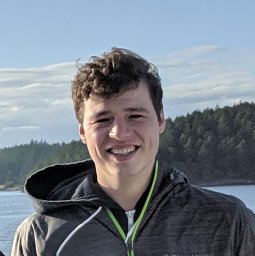
 Jan Eric Lenssen
· 7 previous affiliations
- Max Planck Institute for InformaticsSince 2022
- Associated Faculty · Since 2026
- Principal Researcher · 2023–2026
- Postdoctoral Researcher · 2022–2023
- Saarland UniversitySince 2026
- Full Professor · Since 2026
- Current
- Kumo.AI2021–2026
- Founding Engineer · 2021–2026
- Kumo AI2021–2026
- Researcher · 2021–2026
- TU Dortmund University2009–2021
- Research Associate, PhD Student · 2016–2021
- Bachelor's and Master's degree, Computer Science · 2009–2014
- Research Intern, Reality Labs · 2019
- NNAISENSE2019
- Research Intern · 2019
Research Overview
Jan Eric Lenssen focuses on geometric representation learning, graph neural networks, and 3D generative modeling. His early work established foundational architectures and software frameworks for deep learning on irregular spatial data. More recently, his research addresses scalable generative models for 3D reconstruction, multi-view consistency, and spatial reasoning across continuous domains.
Research Trajectory
Lenssen’s early research focused on adapting deep learning techniques to irregular geometric data. He introduced SplineCNN: Fast Geometric Deep Learning With Continuous B-Spline Kernels (2018), a spatial convolution operator for graphs and meshes that utilizes continuous B-spline kernels to achieve high accuracy and scalability. In parallel, he developed Group Equivariant Capsule Networks (2018), establishing guaranteed equivariance and invariance properties by defining a routing-by-agreement algorithm on group elements. To support the broader adoption of these methods, he created Fast Graph Representation Learning with PyTorch Geometric (2019), a high-performance library utilizing optimized CUDA kernels that became a foundational tool for deep learning on irregular data. He also contributed to theoretical advancements in the research direction of The Weisfeiler Lehman Expressivity Bottleneck through his participation in Weisfeiler and Leman Go Neural: Higher-Order Graph Neural Networks (2019), which introduced higher-order message passing between subgraphs to overcome the limitations of standard 1-dimensional isomorphism tests.
Expanding his work on graph structures, Lenssen—also a founding engineer at Kumo.ai—participated in efforts to apply Graph Neural Networks directly to enterprise data architectures. This included contributions to the area of Relational Deep Learning on Database Graphs with Relational Deep Learning: Graph Representation Learning on Relational Databases (2024), a framework that represents relational data as heterogeneous graphs to bypass manual feature engineering. To standardize evaluation in the related direction of Relational Deep Learning on Multi-Table Databases, he co-authored RelBench: A Benchmark for Deep Learning on Relational Databases (2024). He further explored graph-based architectures for large-scale systems in ContextGNN: Beyond Two-Tower Recommendation Systems (2025), contributing to the field of Hybrid Global and Local Modeling for Recommender Systems by utilizing a personalized fusion mechanism to balance local context with global exploration.
Returning to geometric and spatial domains, his research group focused heavily on generative models for 3D reasoning and multi-view consistency. He led the development of Spatial Reasoning with Denoising Models (2025), which enables diffusion models to solve complex logical tasks by estimating uncertainty and generating data sequentially. This methodology was generalized in Spatial Reasoners for Continuous Variables in Any Domain (2025), an open-source framework for implementing inference strategies across continuous data domains. Addressing the evaluation of generative models, he oversaw MVGBench: Comprehensive Benchmark for Multi-view Generation Models (2025), which introduced a 3D self-consistency metric to replace flawed 2D comparisons. Complementing this, his team proposed MET3R: Measuring Multi-View Consistency in Generated Images (2025), utilizing feed-forward dense 3D reconstructions to evaluate multi-view outputs independently of specific scenes.
In his most recent work, Lenssen has advanced the integration of semantic understanding and generative modeling. He directed research on SemanticNVS: Improving Semantic Scene Understanding in Generative Novel View Synthesis (2026), which incorporates pre-trained semantic features into the diffusion process to reduce distortions during long-range camera movements. He also led AnyUp: Universal Feature Upsampling (2026), introducing a model to bridge low-resolution semantic features and high-resolution pixel-level tasks without retraining. He participated in Rewis3d: Reconstruction Improves Weakly-Supervised Semantic Segmentation (2026), which enforces consistency between 2D images and reconstructed 3D point clouds to enhance segmentation models trained on sparse labels. Additionally, he contributed to motion synthesis with ActionPlan: Future-Aware Streaming Motion Synthesis via Frame-Level Action Planning (2026), a diffusion framework that generates semantic anchors for low-latency streaming. Finally, he advanced the fundamental training of generative models in the area of Linear Trajectories for Fast Generative Modeling with MixFlow: Mixed Source Distributions Improve Rectified Flows (2026), reducing the curvature of generative paths to accelerate image generation and improve sample quality.
Current Directions
The most recent papers in the evidence indicate a strong focus on scaling generative models for 3D representations and spatial reasoning. Recent work investigates the intersection of semantic understanding and novel view synthesis, utilizing diffusion models and rectified flows to improve the structural consistency of generated scenes. Additionally, ongoing research addresses the efficiency of these generative processes, exploring mixed source distributions to accelerate training and sampling in rectified flow models, alongside the development of universal upsampling techniques for high-resolution vision tasks.
Profile updated
Loading new papers…
Other researchers whose papers cluster into the same research directions — a proxy for overlapping technical interests and shared intellectual neighborhoods.
See something wrong? Report a mistake