

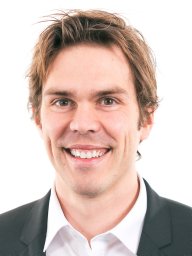
 Gerard Pons-Moll
· 8 previous affiliations
- Max Planck Institute for InformaticsSince 2017
- Emmy Noether Group Leader and Senior Researcher · Since 2018
- Independent Research Group Leader · Since 2017
- Research Group Leader · 2017–2018
- Tübingen AI CenterSince 2021
- Core Faculty · Since 2021
- University of TübingenSince 2021
- Full Professor · Since 2021
- Current
- Beyond PresenceSince 2025
- Research Advisor · Since 2025
- Research Scientist · 2015–2017
- Researcher · 2014–2017
- Leibniz University Hannover2009–2013
- PhD student · 2009–2013
- Universitat Politècnica de Catalunya2002–2008
- Master's degree, Telecommunications Engineering · 2002–2008
- Northeastern University2007–2008
- Master's project, Telecommunications Engineering · 2007–2008
Research Overview
Gerard Pons-Moll focuses on 3D human reconstruction, generative motion synthesis, and the modeling of clothed avatars from monocular inputs. His early work established core parametric models for human body shape and dynamic surface deformation. More recently, his research investigates neural implicit representations, physics-aware human-object interaction, and the integration of diffusion models for high-fidelity 3D scene generation.
Research Trajectory
His early work established core techniques for recovering human pose and shape from images. He introduced qualitative 3D pose information via Posebits for Monocular Human Pose Estimation, using Boolean geometric relationships to resolve pose ambiguities and contributing to the broader area of Resolving Self Occlusion in Monocular 3D Pose Estimation. He also participated in the development of the foundational SMPL: a skinned multi-person linear model, which provided a vertex-based representation of body shapes in natural poses. Building on parametric modeling, he developed Dyna: a model of dynamic human shape in motion to capture soft-tissue deformations.
Modeling realistic clothing on moving bodies subsequently became a central theme. He presented ClothCap: seamless 4D clothing capture and retargeting, a method to segment and track individual garments on fully dressed people. This evolved into end-to-end approaches like Multi-Garment Net: Learning to Dress 3D People From Images, which decoupled clothing geometry from the underlying body shape to enable virtual try-on and fine-grained avatar control. This work advanced the research directions of High-Fidelity Monocular 3D Human Reconstruction and 2D to 3D Gradient Propagation via Differentiable Rendering. Concurrently, he contributed to large-scale motion data unification with AMASS: Archive of Motion Capture As Surface Shapes, converting disparate marker-based datasets into a common framework to facilitate data-driven motion modeling.
Around 2020, his focus expanded to neural implicit representations and weakly supervised learning. To overcome the topological limitations of closed meshes, his lab introduced Neural Unsigned Distance Fields for Implicit Function Learning, enabling continuous, high-resolution modeling of open surfaces like clothing and architectural walls. He further explored implicit functions for handling deficient 3D inputs in Implicit Functions in Feature Space for 3D Shape Reconstruction and Completion, contributing to the area of Reconstructing Complete Geometry from Partial Point Clouds. Addressing the challenge of appearance, he developed Learning to Transfer Texture From Clothing Images to 3D Humans, mapping pixels to 3D garment surfaces and advancing work in the direction of Unwrapping 3D Surfaces into 2D Grid Representations. He also participated in DeepCap: Monocular Human Performance Capture Using Weak Supervision, which disentangled pose and surface deformation without relying on 3D ground truth annotations, aligning with the area of Overcoming the 3D Annotation Bottleneck in Pose Estimation.
Between 2024 and 2026, his research shifted toward complex scene interactions, generative priors, and robust open-world deployment. To model plausible human articulations, he developed NRDF: Neural Riemannian Distance Fields for Learning Articulated Pose Priors. His group also tackled long-term motion synthesis with Generating Continual Human Motion in Diverse 3D Scenes, enabling drift-free navigation using scene-agnostic mocap data. In the domain of avatar creation, Human-3Diffusion: Realistic Avatar Creation via Explicit 3D Consistent Diffusion Models coupled 2D multi-view diffusion models with 3D Gaussian Splatting to generate high-fidelity, view-consistent avatars from single images.
Expanding beyond isolated humans, his recent research emphasizes human-object interaction and scene-level reconstruction. He introduced InterTrack: Tracking Human Object Interaction without Object Templates to recover interactions from video without predefined shapes, and FORCE: Physics-aware Human-object Interaction to synthesize realistic motions by explicitly modeling physical attributes like force and resistance. To evaluate the robustness of these systems, he presented Are Pose Estimators Ready for the Open World? STAGE: A GenAI Toolkit for Auditing 3D Human Pose Estimators, revealing performance vulnerabilities to real-world variations. Most recently, Human3R: Everyone Everywhere All at Once proposed a unified framework for simultaneously reconstructing multiple people, dense 3D scenes, and camera trajectories from monocular video. Pons-Moll also supervised PiHand: Latent Hand-Object Interaction Priors for Physics-Based Policy Learning, distilling tracking demonstrations into an interaction prior to guide reinforcement learning policies for dexterous tabletop manipulation. Extending beyond human structures, they contributed to SAMoR: Motion Modelling for Articulated Objects of Any Skeleton and Topology, which represents articulated motion across diverse skeletons and topologies using shared part-level tokens. To address articulated contact from video, Pons-Moll's group developed HARI4D: Hand-Articulation Aware 4D Reconstruction of Human-Object Interaction, using history-aware object tracking alongside coarse-to-fine reasoning modules to reconstruct temporally consistent full-body and hand interactions without penetration or floating.
Current Directions
The most recent papers in the evidence address the holistic modeling of humans interacting within complex, dynamic environments. Recent work investigates physics-aware human-object interaction, moving beyond purely kinematic tracking to explicitly model forces and physical resistance during contact. Additionally, there is a strong focus on unified scene reconstruction, developing frameworks capable of simultaneously recovering multiple individuals, dense 3D environments, and camera trajectories from monocular video. Finally, recent efforts emphasize the robustness of 3D vision systems, utilizing generative AI toolkits to systematically audit pose estimators and evaluate their readiness for open-world deployment against common real-world variations.
Profile updated
Loading new papers…
Other researchers whose papers cluster into the same research directions — a proxy for overlapping technical interests and shared intellectual neighborhoods.
See something wrong? Report a mistake