

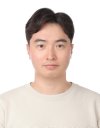
 Jae Oh Woo
· 6 previous affiliations
- Amazon (United States)Since 2024
- Researcher · Since 2024
- Samsung (South Korea)2019–2024
- Researcher · 2019–2024
- Moodys Analytics2017–2019
- Researcher · 2017–2019
- The University of Texas at Austin2015–2017
- Postdoc · 2015–2017
- Yale University2006–2015
- PhD student · 2006–2015
- MS student · 2005–2006
- Undergrad student · 2001–2005
Research Overview
Jae Oh Woo focuses on information theory, Bayesian deep learning, and uncertainty quantification. His trajectory spans foundational work in discrete entropy inequalities and stochastic geometry to recent advancements in active learning and unsupervised accuracy estimation for deployed models. Currently, his research addresses the alignment, self-evaluation, and logical reasoning consistency of large language models.
Research Trajectory
The early phase of his research centered on information theory and statistical inference. He investigated the redundancy of Bayes estimators derived from Poisson-Dirichlet and Pitman-Yor priors, connecting these estimators to universal compression in unknown discrete alphabets in Redundancy of Exchangeable Estimators. Continuing in information theory, he explored entropy power inequalities on the integers, demonstrating that an analog to the classical entropy power inequality holds for uniform distributions over finite subsets in A discrete entropy power inequality for uniform distributions.
Transitioning into applied probability for telecommunications, he contributed to stochastic geometry models for wireless networks. To better capture the realities of base station deployments, he collaborated on a cellular network model incorporating both deterministic grids and random Poisson point processes, which accounted for spatial repulsion between stations. This framework and its implications for coverage probability were detailed in On the coverage probability of a spatially correlated network and expanded in An Analytical Framework for Modeling a Spatially Repulsive Cellular Network.
Returning to fundamental information inequalities, he led research in the area of Bridging Discrete and Continuous Information Inequalities. He established novel connections between majorization theory and Sperner's theorem on partially ordered sets to derive new Rényi entropy inequalities for sums of independent, integer-valued random variables in Majorization and Rényi entropy inequalities via Sperner theory. This theoretical work was subsequently extended to prime cyclic groups in Entropy Inequalities for Sums in Prime Cyclic Groups. During this period, he also applied probabilistic methods to social dynamics, using Mellin transforms to derive explicit stationary solutions for continuous-time opinion dynamics with state-dependent interaction rates in On the steady state of continuous-time stochastic opinion dynamics with power-law confidence.
In recent years, his focus shifted toward Bayesian deep learning, uncertainty quantification, and computer vision. To better understand epistemic uncertainty in Bayesian neural networks, he derived an analytical formula for the mutual information between model parameters and predictive outputs in Analytic Mutual Information in Bayesian Neural Networks. He also participated in developing self-supervised contrastive representation learning techniques to reduce the annotation burden for irregular 3D geometries in Self-Supervised Contrastive Representation Learning for 3D Mesh Segmentation.
His expertise in uncertainty naturally extended to active learning and model evaluation. He introduced Balanced Entropy Acquisition (BalEntAcq), a novel uncertainty measure designed to capture information balance and reduce redundant data selection, in Active Learning in Bayesian Neural Networks with Balanced Entropy Learning Principle. This principle was later adapted for pixel-level tasks in Bayesian Active Learning for Semantic Segmentation, contributing to the broader research direction of Uncertainty-Driven Class Balancing. Concurrently, he developed frameworks for the research area of Estimating Machine Learning Performance Without Ground Truth Labels, introducing a source-free domain adaptation method that uses adaptive adversarial perturbations to predict performance drops caused by distribution shifts in Unsupervised Accuracy Estimation of Deep Visual Models using Domain-Adaptive Adversarial Perturbation without Source Samples.
Most recently, he has applied probabilistic frameworks to the evaluation and alignment of large language models (LLMs). He collaborated on Improving Instruction Following in Language Models through Proxy-Based Uncertainty Estimation, which leverages Bayesian uncertainty to create smarter data curation strategies and new training objectives for preference optimization. He further investigated the self-evaluation capabilities of LLMs by adapting classical Vapnik-Chervonenkis (VC) dimension theory to probabilistic predictors in Can LLMs Reliably Evaluate Themselves? A Probabilistic VC Framework. Expanding on the reliability of LLM outputs, he formalized the concept of "structural uncertainty" to measure the consistency of logical reasoning paths in Quantifying Consistency in LLM Logical Reasoning via Structural Uncertainty. Woo also guided research on multi-agent collaboration under computational constraints in Budgeted Act-or-Defer Multi-Agent LLM Deliberation with Local Reliability Bounds, introducing act-or-defer mechanisms backed by local reliability bounds to govern deliberation.
Current Directions
The most recent papers in the evidence focus heavily on the intersection of uncertainty quantification and large language models. A major ongoing theme is developing theoretical and empirical frameworks to assess whether LLMs can reliably evaluate their own outputs, adapting classical statistical learning theory to modern probabilistic text generation. This includes measuring and mitigating inconsistencies in LLM logical reasoning by analyzing the structural uncertainty of their reasoning paths. Additionally, recent efforts explore how Bayesian uncertainty estimates can be integrated into preference optimization to improve instruction following, alignment, and robustness against noisy data in generative models.
Profile updated
Loading new papers…
Other researchers whose papers cluster into the same research directions — a proxy for overlapping technical interests and shared intellectual neighborhoods.
See something wrong? Report a mistake