

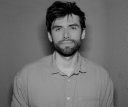
 Lukas Rauch
· 1 previous affiliation
- University of KasselSince 2020
- PhD student · 2020–2027
Research Overview
Lukas Rauch focuses on deep active learning, audio representation learning, and bioacoustics. His early work established benchmarks and sampling strategies for active learning in language and vision models. More recently, his research addresses the challenges of robust audio modeling and self-supervised learning, particularly for complex, real-world acoustic environments like avian bioacoustics.
Research Trajectory
Rauch’s early research concentrated on optimizing data annotation pipelines through deep active learning (DAL). In 2022, he introduced methodologies for Enhancing Active Learning with Weak Supervision and Transfer Learning by Leveraging Information and Knowledge Sources, addressing cold-start problems and predictive overconfidence in neural networks. Recognizing the lack of standardized evaluation protocols for transformer-based language models in this space, he subsequently developed ActiveGLAE: A Benchmark for Deep Active Learning with Transformers. This benchmark provided a comprehensive collection of datasets and guidelines to streamline the assessment of novel DAL strategies.
By 2024, Rauch began extending these active learning principles into the domain of bioacoustics, while also investigating how models handle noisy, human-centric data. He explored the intersection of these fields in Towards Deep Active Learning in Avian Bioacoustics, adapting data-efficient sampling to the challenges of multi-label segmentation and overlapping acoustic signals. Concurrently, he collaborated on dopanim: A Dataset of Doppelganger Animals with Noisy Annotations from Multiple Humans, a benchmark featuring images of visually similar species paired with rich metadata on annotator expertise and confidence, providing a realistic testbed for learning from imperfect annotations.
In 2025, Rauch’s work in active learning evolved to address the capabilities of modern foundation models, contributing significantly to the research direction of Hybrid Uncertainty and Diversity Sampling for Active Learning. He demonstrated in No Free Lunch in Active Learning: LLM Embedding Quality Dictates Query Strategy Success that the effectiveness of data selection strategies is heavily dependent on the quality of embeddings from large language models. Building on these insights, he co-developed Cleaning the Pool: Progressive Filtering of Unlabeled Pools in Deep Active Learning, an ensemble framework named REFINE that iteratively removes uninformative instances before applying diversity-focused selection, consistently improving performance across various foundation models.
Parallel to his active learning research, Rauch has made substantial contributions to the area of Robust Audio Modeling Under Acoustic Domain Shift. He led the creation of BirdSet: A Large-Scale Dataset for Audio Classification in Avian Bioacoustics, a large open-source resource providing over 6,800 hours of training data to establish standardized benchmarks for real-world soundscapes. To further improve model generalization in these noisy environments, he investigated defense mechanisms in Adversarial Training Improves Generalization Under Distribution Shifts in Bioacoustics. This work showed that training models to withstand worst-case perturbations not only boosts classification performance across diverse datasets but also stabilizes the models' internal representations.
Rauch has also focused on refining self-supervised architectures for specialized audio tasks, advancing the broader area of In-Domain Representation Learning for Complex Acoustic Signals. In Can Masked Autoencoders Also Listen to Birds?, he systematically adapted Masked Autoencoders (MAEs) to bridge the domain gap in fine-grained bird sound classification, setting new performance standards on multi-label benchmarks. His interest in efficient representation learning extends beyond audio; he collaborated on Hashing-Baseline: Rethinking Hashing in the Age of Pretrained Models, which combined frozen embeddings with classical techniques to achieve high performance in image and audio retrieval without expensive training. This work intersects with research directions such as Compressing Deep Learning Representations with PCA and Asymmetric Distance Computation for High Dimensional Vector Search.
Most recently, in 2026, Rauch’s trajectory has shifted toward rethinking how self-supervised audio models are evaluated and probed. He co-authored BAT: Better Audio Transformer Guided by Convex Gated Probing, introducing a novel evaluation method that bridges the gap between traditional probing and fine-tuning to refine audio SSL architectures. Expanding on this, he developed Unmute the Patch Tokens: Rethinking Probing in Multi-Label Audio Classification. By introducing Binarized Prototypical Probes, this work extracts localized information directly from patch tokens, bypassing the traditional class-token bottleneck and challenging existing rankings of self-supervised audio models.
Current Directions
The most recent papers in the evidence indicate a strong focus on the evaluation and interpretability of self-supervised learning models in the audio domain. Rauch is currently investigating advanced probing techniques that move beyond standard linear evaluation, seeking to unlock the localized information captured within transformer patch tokens. This work aims to close the performance gap between lightweight probing and full model fine-tuning, ultimately providing more accurate assessments of representation quality for complex, multi-label audio classification tasks.
Profile updated
Loading new papers…
Other researchers whose papers cluster into the same research directions — a proxy for overlapping technical interests and shared intellectual neighborhoods.
See something wrong? Report a mistake